Image 1 of 4
1 / 4
© Scott Zona from Miami, Florida, USA, some rights reserved (CC-BY) · Wikimedia Commons
Crinum, Genus, spp., Multiple species,
- Genus
- Multiple species
swamplilies
Tropics and subtropics worldwide; many species in Africa
Overview
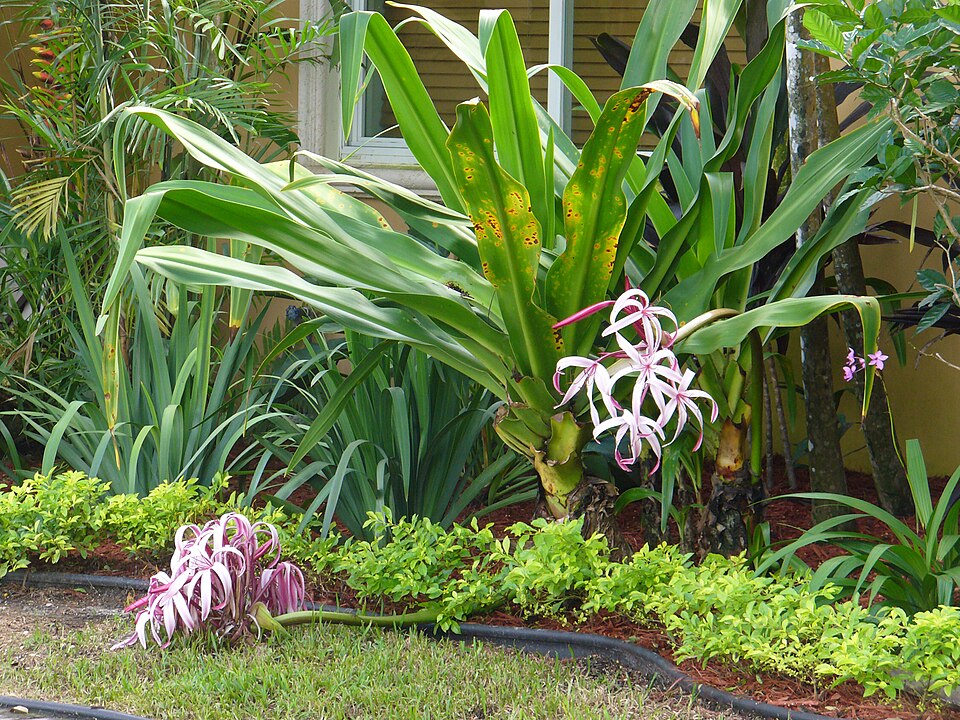
Crinum is a genus of about 100 species of large bulbous perennials in the amaryllis family (Amaryllidaceae), found across the tropics and subtropics, often in wet ground beside rivers, marshes, and coasts. Each plant grows from a thick, often massive bulb and produces a rosette or fountain of strap-shaped leaves 2–4 feet (60–120 cm) long. Tall, leafless flower stalks rise 2–6 feet (0.6–1.8 m) and carry an umbel of large, trumpet- or spider-shaped flowers, usually white or pink and often striped, that open over several days and carry a strong scent in the evening. The common name swamp lily reflects the wet habitats of many species, including the North American C. americanum. The bulbs and leaves contain lycorine and related alkaloids that are toxic to people and animals if eaten. Plants are long-lived and slow to re-establish after disturbance, often flowering more freely once the bulb is well settled. Most species are tender and grow only where winters are mild, though a few, such as the hybrid C. powellii, tolerate light frost. Crinum grows in full sun to part shade in rich, moist soil and is often planted at pond and stream margins.
Native Range
Crinum is native to wet and coastal habitats throughout the tropics and subtropics of Africa, Asia, Australia, and the Americas, with many species in Africa. Plants grow along rivers, in marshes, on floodplains, and on sandy shores.Suggested Uses
Crinum is planted at pond and stream edges, in moist borders, and in large containers for its scented summer flowers. In frost-free gardens it is used as a long-lived specimen and in mass plantings. Cut stems are used in arrangements, and tender species are grown in conservatories.How to Identify
Appearance
Size & Dimensions
Height2' - 6'
Width/Spread2' - 4'
Bloom Information
Most species flower in summer, sending up successive stalks over several weeks, with each umbel opening its flowers over a few days. The evening-scented flowers are pollinated by hawkmoths and other long-tongued insects. In warm climates some species flower more than once in a season, often after heavy rain.
Detailed Descriptions
Flower Description
White or pink, sometimes red-stripedFoliage Description
GreenGrowing Conditions
Sun Requirements
Requires 6-10 hours of direct sunlight daily
• Full Sun: 6+ hours of direct sunlight
• Partial Shade: 3-6 hours of direct sunlight
• Full Shade: Less than 3 hours of direct sunlight
Care & Maintenance
Care Guide
Grow Crinum in full sun to partial shade in rich, moisture-retentive soil, including the wet ground at pond and stream margins. Plant the large bulbs with the neck at or just above the surface, and water freely during the growing season. Most species are tender and are hardy only in USDA zones 8 to 11, though C. powellii and a few others tolerate light frost with a deep mulch. The bulbs are left undisturbed where possible, as plants take a season or two to settle and flower after being moved. All parts are toxic if eaten, a concern where children or pets are present. In cold regions the bulbs are grown in large containers and overwintered under cover.Pruning
Crinum needs no pruning beyond removing spent flower stalks and tidying old or frosted leaves. Evergreen species hold their foliage year-round in mild climates, while frosted plants are cut back and regrow from the bulb. Offsets can be detached from the parent bulb to propagate new plants.Container Growing
Suitable for container growing
Minimum container size: 5 gallons