Crassocephalum, Genus, crepidioides, Species,
- Genus & species
redflower ragleaf
SunFull Sun – Part Shade
WaterMedium
Overview
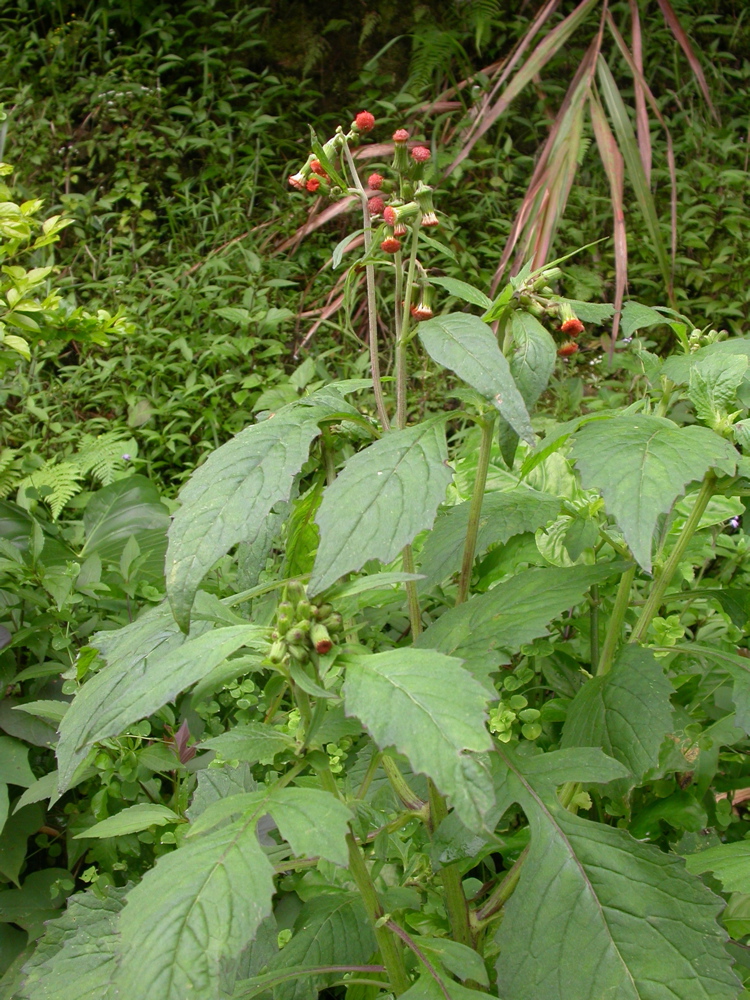
Crassocephalum crepidioides is an erect annual herb in the daisy family reaching 12-47 inches (30-120 cm) tall, with a single ribbed stem that branches in the upper portion and is often tinged purple. Leaves are alternate, ovate to elliptic, 2-7 inches (5-18 cm) long, with coarsely and irregularly toothed margins and occasional small lobes near the base; the foliage is soft and slightly fleshy. Flower heads are cylindrical, 0.4-0.5 inch (10-13 mm) long, and nodding before opening, carried in loose terminal clusters. Each head holds only tubular disc florets, with no ray florets; the floret tips are brick-red to orange-brown and project just beyond the green involucre. The fruit is a ribbed achene about 0.1 inch (2-2.5 mm) long topped with a tuft of white pappus hairs that carry the seed on wind. In warm climates plants flower and set seed within a few months of germination and complete their life cycle in a single season. A single plant produces several hundred wind-dispersed seeds, and the species establishes in disturbed ground, where it is treated as a weed across much of the tropics. Leaves contain pyrrolizidine alkaloids.
Native Range
Native to tropical Africa, where it grows in forest clearings, disturbed ground, and cultivated land. It is now naturalized through much of tropical and subtropical Asia, the Pacific, and eastern Australia, typically at low to moderate elevations in areas with regular summer rainfall.Suggested Uses
Grown in some regions as a leafy green, where young shoots and leaves are cooked before eating. In gardens it appears mainly as a volunteer in vegetable beds and disturbed soil rather than as a planted species. Its weedy habit and wind-borne seed make it persistent once established.How to Identify
Appearance
Size & Dimensions
Height1' - 3'11"
Width/Spread8" - 1'4"
Bloom Information
In frost-free climates flowering continues through much of the year, with peaks during and after the warm wet season. In subtropical eastern Australia heads appear mainly from spring through autumn (September to May). Individual heads open over about a week, and plants flower while soil moisture lasts. Flowering stops once plants are killed by frost or drought.
Detailed Descriptions
Flower Description
brick-red to orange-brownFoliage Description
green, sometimes purple-tinged on veinsGrowing Conditions
Sun Requirements
Requires 4-8 hours of direct sunlight daily
• Full Sun: 6+ hours of direct sunlight
• Partial Shade: 3-6 hours of direct sunlight
• Full Shade: Less than 3 hours of direct sunlight
Water & Climate
Water Needs
Care & Maintenance
Care Guide
Grows in full sun to part shade in most moisture-retentive soils, germinating from seed once soil temperatures rise. Seedlings reach flowering size in 8-12 weeks and need steady moisture during that period; growth slows and leaves wilt during extended dry spells. No fertilizing is required on average garden soils, and plants self-sow heavily if seed heads are allowed to mature. Volunteer seedlings number in the dozens around each parent plant and pull out while young. Leaves contain pyrrolizidine alkaloids, which are linked to cumulative liver damage when consumed regularly. The species is regarded as a weed in many regions and spreads into adjacent gardens and farmland by wind-blown seed.Pruning
No pruning is needed for this short-lived annual. Removing spent flower heads before the pappus develops reduces self-seeding and limits spread into surrounding ground. Whole plants can be cut or pulled at the end of the season once they begin to yellow.Container Growing
Suitable for container growing
Minimum container size: 2 gallons
Toxicity Warning
Toxic to humansPlanting Guide
Planting Methods & Timing
Planting Method
direct sow
Days to Maturity
56–84 days
Plant Spacing
12 inches