Image 1 of 12
1 / 12
Plant Reference
Cosmos, Genus, atrosanguineus, Species,
- Genus & species
chocolate cosmos
Central and western Mexico (extinct or nearly so in wild; maintained through garden cultivation since the late 19th century)
Overview
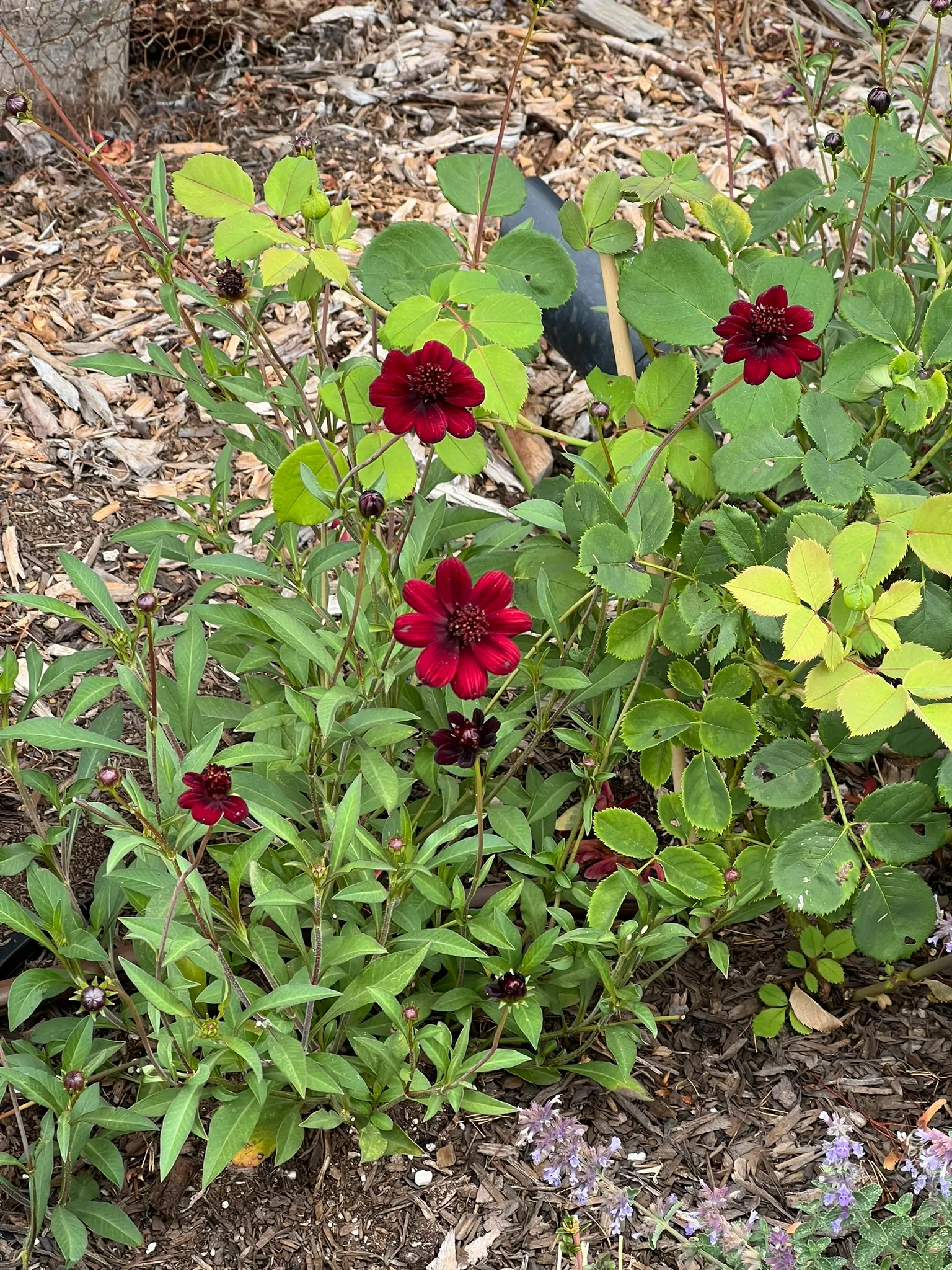
Cosmos atrosanguineus is a tender tuberous perennial reaching 18–24 inches (45–60 cm) tall and 12–18 inches (30–45 cm) wide, grown as a seasonal annual in most of North America and as a tuberous perennial in USDA zones 8–11. Stems are slender, branched, green to reddish, arising from fleshy tuberous roots that function as the overwintering storage organ. Leaves are pinnately divided, 3–5 inches (8–13 cm) long, with narrow lance-shaped segments in medium green. Flower heads are solitary on long stalks, 1–1.5 inches (2.5–4 cm) across, with 8 velvety dark maroon-red to near-black ray florets surrounding a small dark maroon disc — individual florets are silky-textured and read as near-black in most lighting conditions, carrying a deeper pigmentation than the typical burgundy-red cosmos cultivars. A warm chocolate scent (sometimes described as cocoa-like or vanilla-chocolate) arises from the flowers and is most perceptible during warm afternoons when air temperatures exceed 70°F (21°C). The species does not set viable seed in most garden conditions because modern plants descend from a single vegetatively propagated clone, so propagation is by division of tubers or by cuttings rather than by seed. The species is considered extinct or nearly so in its wild Mexican habitat and persists primarily through garden cultivation, having been maintained in ornamental horticulture since its introduction to European gardens in the late 19th century. Not known to be toxic to pets or humans.
Native Range
Cosmos atrosanguineus is native to central and western Mexico, documented historically from oak and pine-oak woodland margins at moderate elevations. The species is considered extinct or nearly so in the wild; surviving populations in cultivation descend largely from a single vegetatively propagated clone introduced to European horticulture in the late 19th century.Suggested Uses
Used in mixed borders, cutting gardens, or containers of 3–5 gallons (11–19 L) at 12–15 inch (30–38 cm) spacing, with positioning near seating, pathways, or container groupings where the warm-afternoon chocolate scent can be smelled at close range. The near-black maroon flower color reads as a strong tonal contrast against lighter companion flowers and silver foliage — pairing with silver-leaved Artemisia 'Powis Castle' or pale pink Diascia cultivars heightens the near-black effect through simultaneous contrast. Cut stems hold 5–7 days in water when stems are cut at the point where 1–2 florets on a stem have opened. The plant does not grow well in heavy clay soils, waterlogged positions, deep shade, or in-ground positions in USDA zone 7 and colder without tuber lifting and indoor winter storage.How to Identify
Appearance
Size & Dimensions
Height1'6" - 2'
Width/Spread1' - 1'6"
Bloom Information
Solitary flower heads 1–1.5 inches (2.5–4 cm) across on long stalks with 8 velvety dark maroon-red to near-black ray florets appear from June through first frost in annual culture, typically July through October in USDA zones 5–8. Peak bloom runs July through September. In USDA zones 9–11, flowering may extend nearly year-round with reduced output December through February. Individual flower heads last 5–7 days; plants produce new buds continuously at branch tips. The chocolate scent is strongest on warm afternoons above 70°F (21°C).
Detailed Descriptions
Flower Description
Very dark maroon-red to near-black; velvety silky-textured 8 ray florets 1-1.5 inches across with small dark maroon disc; warm chocolate (cocoa-like) scent perceptible on warm afternoons above 70°FFoliage Description
Medium green; pinnately divided 3-5 inches long with narrow lance-shaped segmentsGrowing Conditions
Sun Requirements
Requires 6-12 hours of direct sunlight daily
• Full Sun: 6+ hours of direct sunlight
• Partial Shade: 3-6 hours of direct sunlight
• Full Shade: Less than 3 hours of direct sunlight
Care & Maintenance
Care Guide
Grow in full sun with 6 or more hours of direct light in well-drained loam or sandy loam at pH 6.0–7.0. In USDA zones 7 and colder, start tubers indoors 4–6 weeks before last frost or purchase transplants, and set plants outdoors after last frost when soil has warmed to at least 60°F (16°C). In USDA zones 8–9, tubers may overwinter in the ground with a protective mulch layer of 3–4 inches (8–10 cm) over the planting area. Water when the top 2 inches (5 cm) of soil are dry; overwatering causes tuberous root rot, so well-drained positions and measured irrigation are essential for plant survival. Apply a balanced fertilizer (10-10-10) monthly during the growing season. Lift tubers after first frost in USDA zones 7 and colder; dry for 2–3 days, then store in barely damp peat or vermiculite at 40–50°F (4–10°C) through winter. Aphids occasionally cluster on growing tips but do not typically cause significant plant damage.Pruning
Deadhead spent flower heads by cutting back to the next lateral bud; this keeps the plant forming new buds and extends the bloom season by 2–3 weeks compared with unpruned plants. Cut back by one-third in midsummer if plants become leggy or if the first bloom flush is exhausted. After the first frost in USDA zones 7 and colder, cut stems back to 2–3 inches (5–7.5 cm) above the tuber before lifting and storing the tubers for winter.Pruning Schedule
Prune: August & October
summerfall
Container Growing
Suitable for container growing
Minimum container size: 3 gallons