Corallorhiza, Genus, maculata, Species,
- Genus & species
spotted coralroot
Overview
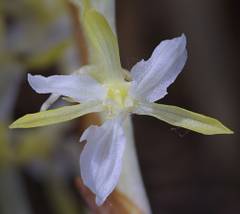
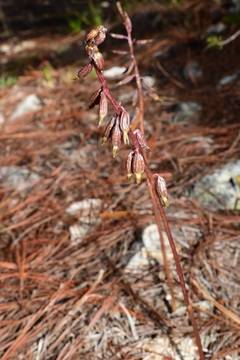
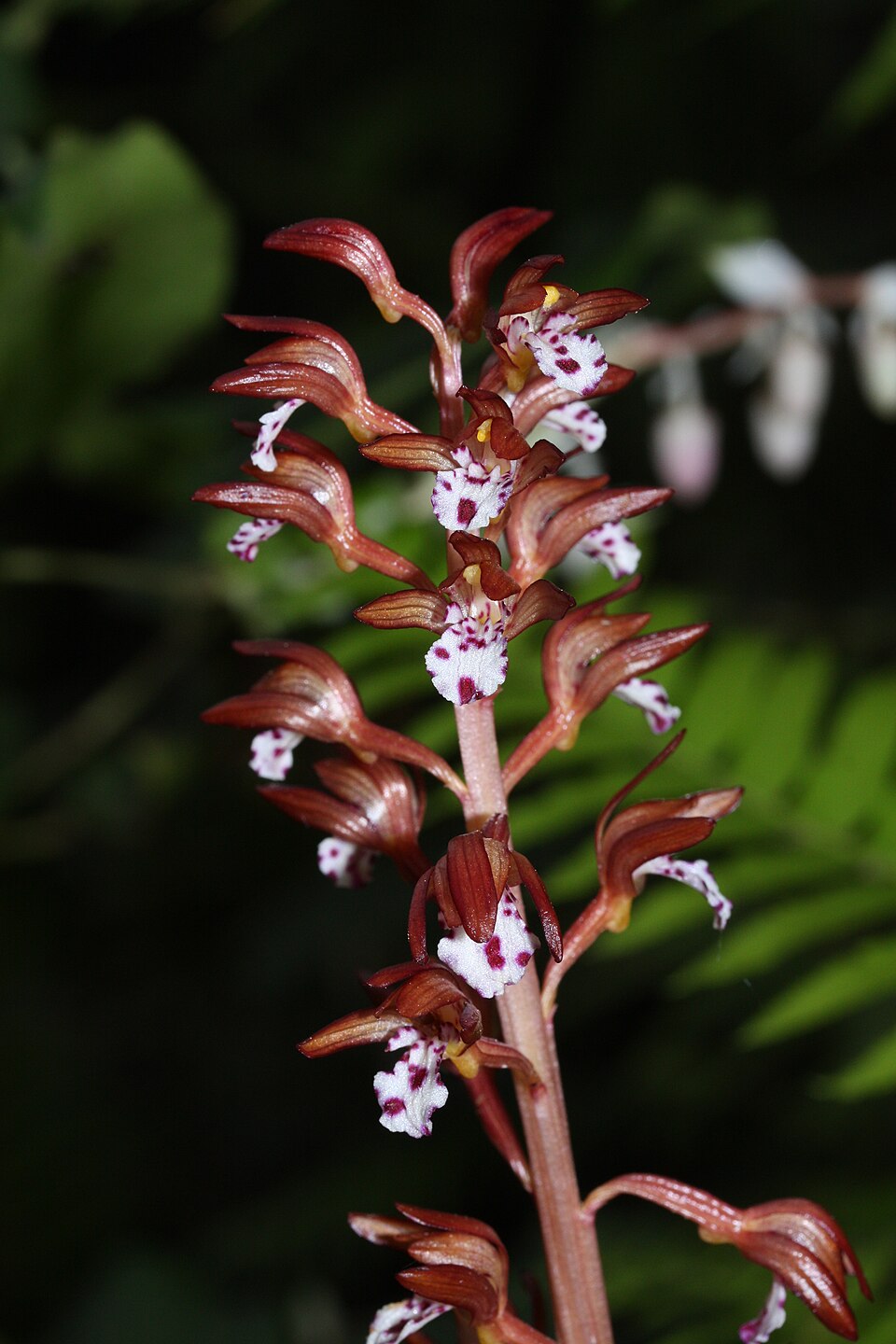
Corallorhiza maculata is a leafless, non-photosynthetic perennial orchid that draws its nutrients from soil fungi rather than producing chlorophyll. It sends up reddish-brown to purplish or yellowish flowering stems 8-20 inches (20-50 cm) tall, with no true leaves, only a few thin sheathing scales at the base. Each stem carries 10-40 small flowers, each about 0.5 inch (1.3 cm) across, with reddish to brownish sepals and petals and a white lower lip marked with crimson or purple spots. Underground, the plant forms a branched, coral-like mass of rhizomes, which gives the group its common name. Flowering occurs from late spring through summer, depending on elevation. Dry capsules release dust-like seeds. Because it relies on specific soil fungi, it cannot be transplanted or cultivated and appears only where its fungal partners grow. The stems emerge, flower, and wither within a few weeks, with no growth visible above ground the rest of the year.
Native Range
Native to North America, widespread across Canada and the United States, from Alaska and Newfoundland south through the mountains to Mexico and Central America. Grows in the humus and leaf litter of shaded coniferous and mixed forests, where its fungal partners occur.Suggested Uses
Found in undisturbed coniferous and mixed forests rather than gardens, since it cannot be cultivated. It is valued in native plant study and forest conservation as an indicator of intact soil-fungus networks. Observation in place is the only practical use, as collection or transplanting kills the plant.How to Identify
Appearance
Size & Dimensions
Height8" - 1'8"
Width/Spread4" - 8"
Bloom Information
Detailed Descriptions
Flower Description
reddish-brown with white spotted lipGrowing Conditions
Sun Requirements
Tolerates up to 2 hours of direct sunlight daily
• Full Sun: 6+ hours of direct sunlight
• Partial Shade: 3-6 hours of direct sunlight
• Full Shade: Less than 3 hours of direct sunlight