Conoclinium, Genus, coelestinum, Species,
- Genus & species
blue mistflower
Eastern North America (from southern New York and New Jersey south through the Atlantic and Gulf coastal plains to Florida and west through Texas, Oklahoma, and Kansas to eastern Nebraska); moist meadow margins, streambank habitats, ditch edges, and disturbed open positions where consistent moisture and full-to-partial sun create the conditions the species evolved with.
Overview
Conoclinium coelestinum (synonym Eupatorium coelestinum — the species was reclassified from Eupatorium into the resurrected genus Conoclinium during the late-20th-century molecular-phylogeny revision of the Eupatorium sensu lato complex) is blue mistflower (also called hardy ageratum), a native eastern North American perennial in the daisy family (Asteraceae, tribe Eupatorieae) growing 18-30 inches (45-75 cm) tall and spreading 24-36 inches (60-90 cm) or more by underground stolons. The species name 'coelestinum' is Latin for 'sky-blue' or 'heavenly blue' and references the lavender-blue to violet-blue flower color that distinguishes the species from most other native Asteraceae perennials of the eastern North American flora. The species produces dense flat-topped fluffy flower clusters of soft lavender-blue color from August through October across a 6-week active flowering window — the flower clusters resemble the tender annual Ageratum houstonianum (the unrelated bedding plant from which the alternate common name 'hardy ageratum' derives), and the visual similarity is the historical reason for the common-name connection between the two species despite their different genus and tribal placement within the family. Each individual flower head is composed of 35-70 disc florets with no ray florets — a rayless composite flower head architecture typical of the Eupatorieae tribe within the Asteraceae family that the species shares with Eupatorium (boneset), Eutrochium (Joe-Pye weed), Liatris (blazing star), Mikania (climbing hempvine), and other Eupatorieae genera. The species is among the few true-blue color displays in the late-season North American native perennial flora — most native Asteraceae produce yellow (Solidago, Rudbeckia, Helianthus), white (Boltonia, Eupatorium), or pink-purple (Eutrochium, Symphyotrichum) flowers, and the lavender-blue color of Conoclinium coelestinum contributes a color range that few other late-season native perennials match. The bloom timing coincides with the eastern monarch butterfly (Danaus plexippus) migration south to the Mexican overwintering grounds, and the species is a recurring late-season nectar source for migrating monarchs and other late-season butterflies (skippers, sulphurs, painted ladies, hairstreaks); the late-season nectar role places C. coelestinum alongside Solidago and Symphyotrichum as one of the principal late-summer native perennials supporting fall-migrating pollinator populations. Cultivation point: the species spreads aggressively by underground stolons that produce a connected colony from each individual plant within 2-3 growing seasons in favorable moisture conditions, and the species is an aggressive spreader rather than a contained clumping perennial. The aggressive spread makes the species a working choice for naturalized plantings, large-scale prairie restorations, and pollinator-meadow plantings where the colonizing habit fills its native ecological role; the same aggressive spread makes the species inappropriate for tightly-contained mixed perennial borders without root-barrier installation or aggressive edging, where the spreading colony will overtake neighboring plantings within a few seasons. Pinching the stems back by half in early June produces a shorter and bushier plant that flowers in late summer with reduced floppiness; the pinch-back is optional but improves the species' performance in cultivated borders. Hardy to zone 5 with reliable performance across zones 5-10. Drought-tolerant in moist substrate, less reliable in extreme drought conditions. Deer avoid the foliage from the bitter Asteraceae-tribe-shared compounds. The species is non-toxic to humans and pets.
Native Range
Conoclinium coelestinum is native to eastern North America with a continuous native range from southern New York and southern New Jersey south through Pennsylvania, Maryland, Virginia, the Atlantic and Gulf coastal plains to Florida, and west through Tennessee, Kentucky, Ohio, Indiana, Illinois, Missouri, Texas, Oklahoma, Kansas, and into eastern Nebraska. The species occurs in moist meadow margins, streambank habitats, ditch edges, lowland prairie positions, floodplain fringes, and disturbed open positions where consistent moisture and full-to-partial sun create the conditions the species evolved with. The species' spreading-stolon native habit and the moist-substrate physiological preference reflect the riparian and moist-meadow native habitat. The species is a foundational perennial for native-plant gardens, prairie-restoration plantings, pollinator-meadow plantings, and rain-garden plantings across the eastern and central United States, with the species' late-season blue bloom and the migrating-monarch nectar-source role together placing the species at the top of native-perennial recommendations for late-season pollinator support.Suggested Uses
Used in naturalized plantings, prairie restorations, pollinator meadows, butterfly gardens, rain gardens, large-scale native-plant gardens, and moist-meadow positions where the spreading-stolon colonizing habit fits the planting role. The species is among the few late-season native perennials with true-blue flower color in the eastern North American native flora, and the species' bloom timing coincides with the eastern monarch butterfly migration south to Mexico — the late-season nectar role places C. coelestinum alongside Solidago and Symphyotrichum as principal native fall pollinator-support perennials. The aggressive stoloniferous spread makes the species inappropriate for tightly-contained mixed perennial borders without root-barrier installation, and the species is sited in naturalized planting positions where the colonizing habit fits its native ecological role. The species pairs with companion late-season native perennials including Solidago (goldenrods), Symphyotrichum (New England aster, smooth aster), Eutrochium (Joe-Pye weed), Helianthus angustifolius (swamp sunflower), and warm-season ornamental grasses (Schizachyrium scoparium, Sporobolus heterolepis) for a multi-species fall-pollinator garden composition where the Conoclinium blue bloom contributes a color contrast against the warm-yellow goldenrods, the white-and-purple asters, and the magenta-purple Joe-Pye weed.How to Identify
Appearance
Size & Dimensions
Height1'6" - 2'6"
Width/Spread2' - 3'
Bloom Information
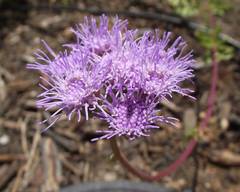
Soft lavender-blue to violet-blue dense flat-topped fluffy flower clusters open from August through October across a 6-week active flowering window. Each individual flower head is composed of 35-70 disc florets with no ray florets — a rayless composite flower head architecture typical of the Eupatorieae tribe within the Asteraceae family. Pollination is by butterflies (the late-bloom timing coincides with the eastern monarch butterfly migration south to Mexican overwintering grounds, and the species is a recurring late-season nectar source for migrating monarchs and other late-season Lepidoptera), bumblebees and other large bees, and beneficial wasps; the broad pollinator support is one of the species' principal ecological contributions to native-plant gardens. The species produces wind-dispersed achene seeds following bloom that support self-sowing recolonization in suitable substrate.
Detailed Descriptions
Flower Description
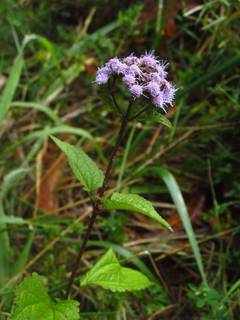
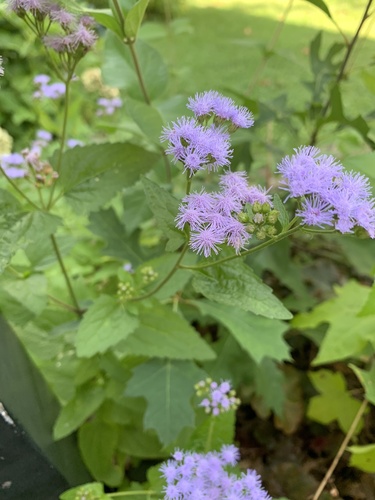
Soft lavender-blue to violet-blue in dense flat-topped fluffy flower clusters resembling the tender annual ageratum (Ageratum houstonianum); each individual flower head is composed of 35-70 disc florets with no ray florets — a rayless composite flower head architecture typical of the Eupatorieae tribe — and the lavender-blue color is among the few true blue color displays in the late-season North American native perennial floraFoliage Description
Medium green; triangular to ovate-deltate leaves with coarsely toothed margins arranged in opposite pairs along upright square-to-rounded stems; the opposite leaf arrangement is typical of the broader Eupatorieae tribe within the Asteraceae and the toothed triangular leaf shape is one of the species' field-identification characters at the foliage levelGrowing Conditions
Sun Requirements
Requires 5-10 hours of direct sunlight daily
• Full Sun: 6+ hours of direct sunlight
• Partial Shade: 3-6 hours of direct sunlight
• Full Shade: Less than 3 hours of direct sunlight
Care & Maintenance
Care Guide
Plant in full sun to partial shade with 5-10 hours of direct light. Moist soil at pH 5.5-7.5 supports the species reliably; the species' moist-meadow native habitat reflects a strong physiological preference for consistent moisture, and the species performs less reliably in extreme drought conditions or in lean dry exposed positions. Watering is during establishment and through extended summer drought to maintain consistent moisture. The species is moderately drought-tolerant once the spreading-stolon root system develops but performs better with consistent moisture than with extended dry conditions. Fertilization is generally not needed because the species is adapted to moist meadow substrate. Pinching the stems back by half in early June produces a shorter and bushier plant that flowers in late summer with reduced floppiness; the pinch-back is optional but improves the species' performance in cultivated border positions where the unpruned 30-inch stems can flop on their own weight. The species spreads aggressively by underground stolons and the aggressive spread is a fact of the species' physiology rather than a controllable trait — root-barrier installation or aggressive seasonal edging contains the spread in cultivated border positions, and the species is generally sited in naturalized plantings, prairie restorations, pollinator meadows, or other positions where the colonizing habit fits the planting role. Annual cleanup is in early spring (March) when stems are cut to ground level before new spring growth emerges. Hardy to zone 5 with reliable performance across zones 5-10.Pruning
Pinch or cut all stems back by half in early June to produce a shorter and bushier plant that flowers in late summer with reduced floppiness; the pinch-back is optional and the unpinched plant flowers earlier with taller and more floppy stems. Cut all stems to ground level in early spring (March) before new spring growth emerges. Contain the rhizomatous spread with root-barrier installation or aggressive seasonal edging if strict containment is required in cultivated border positions.Pruning Schedule
Prune: March & June
summerearly spring