Conocarpus, Genus, erectus, Species,
- Genus & species
green buttonwood
Tropical American and West African coasts
Overview
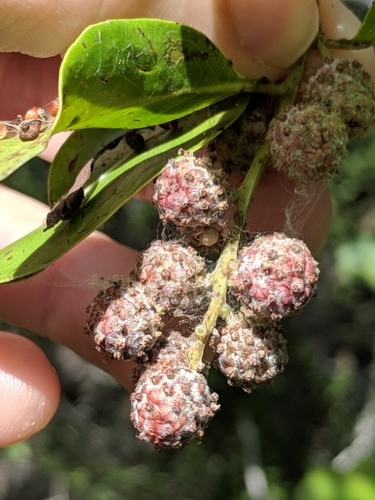
Conocarpus erectus is an evergreen tree or large shrub of tropical and subtropical coasts, growing 20-40 ft (6-12 m) tall, occasionally taller, with a dense, rounded crown and often multiple trunks. It is associated with mangroves but grows on higher, drier ground just inland of them. The leathery, alternate leaves are 1-4 in (2.5-10 cm) long, narrow, and tapered, glossy green in the typical form, with two small glands at the leaf base. Tiny greenish flowers are packed into small rounded heads from spring through summer, followed by clustered, cone-like fruiting heads that break into winged, button-shaped seeds. It grows on coastal dunes, tidal flats, rocky shores, and disturbed coastal ground in full sun. It tolerates salt spray, brackish water, wind, and poor sandy or limestone soils. It is sensitive to hard frost and is limited to frost-free coasts.
Native Range
Native to tropical and subtropical coasts of the Americas and West Africa, including southern Florida, the Caribbean, Mexico, and Central and South America. In the United States it grows naturally along the coasts of central and southern Florida.Suggested Uses
Used as a coastal shade tree, windbreak, screen, or clipped hedge in tropical and subtropical seaside landscapes. It is planted as a street and parking-lot tree in frost-free regions and spaced 10-15 ft (3-4.6 m) apart for screening. It stabilizes coastal soils and shelters and feeds birds and insects.How to Identify
Appearance
Size & Dimensions
Height20' - 40'
Width/Spread15' - 25'
Bloom Information
Detailed Descriptions
Foliage Description
greenGrowing Conditions
Sun Requirements
Requires 6-12 hours of direct sunlight daily
• Full Sun: 6+ hours of direct sunlight
• Partial Shade: 3-6 hours of direct sunlight
• Full Shade: Less than 3 hours of direct sunlight
Care & Maintenance
Care Guide
Conocarpus erectus grows in full sun on sandy, rocky, or limestone soils at a pH of 6.0-8.5 and tolerates salt spray, brackish water, drought, and strong coastal wind. Established trees need little or no irrigation. It grows quickly and tolerates hard pruning, which is often used to keep it as a shrub or hedge. It is damaged or killed by hard frost and suits only frost-free or nearly frost-free coasts in zones 10-11. On alkaline soils it can show minor nutrient deficiencies. Scale insects and sooty mold are the most common problems in cultivation.Pruning
Prune in spring or summer during active growth to shape the canopy or maintain a hedge, as the tree tolerates repeated cutting. Removing crossing and weak branches builds a strong framework on tree forms. Heavy pruning just before cold snaps in marginal areas can leave new growth open to frost damage.Pruning Schedule
Prune: April–June
late springsummer