Condea, Genus, emoryi, Species,
- Genus & species
desert lavender
Overview
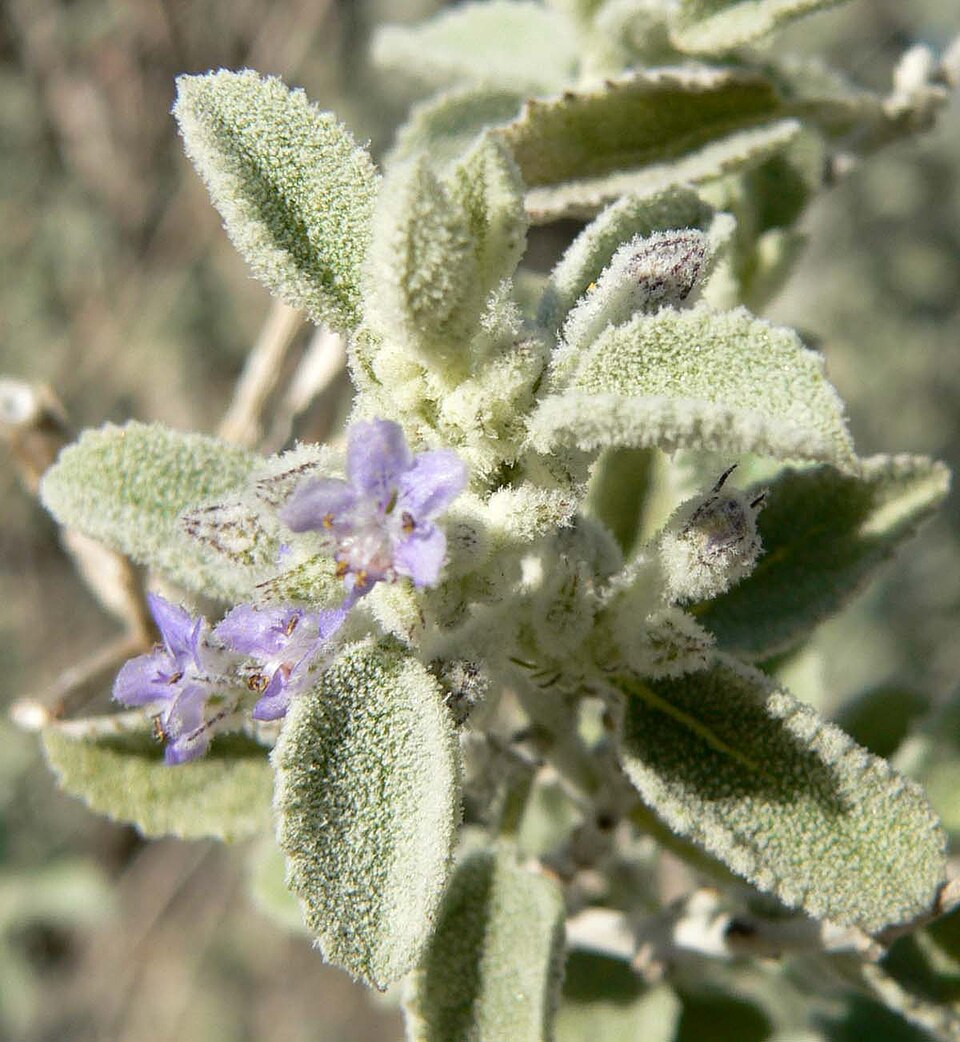
Condea emoryi, desert lavender, is an aromatic evergreen to drought-deciduous shrub in the mint family, growing 3-10 feet (0.9-3 m) tall with slender, ascending, grey-woolly branches. The ovate leaves are 0.5-1.5 inches (1.5-4 cm) long, grey-green, softly hairy, and toothed, releasing a lavender-like scent when crushed. From late winter through spring, and after rain at other times, the stems carry open clusters of small two-lipped flowers about 0.25 inch (6 mm) long in pale violet to lavender-blue. The flowers draw native bees, honeybees, butterflies, and hummingbirds, and desert lavender is a source of desert honey. Native to the Sonoran, Mojave, and Colorado deserts of the southwestern United States and northwestern Mexico, C. emoryi grows along washes, canyon bottoms, rocky slopes, and desert flats where roots can reach deep moisture. It was long known as Hyptis emoryi before being moved to Condea. The grey foliage and deep roots let it withstand intense heat and drought. One limitation is frost sensitivity: hard freezes damage the stems, though plants usually resprout from the base. It drops some leaves in prolonged drought and releafs after rain.
Native Range
Condea emoryi is native to the deserts of the southwestern United States, including Arizona, southern California, and southern Nevada, and to Baja California and Sonora in northwestern Mexico. It grows along desert washes, canyon bottoms, and rocky slopes where runoff collects.Suggested Uses
Condea emoryi is grown in desert and water-thrifty gardens as a flowering shrub, informal screen, and pollinator plant. It suits dry washes, rock gardens, and unirrigated slopes in hot, arid regions. The aromatic foliage and long bloom support bees and hummingbirds in desert landscaping.How to Identify
Appearance
Size & Dimensions
Height3' - 10'
Width/Spread3' - 8'
Bloom Information
Flowering peaks from late winter into spring, roughly January through May, with scattered bloom after summer and autumn rains. The violet flowers open over many weeks and draw bees, butterflies, and hummingbirds. Tiny nutlets ripen in the persistent calyces and drop through the dry season.
Detailed Descriptions
Flower Description
pale violet to lavender-blueFoliage Description
grey-greenGrowing Conditions
Sun Requirements
Requires 6-12 hours of direct sunlight daily
• Full Sun: 6+ hours of direct sunlight
• Partial Shade: 3-6 hours of direct sunlight
• Full Shade: Less than 3 hours of direct sunlight