Comesperma, Genus, spp., Multiple species,
- Genus
- Multiple species
milkwort
Overview
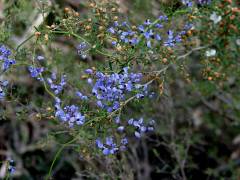
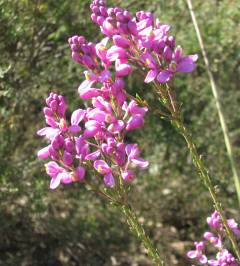
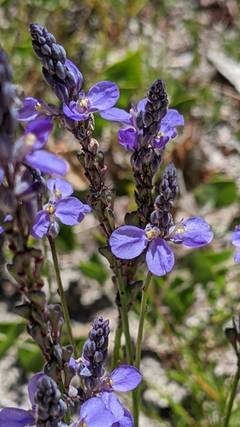
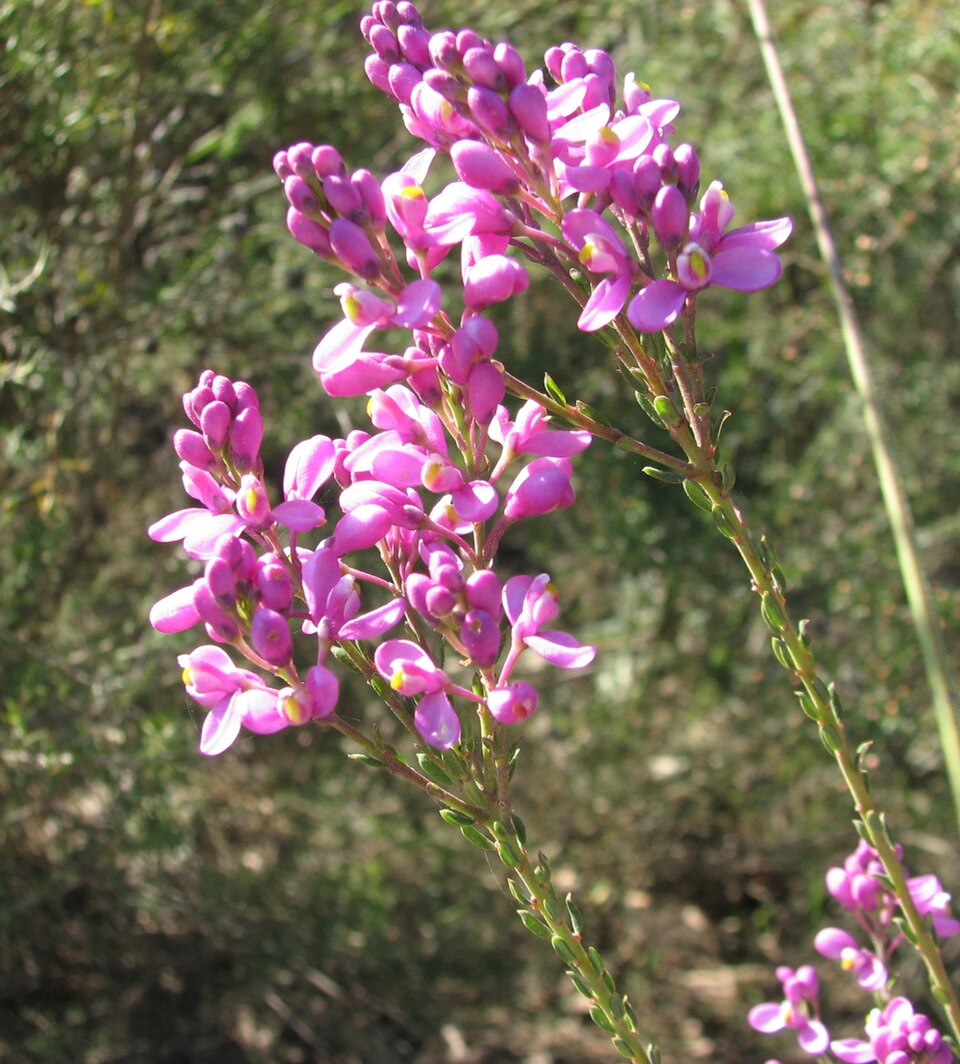
Comesperma is a genus of about 30 species of herbs, small shrubs, and twining climbers in the milkwort family, Polygalaceae, found only in Australia. The genus spans slender twiners such as the love creeper (C. volubile), which climbs 3-10 feet (0.9-3 m) by wiry, nearly leafless green stems, to low wiry shrubs such as the heath milkwort (C. ericinum), 1-3 feet (0.3-0.9 m) tall, with small narrow leaves. The flowers are small and pea-like in outline but built on the milkwort plan, with two petal-like wings flanking a small keel, and open in shades of blue, purple, mauve, pink, or yellow in slender terminal or axillary racemes. Each flower gives way to a flattened, wedge-shaped capsule holding hairy seeds. Most species grow in dry sclerophyll forest, heath, and open woodland on sandy or gravelly, low-nutrient soils, often among shrubs that the climbers scramble through. Flowering is mainly in spring. Plants are adapted to lean, well-drained Australian soils and seasonal dryness, and many resprout or regenerate from seed after fire. They are little known in cultivation and are sensitive to rich soil and frost.
Native Range
Comesperma is endemic to Australia, found across the southern, eastern, and western parts of the continent, including Tasmania. It grows in dry sclerophyll forest, heathland, mallee, and open woodland, mostly on sandy or gravelly soils low in nutrients.Suggested Uses
Comesperma is grown occasionally in native Australian gardens, heath and woodland plantings, and among shrubs the twiners can climb through, where the blue or purple spring flowers thread among other plants. The flowers draw native bees. Its need for lean, sharply drained soil and a warm climate makes it unsuited to rich or cold gardens.How to Identify
Appearance
Size & Dimensions
Height1' - 10'
Width/Spread1' - 4'
Bloom Information
Flowering occurs mainly in spring, from roughly August to November in the southern hemisphere, with some species extending into summer. The small wing-petaled flowers open along slender racemes and draw native bees. Flattened capsules follow and shed hairy seeds.
Detailed Descriptions
Flower Description
blue to purpleFoliage Description
greenGrowing Conditions
Sun Requirements
Requires 5-10 hours of direct sunlight daily
• Full Sun: 6+ hours of direct sunlight
• Partial Shade: 3-6 hours of direct sunlight
• Full Shade: Less than 3 hours of direct sunlight