Collinsia, Genus, spp., Multiple species,
- Genus
- Multiple species
blue-eyed marys
SunPart Shade – Full Sun
WaterMedium
Overview
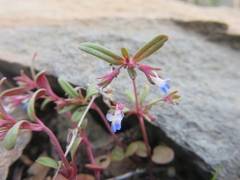
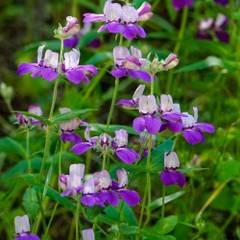
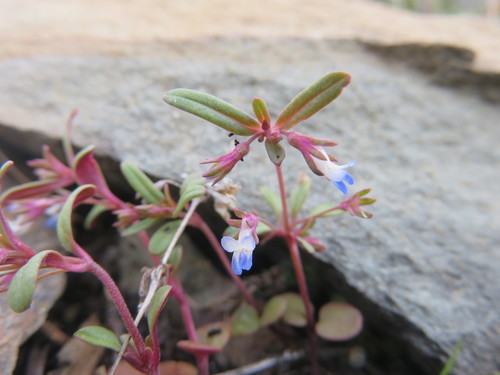
Collinsia is a genus of cool-season annual wildflowers in the plantain family, native to North America. Plants are slender and upright, 4-24 inches (10-60 cm) tall, with thin, often-branched stems and opposite to whorled leaves 0.5-3 inches (1-8 cm) long, lance-shaped to oblong with smooth or toothed margins. The two-lipped tubular flowers, 0.3-0.8 inch (8-20 mm) long, are carried in tiered whorls around the upper stem; the upper lip is usually white and the lower lip blue to violet or pink, with the central lobe folded into a keel that hides the stamens. Bloom comes in spring, lasting 4-8 weeks before plants set seed and die with the onset of summer drought. In C. heterophylla, the whorled flower tiers resemble stacked pagodas, the source of the name Chinese houses. Seed capsules split to release several small seeds that germinate with fall and winter rains. Foliage often turns bronze or purplish in strong sun or cold. Across the genus, roughly 20 species range from open woodland and grassland to disturbed slopes, most concentrated in California. Plants are shallow-rooted and short-lived, declining quickly once soil dries.
Native Range
The genus Collinsia is native to North America, with the greatest concentration of species in California and the western United States and a few species, such as C. verna, extending into the eastern and central states. Plants grow in open woodland, chaparral, grassland, and on moist, partly shaded slopes, often appearing in large numbers after wet winters. Most species favor well-drained soils that dry through summer.Suggested Uses
Grown in wildflower meadows, woodland-edge plantings, and native and pollinator gardens, sown at roughly 6-10 inch (15-25 cm) spacing or broadcast for drifts. Suited to spring color in informal and naturalistic plantings that dry through summer. Container culture is possible in deep pots that retain spring moisture.How to Identify
Appearance
Size & Dimensions
Height4" - 2'
Width/Spread4" - 1'
Bloom Information
Blooms in spring, generally March through May in mild-winter regions and April through June at higher elevations or in colder areas. Individual plants flower for 4-8 weeks before setting seed. Bloom timing follows winter rainfall, with earlier and heavier flowering after wet winters. Plants finish and dry as summer heat arrives.
Detailed Descriptions
Flower Description
white upper lip with blue, violet, or pink lower lipFoliage Description
green, bronze-tinged in sun or coldGrowing Conditions
Sun Requirements
Requires 3-6 hours of direct sunlight daily
• Full Sun: 6+ hours of direct sunlight
• Partial Shade: 3-6 hours of direct sunlight
• Full Shade: Less than 3 hours of direct sunlight
Water & Climate
Water Needs
Care & Maintenance
Care Guide
Seed is sown in fall or very early spring onto open, well-drained soil, germinating in cool, moist conditions; seedlings tolerate light frost. Plants grow in part shade to full sun and need moisture through the growing season but decline in waterlogged ground. No fertilizer is needed in average soils, and excess nitrogen produces weak, floppy stems. Aphids may gather on flower stalks in spring. Plants self-sow where soil is left undisturbed, returning from seed the following year. They finish their life cycle by early summer and are cleared once seed has dropped.Pruning
No pruning is required for these annuals. Spent plants are pulled or cut at the base once flowering ends and seed has set. Leaving some plants to dry in place allows self-seeding for the next season.Container Growing
Suitable for container growing
Toxicity
Non-toxicPlanting Guide
Planting Methods & Timing
Planting Method
direct sow
Direct Sow Timing
Fall or early spring, onto cool, moist soil
Days to Maturity
60–90 days
Plant Spacing
8 inches