Cocos, Genus, nucifera, Species,
- Genus & species
coconut palm
Debated; likely Indo-Malayan region or western Pacific
Overview
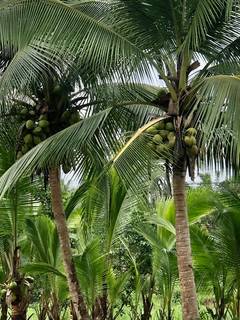
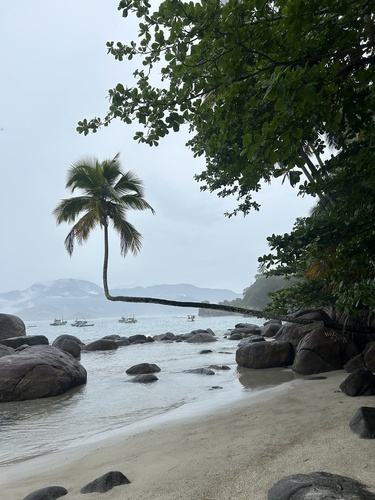
Cocos nucifera is the coconut palm, growing 360–960 inches (900–2,400 cm) for tall varieties (dwarf varieties reach 120–360 inches / 300–900 cm). Pinnate fronds 108–216 inches (270–540 cm) on a single trunk that often develops a lean or curve. The coconut is a drupe (not a true nut) — the outer husk (exocarp), the fibrous layer (mesocarp/coir), the hard shell (endocarp), the white meat (endosperm), and the coconut water (liquid endosperm inside the cavity) are all commercially used. A mature palm produces 50–200 coconuts per year. Coconuts weigh 3–4 lb (1.4–1.8 kg) and fall from heights of 360–960 inches (900–2,400 cm) — a hazard beneath the canopy. The origin is debated but likely the Indo-Malayan region or western Pacific; the buoyant coconut fruit floats in seawater for months and germinates on distant beaches, enabling natural dispersal across the tropics. Two main groups: tall varieties (cross-pollinating, slower fruiting at 6–10 years, taller) and dwarf varieties (self-pollinating, earlier fruiting at 3–4 years, shorter, more susceptible to disease). Lethal yellowing disease (a phytoplasma spread by planthoppers) kills coconut palms in Florida and the Caribbean within 3–5 months; Malayan Dwarf and Maypan varieties have partial resistance. Full sun (8+ hours). Tolerates salt spray and sandy coastal soils. Heavy water needs for fruit production. Non-toxic — all parts edible or commercially used. Zones 10–11. Growth rate is fast for tall varieties.
Native Range
Origin debated — likely the Indo-Malayan region or western Pacific. Distributed across the tropics by natural ocean dispersal (buoyant fruit) and human cultivation for over 4,500 years.Suggested Uses
Grown in zones 10–11 in full sun with ample space. The iconic tropical landscape palm. Position away from pedestrian areas (falling coconut hazard). Select lethal-yellowing-resistant varieties in Florida/Caribbean. Non-toxic — all parts commercially used.How to Identify
Appearance
Size & Dimensions
Height30' - 80'
Width/Spread10' - 20'
Bloom Information
Detailed Descriptions
Flower Description
Yellow, in branched inflorescence enclosed in a woody spatheFoliage Description
Green, pinnate fronds 108-216 inches (270-540 cm)Growing Conditions
Sun Requirements
Requires 8-10 hours of direct sunlight daily
• Full Sun: 6+ hours of direct sunlight
• Partial Shade: 3-6 hours of direct sunlight
• Full Shade: Less than 3 hours of direct sunlight