Clintonia, Genus, uniflora, Species,
- Genus & species
bead lily
Alaska south through BC, Washington, Oregon to California; east through Rocky Mountains to Black Hills
Overview
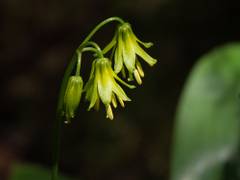
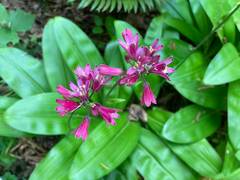
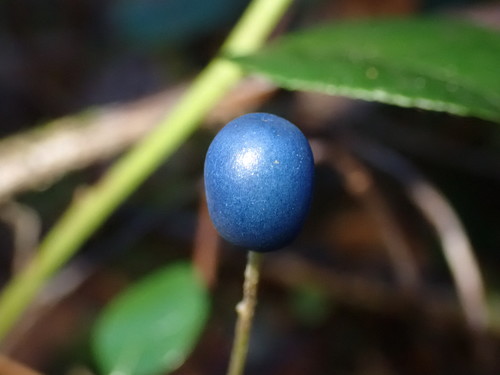
Clintonia uniflora is the bead lily (bride's bonnet, queen's cup), a native perennial growing 4–8 inches (10–20 cm) tall and 6–12 inches (15–30 cm) wide. A solitary white 6-tepaled star-shaped flower 1 inch (2.5 cm) on a short stem above 2–3 deep green glossy oblong-elliptic basal leaves 3–6 inches (7–15 cm) in late spring to early summer. The species name 'uniflora' means 'one-flowered.' The flower develops into a single metallic-blue berry 0.4 inch (10 mm) — the blue bead-like fruit is the species feature (the common name 'bead lily' references this). In the lily family (Liliaceae). Slow-spreading by rhizomes in deep shade under conifer canopy. Requires the specific mycorrhizal associations of undisturbed forest soil — very difficult to establish from nursery stock or transplant (the mycorrhizal network is disrupted by soil disturbance). One of the indicator plants of old-growth and mature conifer forest in the Pacific Northwest. Acidic humus-rich soil (pH 4.5–6.5). The genus Clintonia is named after DeWitt Clinton (1769–1828), governor of New York. The berries are mildly toxic to humans (GI irritant). Native to moist montane and subalpine conifer forest from Alaska to California, east through the Rocky Mountains. Consistent moisture in deep shade. Deer-resistant. Native. Zones 4–8. Growth rate is very slow.
Native Range
Native to Alaska south through BC, Washington, Oregon, and California, east through the Rocky Mountains to the Black Hills, growing in moist montane and subalpine conifer forest.Suggested Uses
Retained as a native wildflower in undisturbed conifer forest in zones 4–8. Indicator of old-growth forest. Very difficult to transplant (mycorrhizal dependency). The metallic-blue berry is the species feature. Berries mildly toxic. Deer-resistant. Native.How to Identify
Appearance
Size & Dimensions
Height4" - 8"
Width/Spread6" - 1'
Bloom Information
Detailed Descriptions
Flower Description
White, 6-tepaled, star-shaped, solitary, 1 inch (2.5 cm), on a short stem above the leavesFoliage Description
Deep green, glossy, oblong-elliptic, 3-6 inches (7-15 cm), 2-3 basal leaves per plantGrowing Conditions
Sun Requirements
Tolerates up to 2 hours of direct sunlight daily
• Full Sun: 6+ hours of direct sunlight
• Partial Shade: 3-6 hours of direct sunlight
• Full Shade: Less than 3 hours of direct sunlight