Cleome, Genus, spp., Multiple species,
- Genus
- Multiple species
spider flowers
Tropical and warm-temperate Americas, Africa, and Asia
SunFull Sun
Overview
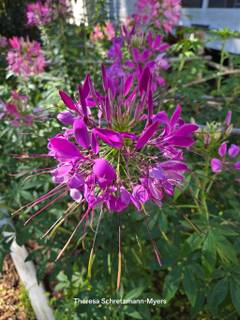
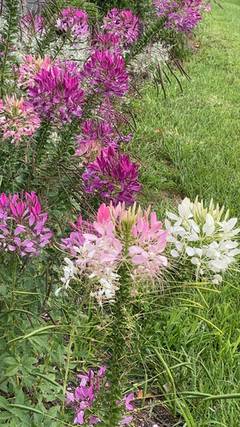
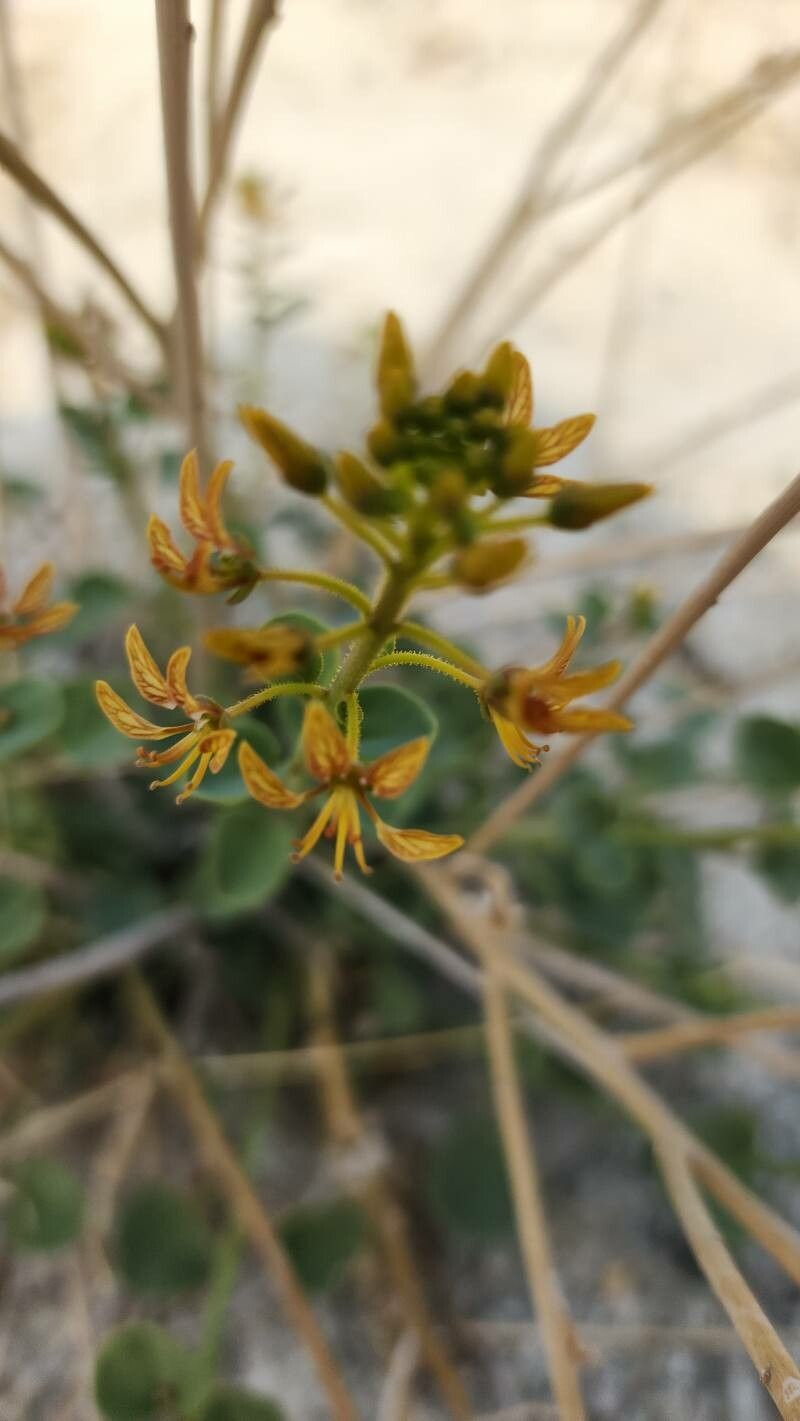
Cleome is a genus of roughly 170 species of annuals, short-lived perennials, and soft-wooded shrubs in the family Cleomaceae. Plants range from 1 to 5 feet (30 to 150 cm) tall, with palmately compound leaves divided into 3 to 7 narrow leaflets; some species carry small spines at the leaf base. Flowers open in elongating terminal racemes, each with four clawed petals and six to many long stamens that extend well beyond the petals, producing the open, airy form behind the common name. Across the genus, flower color spans white, pink, rose, and violet, with some species in yellow. Bloom is followed by slender capsules that split to release small round seeds. The genus is distributed through tropical and warm-temperate regions of the Americas, Africa, and Asia, where species occupy disturbed ground, dry slopes, and seasonally moist flats. In gardens the annual species such as C. hassleriana are grown for summer-long bloom, while several African and American species are studied mainly in botanical and ecological settings. Most species grow in full sun and tolerate dry soils once established; a limitation across the genus is sensitivity to frost, which kills the annual species and damages the tender perennials.
Native Range
Cleome species are native to tropical and warm-temperate regions of the Americas, Africa, and Asia. The genus reaches its greatest diversity in the New World tropics and in southern and eastern Africa, with several species in arid and semi-arid habitats.Suggested Uses
Annual Cleome species are used in summer borders, mass plantings, and the back of mixed beds where their height of 3 to 5 feet (90 to 150 cm) suits a rear position. The flowers draw bees, butterflies, and hovering moths. Several species are grown in pollinator and cottage-style plantings.How to Identify
Appearance
Size & Dimensions
Height1' - 5'
Width/Spread1' - 2'
Bloom Information
Most Cleome species bloom from early summer to first frost, roughly June through October in temperate gardens. Flowering begins at the base of the raceme and continues upward as the stem elongates, so flowers and developing capsules appear on the same spike. In frost-free climates several perennial and shrubby species flower over a longer season.
Detailed Descriptions
Flower Description
white, pink, rose, and violetFoliage Description
greenGrowing Conditions
Sun Requirements
Requires 6-12 hours of direct sunlight daily
• Full Sun: 6+ hours of direct sunlight
• Partial Shade: 3-6 hours of direct sunlight
• Full Shade: Less than 3 hours of direct sunlight
Care & Maintenance
Care Guide
Across the genus, Cleome grows in full sun and well-drained soil of low to moderate fertility, with soil pH from about 6.0 to 7.5. Most species tolerate heat and short dry spells once established and decline in waterlogged ground. Annual species such as C. hassleriana are grown from seed sown after the last frost, germinating fastest after brief exposure to cool temperatures. Tall species may lean in exposed positions and are spaced 18 to 24 inches (45 to 60 cm) apart for mutual support. Self-seeding is common in the annual species and produces volunteer seedlings the following year. Foliage and stems of many species carry a pungent scent when bruised.Pruning
Pruning needs are limited across the genus. Spent racemes of annual species can be removed to limit self-seeding, though developing capsules continue to extend the flowering spike. Shrubby perennial species tolerate cutting back in late winter to control size and encourage branching.Container Growing
Suitable for container growing
Minimum container size: 3 gallons
Toxicity: Not assessed
UnknownPlanting Guide
Planting Methods & Timing
Planting Method
both
Direct Sow Timing
after last frost
Plant Spacing
18 inches