Cladrastis, Genus, kentukea, Species,
- Genus & species
American yellowwood
Southeastern United States (Kentucky, Tennessee, North Carolina, Georgia, Alabama, Missouri, Arkansas, Oklahoma; limestone bluffs, rich mesic slopes, ravines)
Overview
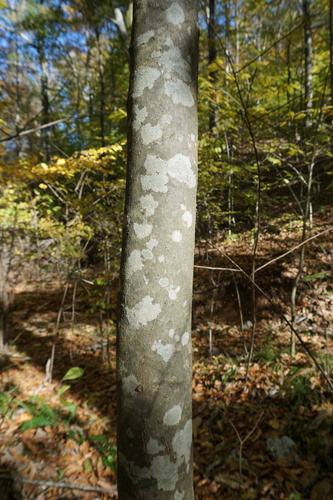
Cladrastis kentukea is a medium spreading deciduous tree in the legume family (Fabaceae) reaching 30–50 feet (9–15 m) tall with a spread of 30–50 feet (9–15 m) at maturity. The crown is broad, rounded, and vase-shaped with a short trunk that often forks low — the low-branching habit and wide spread create a graceful shade-tree silhouette at residential-lot scale. Pendulous wisteria-like panicles 8–14 inches (20–36 cm) long of fragrant white pea-like flowers open in May–June. Flowering is heavy in alternate years, with sparse bloom in off years — this alternate-year pattern is characteristic of the species and does not indicate cultural problems. Leaves are pinnately compound with 7–11 alternate leaflets, each 2.5–4 inches (6–10 cm) long, bright green, turning clear golden-yellow in fall. Bark is smooth and gray, beech-like in texture — a smooth-bark feature uncommon among native North American hardwoods of this size. The heartwood is bright yellow when cut, giving the tree its common name. Flat bean-like seed pods 2–4 inches (5–10 cm) long persist after flowering. Growth rate is moderate at 12–18 inches (30–45 cm) per year. Hardy to zone 4. The branch crotches are weak and prone to splitting in ice and wind storms; structural pruning during the first 5–10 years is essential to establish wide crotch angles and remove codominant leaders. The species is rare in the wild, restricted to scattered limestone bluffs and rich mesic slopes in the southeastern United States.
Native Range
Cladrastis kentukea is native to the southeastern United States, scattered across limestone bluffs, rich mesic slopes, and ravines from Kentucky and Tennessee to North Carolina, Georgia, Alabama, Missouri, Arkansas, and Oklahoma. Wild populations are fragmented and uncommon across the native range.Suggested Uses
Grown as a specimen shade tree in parks, large residential lots, and campuses at 25–40 foot (7.5–12 m) spacing. The broad spreading crown casts dense shade across a 30–50 foot canopy spread. Smooth gray bark combined with golden fall color carries multi-season interest beyond the alternate-year bloom display. Patio and lawn tree use is suitable at mature size. Fragrant white flowers in May–June are the late-spring highlight during heavy-bloom years. The low-branching habit creates a wide canopy at accessible height but requires clearance pruning for walkway and drive passage. Narrow street plantings, small residential lots, and areas with overhead utility lines are not suitable siting contexts given the mature spread.How to Identify
Appearance
Size & Dimensions
Height30' - 50'
Width/Spread30' - 50'
Bloom Information
Pendulous panicles 8–14 inches (20–36 cm) long of fragrant white pea-like flowers open in May–June. Bloom is heavy in alternate years and sparse in intervening years. Bloom duration is 2–3 weeks during a heavy year. Flat bean-like seed pods 2–4 inches (5–10 cm) long ripen in fall and persist through winter.
Detailed Descriptions
Flower Description
White, fragrant, pea-like, in pendulous panicles 8-14 inches longFoliage Description
Bright green in summer turning clear golden-yellow in fall; pinnately compound with 7-11 alternate leaflets 2.5-4 inches eachGrowing Conditions
Sun Requirements
Requires 6-12 hours of direct sunlight daily
• Full Sun: 6+ hours of direct sunlight
• Partial Shade: 3-6 hours of direct sunlight
• Full Shade: Less than 3 hours of direct sunlight
Care & Maintenance
Care Guide
Grows in full sun in average well-drained soil at pH 6.0–8.0, tolerating loam and chalk (alkaline) substrates. The species is native to limestone bluffs and tolerates alkaline soils better than many native trees. Hardy to zone 4. Drought is tolerated once the root system is established, generally after 2–3 years in the ground. Pruning is done in summer (June through August) rather than winter or spring because the species bleeds sap heavily from late-winter and spring cuts; the bleeding does not injure the tree but is unsightly. Ice and wind-storm damage occurs at narrow crotch angles that were not corrected during early pruning. No serious pest or disease problems. The species is nitrogen-fixing (Fabaceae family characteristic), which reduces fertilizer requirements.Pruning
Prune ONLY in summer (June through August). Winter and spring pruning causes heavy sap bleeding from the cuts — the bleeding is cosmetic and does not harm the tree, but is unsightly and is avoidable by pruning in-season. Structural pruning during the first 5–10 years establishes a central leader and wide branch crotch angles; codominant stems are removed early to prevent the weak-crotch splitting that affects mature specimens. Mature trees require minimal pruning beyond dead-wood removal.Pruning Schedule
Prune: June–August
summer