Image 1 of 5
1 / 5
Plant Reference
Cimicifuga, Genus, racemosa, Species,
- Genus & species
black bugbane
Eastern North America (Ontario and New England to Georgia, west to Missouri and Arkansas); moist deciduous woodlands
Overview
Cimicifuga racemosa (now reclassified as Actaea racemosa in Plants of the World Online and most contemporary floras) is a clump-forming herbaceous perennial of eastern North America. Basal mounds of large compound leaves reach 24-36 inches (60-90 cm) tall, with leaves 2-3 times ternate and leaflets 2-4 inches (5-10 cm) long, coarsely toothed, in dark green. In midsummer, unbranched to lightly branched flowering scapes rise 4-8 feet (1.2-2.4 m) above the foliage, carrying slender racemes 12-24 inches (30-60 cm) long of small petal-less flowers whose white color comes from the numerous stamens rather than the sepals or petals. The flowers carry a musky, slightly unpleasant odor. Green fruit capsules develop after bloom and ripen to dark brown in fall, the origin of the common name black cohosh. Plants spread slowly by rhizomes and do not self-seed aggressively. Growth rate is slow, reaching full size in 3-4 years. Hardy to USDA zone 3. Consistent moisture is required; foliage wilts and plant vigor declines on dry sites or in hot-summer climates, which limits use in dry shade.
Native Range
Cimicifuga racemosa is native to eastern North America, from southern Ontario and New England south through the Appalachian Mountains to Georgia and Tennessee, and west to Missouri and Arkansas. It grows in moist rich deciduous woodlands, ravines, and streambanks, typically in partial to deep shade at 500-5,000 feet (150-1,500 m) elevation.Suggested Uses
Planted in shaded woodland borders and naturalized woodland gardens at 24-36 inch (60-90 cm) spacing. The 4-8 foot flowering scapes provide vertical line in shade plantings where few perennials reach that height. Dry shade and hot-summer full-sun exposures fall outside the use range; dry-tolerant shade perennials such as Epimedium or Geranium macrorrhizum cover those conditions.How to Identify
Appearance
Size & Dimensions
Height4' - 8'
Width/Spread2' - 3'
Bloom Information
Slender racemes 12-24 inches (30-60 cm) long of small petal-less white flowers (stamen-based color) borne July through August in zones 3-7. Bloom in zone 6 is typically in mid-July, while zone 3 bloom may not begin until early August; bloom timing shifts 1-2 weeks later per zone northward. Individual racemes remain open 2-3 weeks and the total bloom window is 3-4 weeks.
Detailed Descriptions
Flower Description
White (stamen-based color, petal-less); slender racemes 12-24 inches (30-60 cm); musky odor; July-AugustFoliage Description
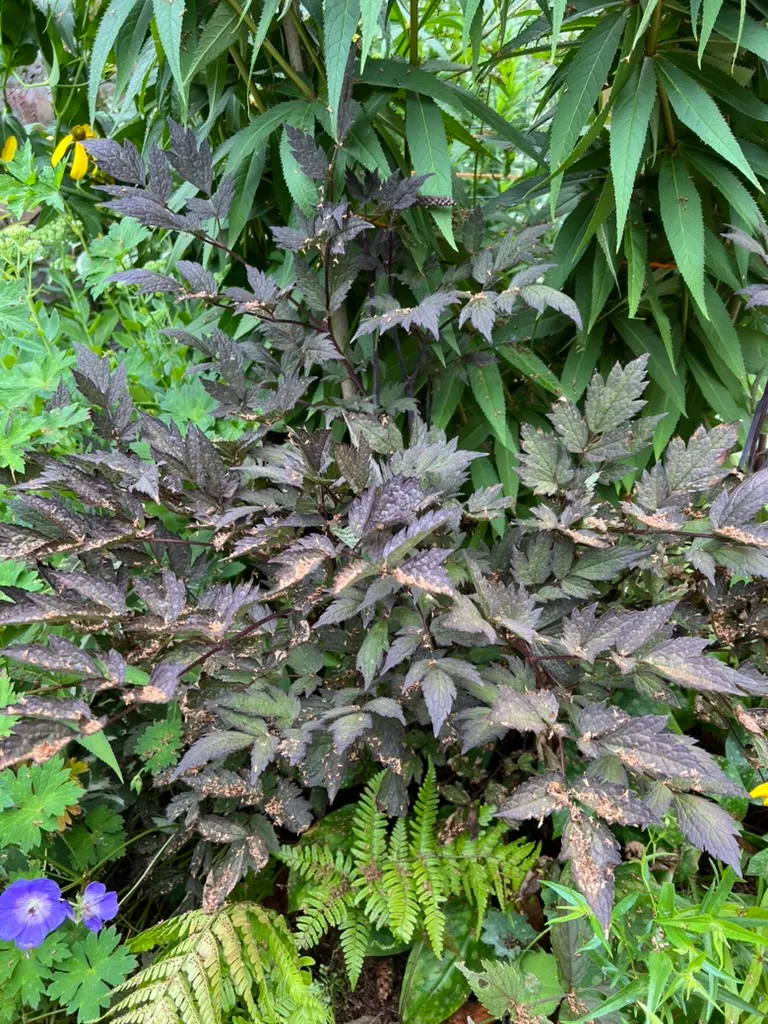
Dark green; 2-3 times ternate compound leaves with coarsely toothed leaflets 2-4 inches (5-10 cm); basal; deciduousGrowing Conditions
Sun Requirements
Requires 2-4 hours of direct sunlight daily
• Full Sun: 6+ hours of direct sunlight
• Partial Shade: 3-6 hours of direct sunlight
• Full Shade: Less than 3 hours of direct sunlight
Care & Maintenance
Care Guide
Grows in partial to full shade in moist, humus-rich, slightly acidic soil at pH 4.5-6.0. Hardy to USDA zone 3. Consistent soil moisture supports full stature and foliage quality; dry soils produce wilt and reduced vigor. Amendment with compost or aged leaf mold at planting supports moisture retention, and a 2-3 inch (5-8 cm) mulch layer maintains cool soil. Light spring fertilization with a balanced slow-release product is adequate. Division is rarely needed; established clumps are long-lived and slow to re-establish after disturbance.Pruning
Flowering stems can be cut to the base after bloom and fruit set, or left standing through fall for the dark capsule display. Foliage is cut to ground level in late fall after frost or in early spring before new growth emerges. Division is infrequent because plants are slow to recover from root disturbance.Pruning Schedule
Prune: March & October
fallearly spring