Cicuta, Genus, spp., Multiple species,
- Genus
- Multiple species
water hemlock
Overview
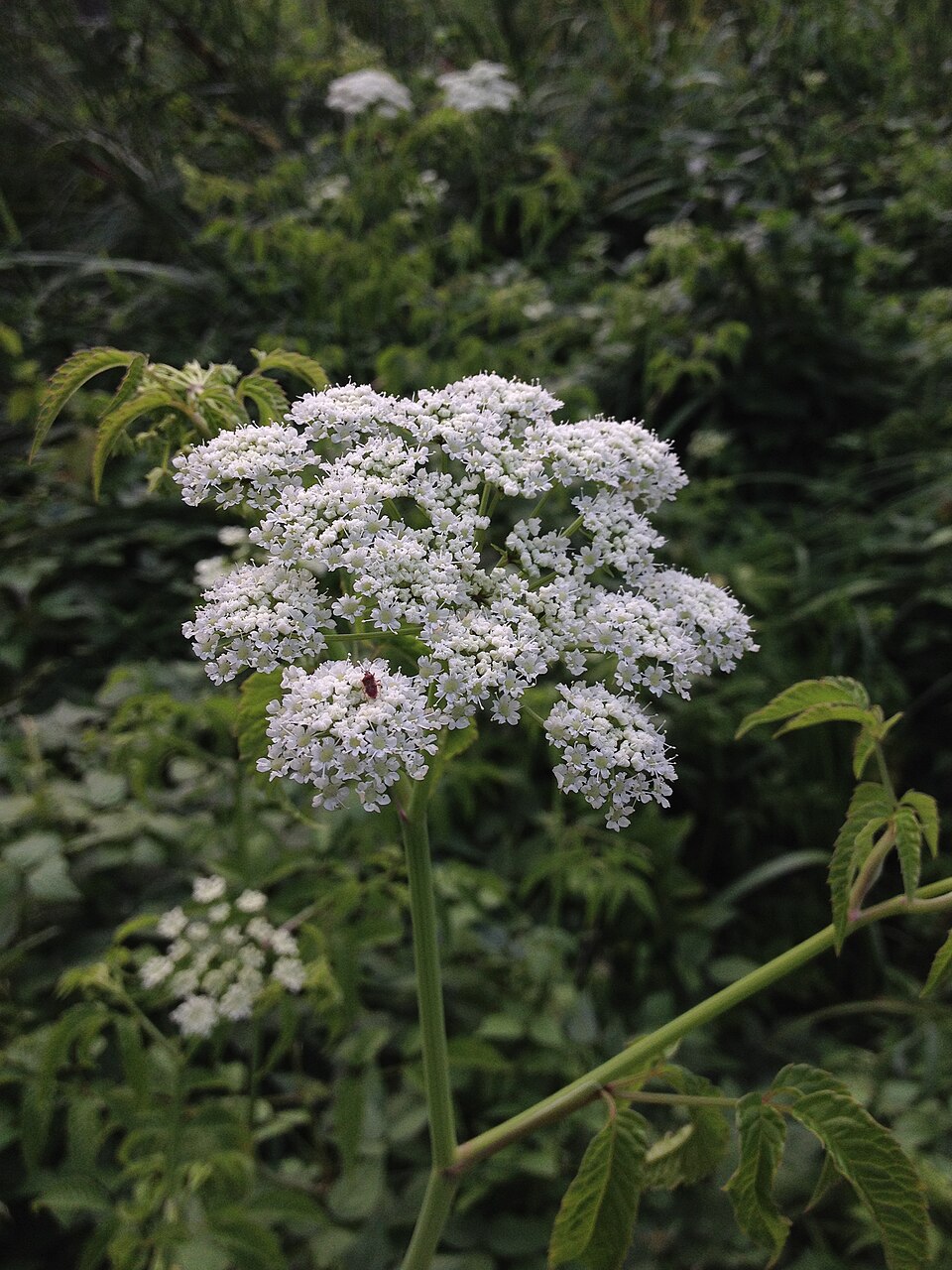
Cicuta is a genus of four species of tall perennial herbs in the carrot family, Apiaceae, native to wet habitats across temperate North America and Eurasia. Plants grow 2-8 feet (0.6-2.4 m) tall from a chambered, tuberous rootstock, with stout, hollow, often purple-streaked stems and two- to three-times divided leaves whose narrow leaflets have sharply toothed margins. In summer the stems are topped by compound umbels of many small white flowers, 2-5 inches (5-12 cm) across, followed by small ribbed seeds. All parts contain cicutoxin, a poisonous compound concentrated in the roots and stem base, and ingestion of even small amounts can cause severe poisoning in people and livestock. The cut rootstock releases a yellowish, oily sap with a parsnip-like smell. Cicuta grows in marshes, wet meadows, ditches, and along streams and pond edges, where its roots sit in saturated soil. The white umbels and divided leaves resemble several edible relatives such as wild carrot and water parsnip, and that similarity is the source of many accidental poisonings. The genus dies back to the rootstock each winter and regrows in spring.
Native Range
Cicuta is native to the temperate Northern Hemisphere, with species spread across most of North America from Alaska and Canada south to Mexico, and others in Europe and northern Asia. It grows in consistently wet ground such as marshes, fens, wet meadows, ditches, and the margins of streams, ponds, and lakes.Suggested Uses
Cicuta is not grown as an ornamental and has no culinary or herbal use because of its toxicity. In the wild its flowers are visited by short-tongued bees, flies, and wasps, and it forms part of native wetland and streambank plant communities. It is mainly of interest for identification, so that it is not mistaken for edible members of the carrot family.How to Identify
Appearance
Size & Dimensions
Height2' - 8'
Width/Spread1' - 3'
Bloom Information
Flowering occurs in summer, generally from June to August depending on latitude and elevation. The white compound umbels open over several weeks and give way to small, ribbed, two-parted seeds. Plants flower in their second and later years once the rootstock has matured.
Detailed Descriptions
Foliage Description
greenGrowing Conditions
Sun Requirements
Requires 4-10 hours of direct sunlight daily
• Full Sun: 6+ hours of direct sunlight
• Partial Shade: 3-6 hours of direct sunlight
• Full Shade: Less than 3 hours of direct sunlight
