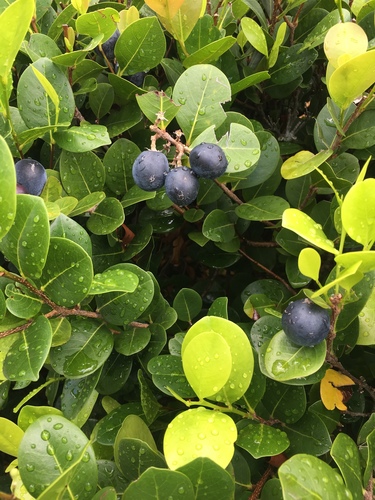
Chrysobalanus, Genus, spp., Multiple species,
- Genus
- Multiple species
coco plum
Overview
Chrysobalanus is a small genus of two or three evergreen shrubs or small trees in the family Chrysobalanaceae, native to tropical and subtropical coasts of the Americas and western Africa. The widespread species, C. icaco, the coco plum, grows as a dense, rounded shrub 3-15 feet (1-4.5 m) tall, though coastal, salt-pruned forms stay low and spreading while inland forms reach small-tree size. The leathery, rounded to broadly oval leaves are 1.5-3 inches (4-8 cm) long, glossy dark green, often with a notched tip and reddish new growth. Small white flowers are borne in branched clusters through much of the year in warm climates, followed by rounded, plum-like fruits about 1-2 inches (2.5-5 cm) across in white, pink, or dark purple, each with a single large seed. The sweet, cotton-textured fruit pulp is edible and the seed kernel is also eaten. Plants grow on beaches, dunes, and coastal scrub and tolerate salt spray, sandy soil, and brief flooding. C. icaco is grown as a hedge and for dune stabilization in the tropics. One limitation is frost sensitivity: plants are damaged below freezing and are limited to zones 10-11 and frost-free coastal areas.
Native Range
Chrysobalanus is native to the coasts and lowlands of tropical and subtropical America, from southern Florida and the Caribbean through Central and South America, and to western tropical Africa. Plants grow on beaches, dunes, coastal scrub, and the margins of wetlands.Suggested Uses
Used as a clipped or informal hedge, screen, and foundation shrub in tropical and coastal gardens, and for dune and shoreline stabilization. The edible fruit is grown for fresh eating and preserves. Salt and wind tolerance suit it to beachfront and seaside planting.How to Identify
Appearance
Size & Dimensions
Height3' - 15'
Width/Spread3' - 15'
Bloom Information
In warm, frost-free climates Chrysobalanus flowers through much of the year, with peaks in spring and summer. The small white flowers are followed within weeks by the plum-like fruit. Flowering and fruiting can overlap, so flowers and ripe fruit often appear together.
Detailed Descriptions
Foliage Description
glossy dark greenGrowing Conditions
Sun Requirements
Requires 4-12 hours of direct sunlight daily
• Full Sun: 6+ hours of direct sunlight
• Partial Shade: 3-6 hours of direct sunlight
• Full Shade: Less than 3 hours of direct sunlight
Care & Maintenance
Care Guide
Grow Chrysobalanus in full sun to part shade in sandy, freely draining soil; the genus tolerates salt spray, coastal wind, and poor soils. Established plants withstand drought but grow faster with regular moisture. The genus needs frost-free conditions and is damaged by cold. Plants accept a wide pH range and brief flooding but not prolonged waterlogging. Light feeding supports growth on poor sand. Plants respond to clipping, which is why they are used for hedges.Pruning
Clip or prune at any time in the frost-free growing season to maintain a hedge or shape the shrub, as the genus tolerates repeated cutting. For fruit, lighter pruning that preserves flowering wood is used. Plants resprout from old wood after hard cutting back.Pruning Schedule
Prune: April–August
springsummer
Container Growing
Suitable for container growing
Minimum container size: 7 gallons
