Chrozophora, Genus, tinctoria, Species,
- Genus & species
dyer's croton
Overview
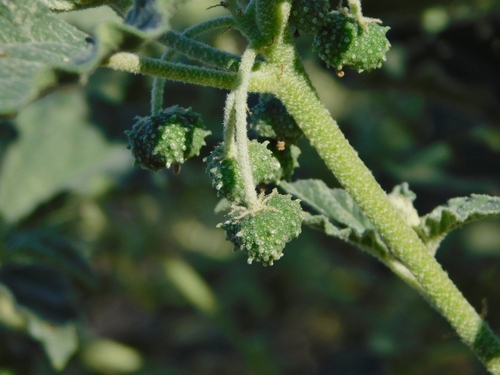
Chrozophora tinctoria is an annual herb in the Euphorbiaceae family, growing 6–18 inches (15–45 cm) tall with a bushy, branching habit. The entire plant is covered in dense stellate (star-shaped) hairs that give it a greyish-green, mealy appearance. Leaves are alternate, ovate to rhomboid, 1–2.5 inches (2.5–6 cm) long, with a slightly undulate margin, on long petioles. The species is monoecious — male and female flowers are borne separately on the same plant. Male flowers are small, yellowish, in short terminal racemes; female flowers are solitary or few in the leaf axils, with a three-lobed ovary developing into a warty, three-seeded capsule 0.3 inch (8 mm) in diameter. The species is historically significant as the source of turnsole (also called folium) — a blue-purple dye extracted from the fruit and used in medieval manuscript illumination, food colouring, and litmus-like pH indication. The dye is produced by soaking linen cloths in the expressed juice of the unripe fruit, which turns from green to blue-violet upon exposure to ammonia vapour. This is one of the oldest known plant-based blue dyes in Europe, predating indigo importation. Native to disturbed, arid ground around the Mediterranean. In the Pacific Northwest, it is not hardy and would be grown only as a curiosity annual in the warmest, driest microsites.
Native Range
Chrozophora tinctoria is native to the Mediterranean basin and western Asia, from the Iberian Peninsula and North Africa east through southern France, Italy, the Balkans, Turkey, Iran, and into Central Asia. It occurs on disturbed, dry, calcareous ground, arable field margins, and waste places at low elevations.Suggested Uses
Grown as a historical curiosity and dye plant in herb gardens, ethnobotanical collections, and educational plantings. The turnsole dye extraction process is a documented medieval craft that can be demonstrated using this species. Not a mainstream ornamental — the plant is visually unassuming. Suited to dry, calcareous, south-facing sites in specialised gardens.How to Identify
Appearance
Size & Dimensions
Height6" - 1'6"
Width/Spread8" - 1'
Bloom Information
Small yellowish male flowers and inconspicuous female flowers appear from June through September. Male racemes are terminal; female flowers are axillary. Three-lobed capsules develop within 3–4 weeks of pollination. The dye-bearing juice is extracted from unripe green fruit, typically harvested in August.
Detailed Descriptions
Flower Description
Yellowish (male); greenish (female)Foliage Description
Greyish-green, mealyGrowing Conditions
Sun Requirements
Requires 6-12 hours of direct sunlight daily
• Full Sun: 6+ hours of direct sunlight
• Partial Shade: 3-6 hours of direct sunlight
• Full Shade: Less than 3 hours of direct sunlight
Water & Climate
Water Needs
Drought Tolerance
Drought tolerant when established
Care & Maintenance
Care Guide
Direct sow seed after the last frost in full sun in well-drained, lean, calcareous soil with a pH of 7.0–8.5. Seeds germinate in 10–14 days at 65–75°F (18–24°C). Thin to 8–12 inches (20–30 cm) apart. Do not fertilise — the species is adapted to nutrient-poor disturbed ground. Water sparingly; drought-tolerant once established. In the Pacific Northwest, site in the warmest, driest microsite available — a south-facing raised bed with alkaline, sandy soil. The species requires a long, warm growing season and may not fruit reliably in cool, wet summers.Pruning
No pruning required. The annual plant completes its life cycle in one season. Remove dead plants in autumn after seed or dye harvest.Container Growing
Suitable for container growing
Minimum container size: 2 gallons
Toxicity: Not assessed
UnknownPlanting Guide
Planting Methods & Timing
Planting Method
direct sow
Direct Sow Timing
After last frost when soil is warm
Days to Maturity
90–120 days
Plant Spacing
10 inches