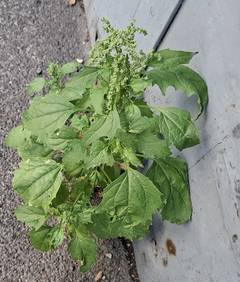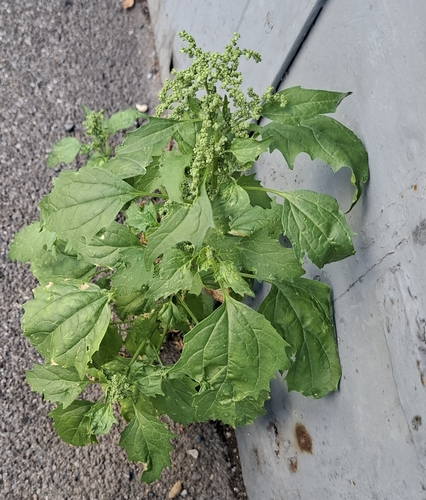
Chenopodiastrum, Genus, spp., Multiple species,
- Genus
- Multiple species
maple and nettle-leaved goosefoots
SunFull Sun – Part Shade
Overview
Chenopodiastrum is a small genus of about five or six species of annual herbs in the family Amaranthaceae (the goosefoot group, formerly Chenopodiaceae), segregated from the broad genus Chenopodium. The plants are native to Europe, Asia, and North Africa and have naturalized widely as weeds of disturbed ground. They are erect, branching annuals 1-3 ft (30-90 cm) tall, with broad, thin, often coarsely toothed or shallowly lobed leaves that recall maple or nettle foliage and may be mealy-coated when young. Tiny greenish flowers without petals are clustered in loose, branched spikes from the upper leaf axils and stem tips through summer and autumn. Each flower gives rise to a small, dry, one-seeded fruit, and a single plant can shed large numbers of seeds. The most familiar species are maple-leaved goosefoot C. hybridum and nettle-leaved goosefoot C. murale, both common weeds of gardens, fields, and waste places. Chenopodiastrum grows quickly in full sun on fertile, disturbed soils and completes its life cycle in a single season. Like other goosefoots, the leaves contain oxalates and saponins and are of limited food value, and the plants can become weedy where they self-seed. Heavy seeding and rapid growth make them persistent in cultivated ground.
Native Range
Chenopodiastrum is native to Europe, temperate and central Asia, and North Africa, and has spread as a naturalized weed across the Americas, Australia, and beyond. The plants grow on disturbed, nitrogen-rich ground such as cultivated fields, gardens, barnyards, roadsides, and waste places.Suggested Uses
Chenopodiastrum has little horticultural use and is generally regarded as a weed rather than a garden plant. The young leaves of some goosefoots have been eaten as a cooked green in times of scarcity, though oxalate content limits their use. The plants serve as food and cover for seed-eating birds and some insects in waste ground.How to Identify
Appearance
Size & Dimensions
Height1' - 3'
Width/Spread8" - 1'6"
Bloom Information
Chenopodiastrum flowers from summer into autumn, generally June to October, the tiny green flowers easy to overlook in branched clusters. Bloom is followed quickly by ripening seed, often within a few weeks. Plants flower and seed until frost ends the season.
Detailed Descriptions
Foliage Description
greenGrowing Conditions
Sun Requirements
Requires 5-12 hours of direct sunlight daily
• Full Sun: 6+ hours of direct sunlight
• Partial Shade: 3-6 hours of direct sunlight
• Full Shade: Less than 3 hours of direct sunlight
Water & Climate
Water Needs
Drought Tolerance
Drought tolerant when established