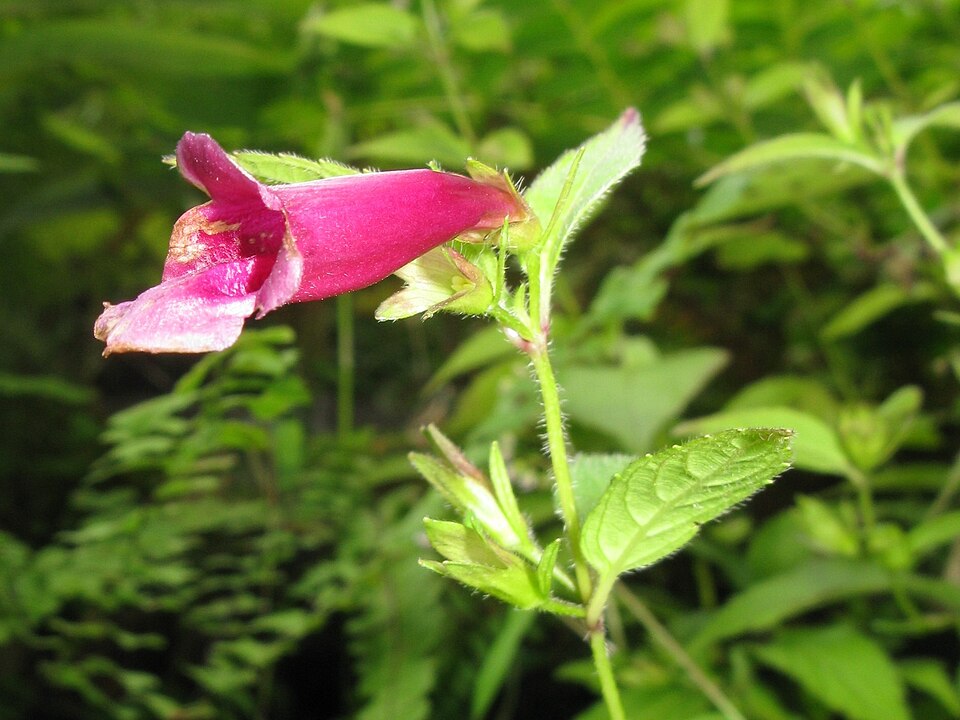
Chelonopsis, Genus, yagiharana, Species,
- Genus & species
Yagihara chelonopsis
Overview
Chelonopsis yagiharana is an upright, clump-forming, herbaceous perennial reaching 18–30 inches (45–75 cm) tall with a spread of 12–18 inches (30–45 cm). Despite the shared common name 'turtlehead,' Chelonopsis is in the mint family (Lamiaceae) and is not closely related to the North American Chelone (Plantaginaceae)—a common point of confusion in horticultural references. The plant carries tubular, two-lipped, rosy-pink to mauve-pink flowers 1–1.5 inches (2.5–4 cm) long in axillary clusters along the upper stems from September through October. The flowers are more tubular and narrower than Chelone, with a less pronounced 'turtle head' shape. Leaves are opposite, ovate to lanceolate, 3–5 inches (8–13 cm) long, medium green, with serrate margins. Stems are square in cross-section (typical of Lamiaceae). Growth rate is moderate. The plant is rarely cultivated outside specialist collections and Japanese woodland gardens. It spreads slowly by short rhizomes, expanding 4–6 inches (10–15 cm) per season under suitable conditions. Requires shade and consistent moisture; heat above 90°F (32°C) and drought cause leaf scorch and bloom failure.
Native Range
Chelonopsis yagiharana is native to Japan (Honshu), where it is endemic to moist mountain forests and shaded streamsides in the Yagihara region and surrounding areas of central Honshu. It occurs at elevations from 1,500 to 4,500 feet (450–1,400 m).Suggested Uses
Planted in woodland gardens, shade borders, and specialist collections at 12–18 inch (30–45 cm) spacing. The September–October bloom carries fall color into shaded settings where most fall-flowering perennials struggle for sufficient light. Functions in Japanese-style woodland gardens. Paired with ferns, Kirengeshoma, and shade-tolerant grasses, the rosy-pink flowers contrast with the surrounding green foliage in a late-season composition. Sunny borders, dry sites, and containers are unsuitable.How to Identify
Appearance
Size & Dimensions
Height1'6" - 2'6"
Width/Spread1' - 1'6"
Bloom Information
Tubular, two-lipped, rosy-pink to mauve-pink flowers 1–1.5 inches (2.5–4 cm) long open in axillary clusters along the upper stems from September through October. Bloom duration is 4–5 weeks. Pollinators include long-tongued bumblebees that can reach the deep tubular nectaries.
Detailed Descriptions
Flower Description
Rosy-pink to mauve-pinkFoliage Description
Medium green, ovate, serrate marginsGrowing Conditions
Sun Requirements
Requires 1-4 hours of direct sunlight daily
• Full Sun: 6+ hours of direct sunlight
• Partial Shade: 3-6 hours of direct sunlight
• Full Shade: Less than 3 hours of direct sunlight
Care & Maintenance
Care Guide
Plant in partial to full shade in moist, humus-rich, well-drained soil. Consistent moisture through the growing season is the single most limiting cultural requirement; drought stress causes leaf scorch and bloom failure. Heat above 90°F (32°C) damages foliage. Cool, sheltered locations matching the cool mountain forests of central Honshu suit the plant. No serious pest or disease problems. Rarely available in the nursery trade; specialist woodland plant nurseries and plant society sales are the primary sources.Pruning
Cut all dead stems to the ground in late fall after frost or in early spring before new growth emerges. No pruning needed during the growing season. Clumps can be divided every 3–4 years in early spring to maintain vigor.Pruning Schedule
Prune: March
early spring