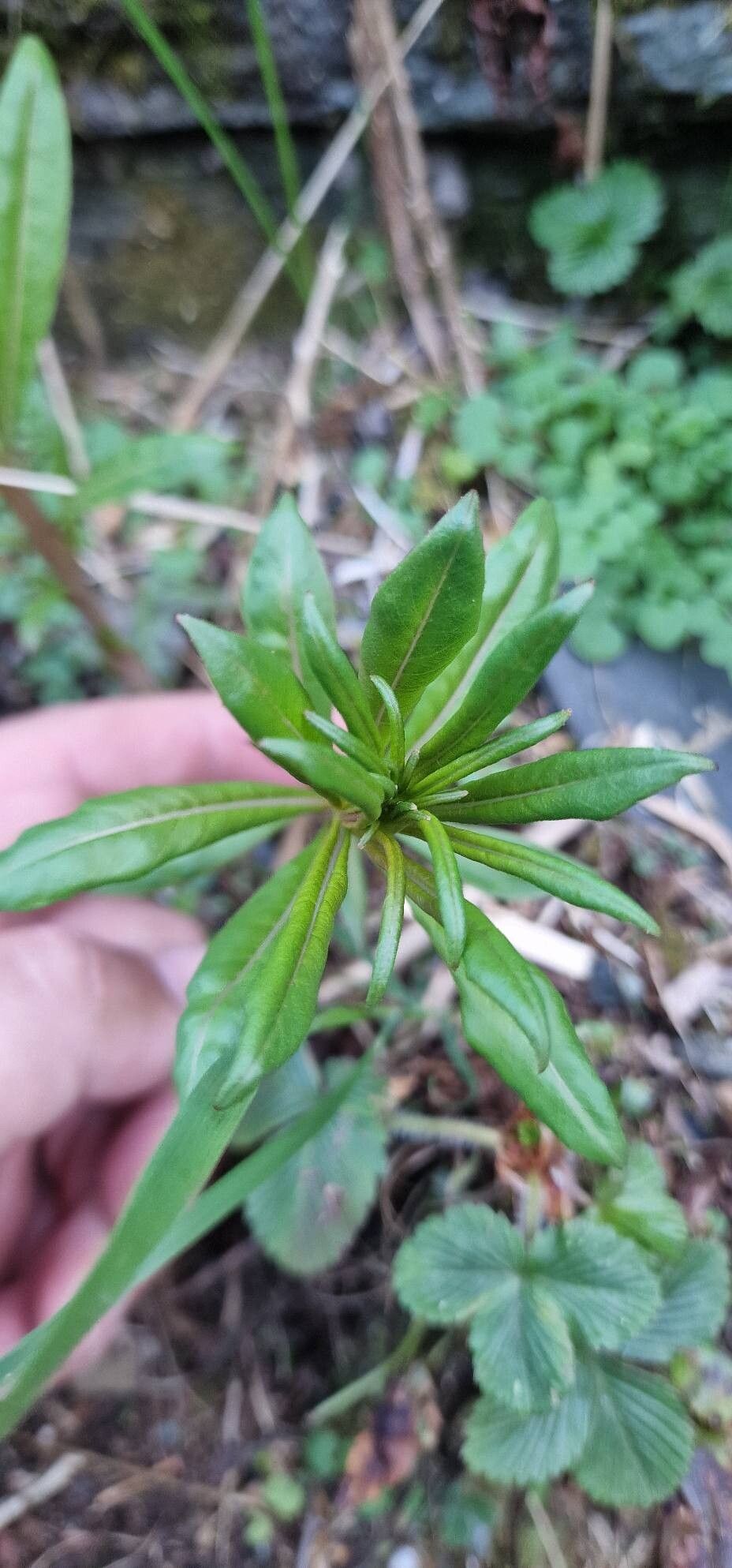
Chamaenerion, Genus, angustifolium, Species,
- Genus & species
fireweed
Overview
Chamaenerion angustifolium is a rhizomatous herbaceous perennial reaching 36-72 inches (90-180 cm) tall and spreading 24-48 inches (60-120 cm) wide via creeping underground stems. Stems erect, slender, glabrous, often reddish at the base. Leaves alternate, lance-shaped, 3-8 inches (7.5-20 cm) long and 0.4-1 inch (1-2.5 cm) wide, dark green above and paler below, with prominent net-like veins separating it from many related Chamaenerion species. Flowers in long terminal racemes 6-18 inches (15-45 cm) tall, opening sequentially from the base upward over 4-6 weeks. Each flower 0.8-1.2 inches (2-3 cm) across with four notched pink-purple to magenta petals and a four-parted curved white style. Bloom June through September across the range. Seed capsules linear, 2-3 inches (5-7.5 cm) long, splitting along four sides in late summer to release 300-500 small seeds with white silky coma for wind dispersal. Spreads 12-24 inches (30-60 cm) per year by rhizomes; a single plant can produce 80,000 wind-borne seeds annually. Foliage turns scarlet to crimson before leaf drop in October. Plants colonize burned ground, road cuts, and clearcuts within 1-2 years and persist 10-30 years before being overtaken by woody succession.
Native Range
Circumboreal across the cool-temperate and boreal Northern Hemisphere, occurring throughout Canada, Alaska, the northern United States, Greenland, Iceland, northern Europe, and northern Asia south to the Caucasus and Himalayas. Found on burned forest sites, road cuts, clearcuts, gravel bars, and disturbed mountain meadows from sea level to 12,000 feet (3,650 m) elevation. Most abundant in the first 5-15 years following fire or land clearing in conifer forests.Suggested Uses
Used in disturbed-land restoration, fire-recovery plantings, large-scale habitat gardens, and roadside meadow plantings at 24-36 inch (60-90 cm) spacing in zones 2-7. Cultivated in apiculture for honey production; commercial honey from C. angustifolium blooms is produced in Canada, Alaska, Russia, and Scandinavia. Aggressive rhizomatous spread limits use in formal gardens and small spaces; root barriers extending 24 inches (60 cm) deep are used to confine plants in mixed plantings.How to Identify
Appearance
Size & Dimensions
Height3' - 6'
Width/Spread2' - 4'
Bloom Information
June through September across the range, with peak bloom in July and August at mid-latitudes and into late September in subarctic zones. Bloom progresses from base to tip of each raceme over 4-6 weeks per plant. Individual flowers last 2-4 days. Bloom timing tracks growing-season heat accumulation; cool wet summers delay peak bloom by 2-3 weeks.
Detailed Descriptions
Flower Description
Pink-purple to magentaFoliage Description
Dark green above, paler belowGrowing Conditions
Sun Requirements
Requires 6-12 hours of direct sunlight daily
• Full Sun: 6+ hours of direct sunlight
• Partial Shade: 3-6 hours of direct sunlight
• Full Shade: Less than 3 hours of direct sunlight
Care & Maintenance
Care Guide
Plants establish rapidly from rhizome divisions or container stock; first-year plants reach 24 inches (60 cm) tall and bloom in their second growing season. Mature plantings tolerate 4-6 weeks without water in zones 4-7. Few pest pressures occur in cultivation; flea beetles may pit foliage in late summer. Rhizomatous spread is aggressive in moist soils at 12-24 inches (30-60 cm) per year; root barriers are required in mixed perennial plantings, and plants are unsuitable for small gardens. Used as a pioneer species in disturbed-land restoration but is excluded from formal beds. Listed as a noxious weed in parts of Australia where it has naturalized.Pruning
Cut spent flower stems back to basal foliage in late September or October before seed pods open to limit wind dispersal of seed. Cut entire plant to ground level after first hard frost. Rhizomes that escape the planting area can be severed at the boundary in spring or fall; plants resprout from any rhizome fragment left in soil.Pruning Schedule
Prune: September–November
fall
Container Growing
Minimum container size: 5 gallons