Chamaedaphne, Genus, calyculata, Species,
- Genus & species
leatherleaf
Circumboreal Northern Hemisphere (northern North America, Europe, Asia)
Overview
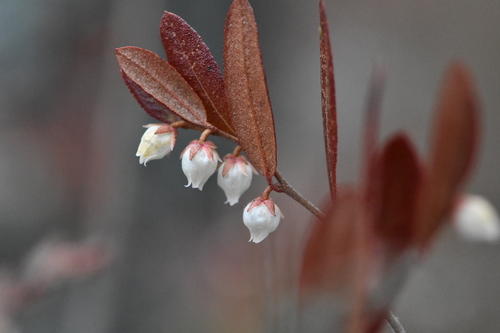
Chamaedaphne calyculata is a low evergreen shrub of northern bogs and peatlands, growing 2-4 feet (0.6-1.2 m) tall and 3-5 feet (0.9-1.5 m) wide, spreading by rhizomes into dense, much-branched colonies. The leathery, oblong leaves are 0.5-2 inches (1-5 cm) long, dull dark green above with tiny rusty scales beneath, and turn bronze to reddish in winter while staying on the plant. In early spring, the upper branches arch over and carry one-sided rows of small, white, urn-shaped flowers about 0.25 inch (6 mm) long, each nodding from a leafy bract. The species grows in acidic, saturated peat in bogs, fens, and pond margins across the cold northern parts of North America, Europe, and Asia, often dominating the shrub layer. The early flowers supply nectar to bumblebees emerging in spring. Like many in the heath family, all parts contain grayanotoxins that are toxic if eaten. Limitations include a strict need for wet, strongly acidic soil, intolerance of drought and lime, and a spreading habit that forms thickets. The plant is suited only to bog gardens and consistently wet, acidic sites rather than ordinary borders.
Native Range
Chamaedaphne calyculata has a circumboreal range, growing across the cold-temperate and subarctic Northern Hemisphere. In North America it ranges from Alaska and Canada south through the northern United States. It grows in acidic bogs, fens, muskeg, and peaty pond margins.Suggested Uses
Grown in bog gardens, peat beds, and the wet, acidic margins of ponds and pools. Used in restoration of peatlands and acidic wetlands within its native range. Suited to consistently wet, acidic sites where most shrubs fail.How to Identify
Appearance
Size & Dimensions
Height2' - 4'
Width/Spread3' - 5'
Bloom Information
Small white urn-shaped flowers open in early spring, generally April into May, before or as new growth begins. They hang in one-sided rows along the upper branches, each flower set above a small leaf. Bloom lasts about two to three weeks. Dry seed capsules follow and persist on the branches.
Detailed Descriptions
Foliage Description
Dark green, bronze in winterGrowing Conditions
Sun Requirements
Requires 4-10 hours of direct sunlight daily
• Full Sun: 6+ hours of direct sunlight
• Partial Shade: 3-6 hours of direct sunlight
• Full Shade: Less than 3 hours of direct sunlight
Care & Maintenance
Care Guide
Grows in full sun to part shade in wet, strongly acidic peat at a pH of 3.5-5.5, in bog, fen, and pond-margin conditions. The soil must stay saturated and acidic; the plant does not tolerate drought, drying, or limy soil. Hardy in USDA zones 2-6, it withstands severe winter cold and a short growing season. No fertilizer is needed in the nutrient-poor peat where it grows. The shrub spreads by rhizome and forms colonies over time. It grows poorly in ordinary garden soil and is limited to bog gardens or naturally wet, acidic ground.Pruning
Little pruning is needed. Old or straggly stems can be cut back after flowering to keep the colony dense. Spreading rhizomes can be trimmed at the edges to limit the colony where space is restricted.Pruning Schedule
Prune: May–June
late spring