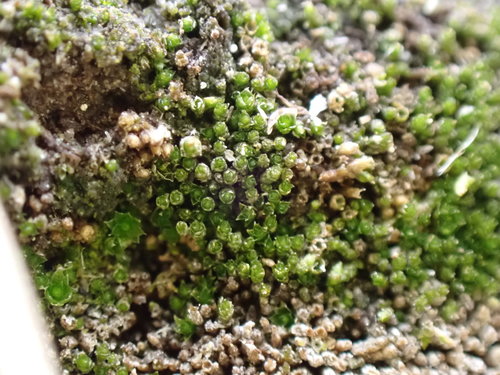
Ceratodon, Genus, spp., Multiple species,
- Genus
- Multiple species
fire moss
SunFull Sun – Part Shade
Overview
Ceratodon is a genus of small acrocarpous mosses in the family Ditrichaceae. The widespread C. purpureus, known as fire moss or redshank, grows on every continent, including Antarctica, and colonises bare, disturbed, and burned ground. Plants form low, dense turfs or cushions usually 0.2 to 1.2 inches (5 to 30 mm) tall, with narrow lance-shaped leaves that curve and twist when dry and spread when moist. The leaves are green to yellow-green, often bronzed or reddish in exposed sites. Like all mosses, Ceratodon has no roots, flowers, or vascular tissue, anchoring instead by thread-like rhizoids and absorbing water across its surface. Reproduction is by spores rather than seed: slender reddish stalks (setae) 0.4 to 1.2 inches (10 to 30 mm) tall rise from female shoots, each bearing a cylindrical, furrowed, often purplish-red capsule that gives the plant its common names. The genus tolerates heat, drought, heavy metals, and pollution that exclude many plants, and is among the first to recolonise scorched soil after fire. It can dry out completely and resume growth when rewetted.
Native Range
Ceratodon has a near-global distribution. C. purpureus occurs on all continents, from the tropics to polar regions, growing on soil, rock, rotting wood, roofs, walls, and recently burned or disturbed ground.Suggested Uses
Grown in moss gardens, green roofs, terraria, and bonsai plantings, and used in restoration of bare or burned ground where few plants establish. It forms a quick green cover on poor substrates and stabilises loose surfaces.How to Identify
Appearance
Colors
Foliage Colors
Fall Foliage Colors
Bloom Information
Mosses do not flower. Ceratodon reproduces by spores released from capsules that mature mainly in spring and early summer in temperate regions, though capsules can appear at other times in mild climates. The reddish capsules are held on wiry stalks and shed spores through a toothed opening at the tip.
Detailed Descriptions
Foliage Description
green to yellow-green, bronzing red in sunGrowing Conditions
Sun Requirements
Requires 4-12 hours of direct sunlight daily
• Full Sun: 6+ hours of direct sunlight
• Partial Shade: 3-6 hours of direct sunlight
• Full Shade: Less than 3 hours of direct sunlight
Care & Maintenance
Care Guide
As a pioneer moss, Ceratodon grows on poor, compacted, sandy, or gravelly substrates in full sun to part shade, including sites too harsh for most plants. It needs no fertile soil and tolerates acidic to neutral conditions, drought, and pollution. Moisture from rain or dew drives growth, and plants turn dormant and brittle when dry, greening again within minutes of wetting. In gardens it appears on its own on bare ground, paths, and container surfaces rather than being deliberately sown. Persistent shade and rich, frequently cultivated soil discourage it.Pruning
Pruning does not apply to this moss. Unwanted patches can be lifted or scraped from paths and pots by hand. The turf re-establishes from spores and fragments if conditions stay open and damp.Container Growing
Suitable for container growing
