Cephalaria, Genus, gigantea, Species,
- Genus & species
giant scabious
Caucasus region (Georgia, Armenia, Azerbaijan) and northeastern Turkey
Overview
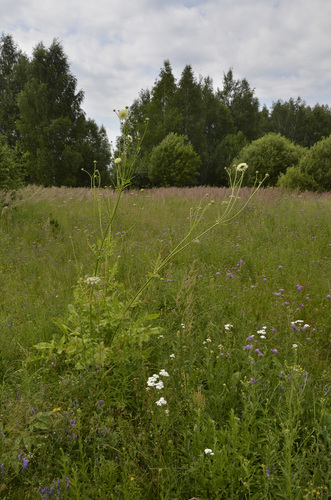
Cephalaria gigantea is a tall, clump-forming, herbaceous perennial reaching 5–7 feet (1.5–2.1 m) tall with a spread of 24–36 inches (60–90 cm). The plant produces a basal rosette of deeply pinnately divided, dark green leaves 12–18 inches (30–45 cm) long with toothed segments. Tall, wiry, branching flower stems rise well above the basal foliage from June through August. Each stem bears rounded, pincushion-like flower heads 1.5–2 inches (4–5 cm) across of soft primrose-yellow, fading to cream as they age. The flower heads closely resemble Scabiosa but in yellow rather than the typical blue-lavender of scabious. The tall, wiry stems sway in the wind, giving the plant a see-through quality that allows views past it. Growth rate is moderate. The plant self-sows moderately in favorable conditions; deadheading controls spread. The basal foliage remains as a low mound while the tall flowering stems extend far above. Despite the height, the thin stems rarely require staking in well-drained soils. In rich, moist soils, stems may become lax and floppy. Short-lived at 4–6 years but self-sows to maintain colonies.
Native Range
Cephalaria gigantea is native to the Caucasus region (Georgia, Armenia, Azerbaijan) and northeastern Turkey. It occurs in montane meadows, subalpine grasslands, and forest clearings from 3,000 to 7,000 feet (900–2,100 m).Suggested Uses
Planted in the back of mixed borders, meadow plantings, and cottage gardens at 24–30 inch (60–75 cm) spacing. The tall, see-through quality allows placement in front of lower plants without blocking views. Functions in naturalistic and prairie-style plantings. The yellow pincushion flowers attract bees and butterflies. Pair with Verbena bonariensis, ornamental grasses, and Echinacea for mixed-height late-summer combinations. Not suitable for containers or small gardens.How to Identify
Appearance
Size & Dimensions
Height5' - 7'
Width/Spread2' - 3'
Bloom Information
Rounded, pincushion-like flower heads 1.5–2 inches (4–5 cm) across of soft primrose-yellow appear on tall, branching stems from June through August. Bloom duration is 6–8 weeks. Individual flowers fade from yellow to cream. Deadheading promotes continued flowering and prevents excessive self-sowing.
Detailed Descriptions
Flower Description
Soft primrose-yellow, fading to creamFoliage Description
Dark green, deeply pinnately dividedGrowing Conditions
Sun Requirements
Requires 4-10 hours of direct sunlight daily
• Full Sun: 6+ hours of direct sunlight
• Partial Shade: 3-6 hours of direct sunlight
• Full Shade: Less than 3 hours of direct sunlight
Care & Maintenance
Care Guide
Plant in full sun to partial shade in average, well-drained soil. Lean to average soils produce the sturdiest stems; rich, moist soils cause lax growth requiring staking. Drought-tolerant once established. The deep taproot makes transplanting of established plants difficult. Self-sows moderately; deadhead to control spread or allow seeding to replace short-lived parent plants. No serious pest or disease problems. Divide clumps every 3–4 years if needed.Pruning
Cut flower stems to the base after bloom or after seeds have set if self-sowing is desired. The basal rosette persists through fall. Cut all dead foliage to the ground in late fall or early spring.Pruning Schedule
Prune: September–October
fall