Cenolophium, Genus, denudatum, Species,
- Genus & species
baltic parsley
Northern and eastern Europe, northern Asia
Overview
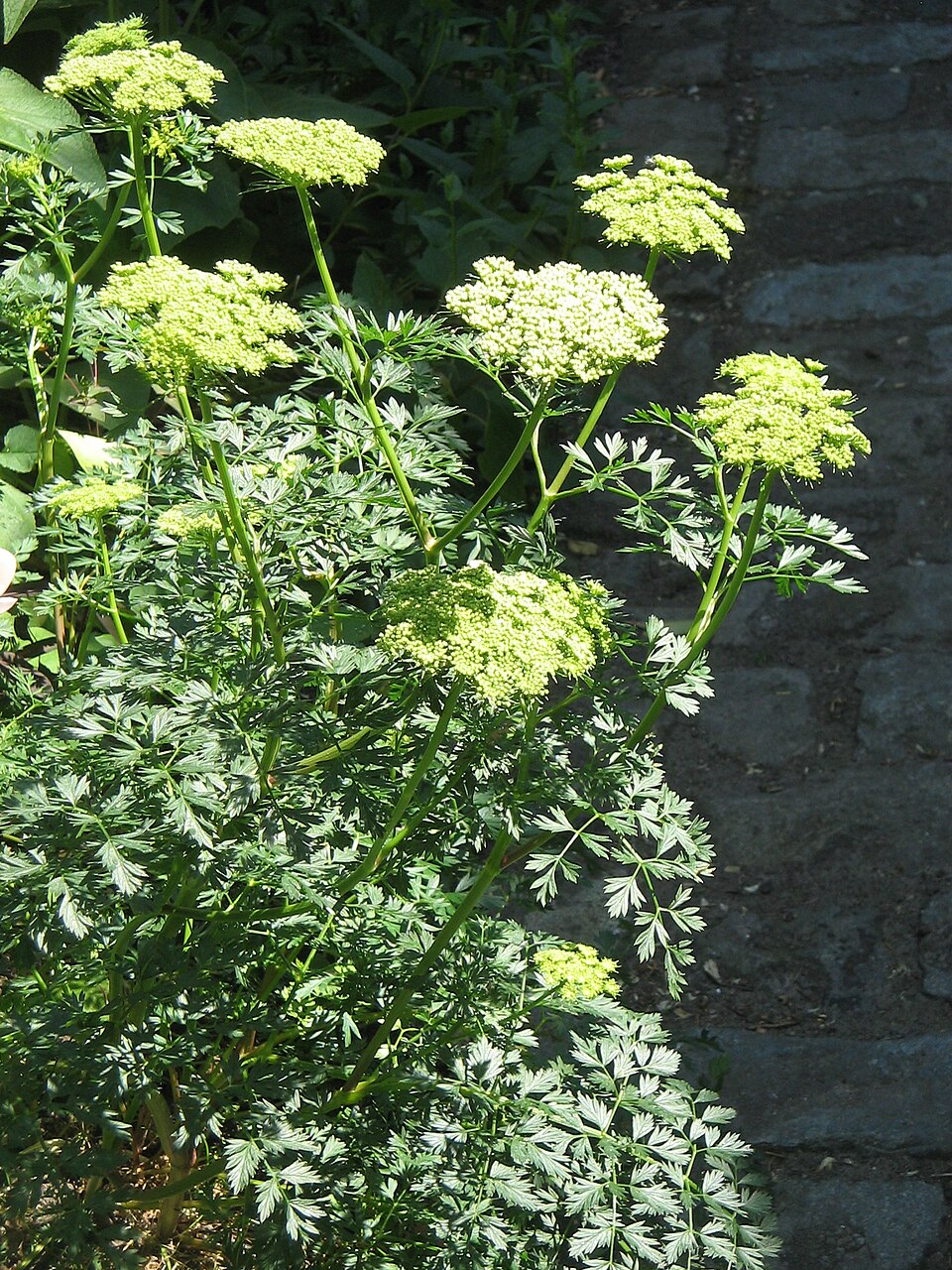
Cenolophium denudatum is a clump-forming herbaceous perennial in the carrot family, growing 3–4 feet (90–120 cm) tall and about 24 inches (60 cm) wide. The foliage is dark green and finely divided into narrow segments, forming a basal mound from which branched, ridged stems rise. From midsummer to early autumn it carries flat-topped compound umbels 2–4 inches (5–10 cm) across, made up of many small white flowers. The umbels open over a long period and are followed by ribbed, oval seeds. The plant develops a deep taproot once established and stands up to wind without staking. It grows in sun or light shade and withstands cold to USDA zone 4, dying back to the ground each winter. In rich, moist soil it reaches the upper end of its height range and may self-seed; in poorer or drier ground it stays more compact. The white flower color is consistent and does not flush pink. It re-emerges late in spring, leaving bare ground earlier in the season.
Native Range
Cenolophium denudatum is native to northern and eastern Europe and into northern Asia, including Scandinavia, the Baltic region, and Russia. It grows naturally in damp meadows, along riverbanks, and at open woodland edges.Suggested Uses
Cenolophium denudatum is used in naturalistic and prairie-style plantings, mixed borders, and pollinator gardens, spaced 18–24 inches (45–60 cm) apart. The airy white umbels combine with grasses and late-summer perennials. Its late spring emergence leaves a gap that early-season plants can fill.How to Identify
Appearance
Size & Dimensions
Height3' - 4'
Width/Spread1'6" - 2'
Bloom Information
Bloom runs from midsummer to early autumn, about July to September. Each branched stem holds several flat white umbels that open in succession over six to eight weeks. The flowers draw bees and hoverflies, and ribbed seeds form as the umbels fade.
Detailed Descriptions
Foliage Description
Dark greenGrowing Conditions
Sun Requirements
Requires 4-10 hours of direct sunlight daily
• Full Sun: 6+ hours of direct sunlight
• Partial Shade: 3-6 hours of direct sunlight
• Full Shade: Less than 3 hours of direct sunlight
Care & Maintenance
Care Guide
Cenolophium denudatum grows in moist, well-drained soil of average fertility in full sun to light shade, with a pH between 6.0 and 7.5. It establishes a deep taproot and becomes drought-tolerant once settled, though prolonged dry spells shorten the bloom. Staking is not required, as the stems stand on their own in wind and rain. The plant dies back fully in winter and resprouts from the crown in late spring. The stems and old foliage can be cut to the ground after seed set or in late winter. Division is difficult because of the taproot, so propagation is usually from seed.Pruning
The flowering stems and old foliage can be cut to ground level in late winter before new shoots appear. Removing the seed heads before they ripen limits self-seeding, while leaving them standing adds structure through autumn and winter. No mid-season pruning is needed.Pruning Schedule
Prune: February–March
early spring