Cassinia, Genus, sifton, Species,
- Genus & species
Sifton bush
Overview
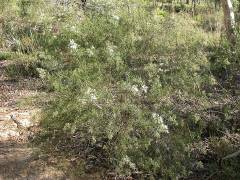
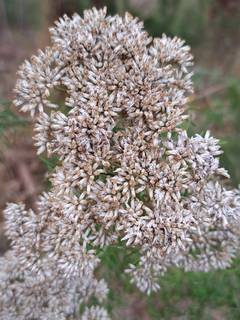
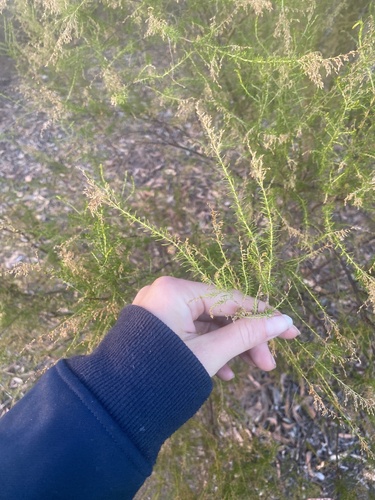
Cassinia sifton is an evergreen shrub reaching 3-8 feet (1-2.5 m) tall with a slender, weeping habit and many thin, wiry branches. The narrow, linear leaves are 0.2-0.6 inch (5-15 mm) long, dark green above and white-woolly beneath, and release a curry-like scent when crushed. Small brownish to pale-yellow flower heads are grouped in dense, drooping clusters at the branch tips from late summer into autumn; the heads are made up of tiny disc florets surrounded by papery bracts. After flowering the clusters turn brown and persist on the plant. Growth is rapid and plants are short-lived, often lasting only 5-8 years. The species colonizes disturbed, overgrazed, and eroded ground and increases on degraded pasture. It tolerates poor soils, drought, and frost but is sensitive to waterlogging.
Native Range
Native to southeastern Australia, across New South Wales, Victoria, and South Australia. Grows in open woodland, dry forest, and disturbed grassland on a range of soils, often spreading on overgrazed or eroded land.Suggested Uses
Used in revegetation of poor and eroded soils and in native and low-water gardens, spaced 3-5 feet (0.9-1.5 m) apart. The weeping habit and aromatic foliage suit informal screening on dry sites. Self-seeding may be vigorous on disturbed ground, which limits its use in tidy, formal gardens.How to Identify
Appearance
Size & Dimensions
Height3' - 8'
Width/Spread3' - 6'
Bloom Information
Detailed Descriptions
Flower Description
brownish to pale yellowFoliage Description
dark greenGrowing Conditions
Sun Requirements
Requires 6-10 hours of direct sunlight daily
• Full Sun: 6+ hours of direct sunlight
• Partial Shade: 3-6 hours of direct sunlight
• Full Shade: Less than 3 hours of direct sunlight
Care & Maintenance
Care Guide
Grows in full sun in well-drained soils of low fertility and tolerates dry, exposed sites. Established plants are drought- and frost-hardy and need no supplementary watering in temperate climates. Growth is rapid and plants self-seed freely on bare or disturbed ground. Waterlogged soils shorten plant life. Few pests affect it. Plants are short-lived and are usually replaced rather than rejuvenated.Pruning
Tolerates light pruning to shape the plant after flowering. Cutting back hard into old wood produces little regrowth. Removal of spent flower heads reduces self-seeding.Pruning Schedule
Prune: April–May
fall