Tecoma, Genus, capensis, Species,
- Genus & species
Cape honeysuckle
Southeastern South Africa, Eswatini, southern Mozambique
Overview
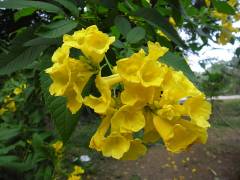
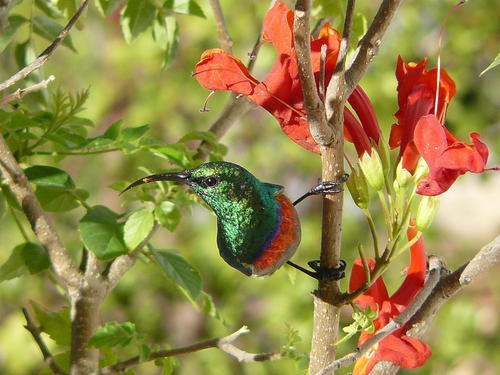
Tecoma capensis is an evergreen scrambling shrub or loose vine native to southern Africa, reaching 6-10 feet (1.8-3.0 m) tall when free-standing and 15-25 feet (4.5-7.5 m) when trained on supports. Stems are pliable and produce aerial roots in humid conditions. Compound pinnate leaves are 4-6 inches (10-15 cm) long with 7-9 ovate, glossy dark green leaflets each 0.75-1.5 inches (2-4 cm) long, with serrated margins. Curved tubular flowers, 1.5-2 inches (4-5 cm) long, are bright orange to red-orange and produced in dense terminal clusters of 8-15 blooms from late spring through winter in frost-free zones. Flat capsular seed pods, 1.5-2.5 inches (4-6.5 cm) long, follow flowers but viability is low in cultivation. Suckers from the base and roots prolifically; spreads underground 3-5 feet (90-150 cm) per year in irrigated soils. Hardy to about 25°F (-4°C); top growth dies at 28°F (-2°C) and regrows from roots in zone 9a. Listed as an environmental weed in parts of Australia, New Zealand, and Pacific island nations due to root suckering. Nectar-rich flowers attract sunbirds in native range and hummingbirds in cultivated landscapes.
Native Range
Native to coastal and interior southeastern South Africa, including the Eastern Cape, KwaZulu-Natal, and Mpumalanga provinces, and extending north into Eswatini and southern Mozambique. Found in coastal scrub, woodland margins, and rocky slopes from sea level to 5,000 feet (1,500 m) elevation.Suggested Uses
Trained on fences, trellises, and pergolas as a flowering vine or grown as a free-standing shrub spaced 5-6 feet (1.5-1.8 m) apart for hedging in zones 9-11. Used as a slope cover and erosion control on banks, where suckering produces dense root mats. Grown in 15-20 gallon (57-76 L) containers on patios and entryways; root pruning every 2-3 years prevents girdling.How to Identify
Appearance
Size & Dimensions
Height6' - 25'
Width/Spread5' - 8'
Bloom Information
April through January in zones 10-11, peaking from June to October. In zone 9a, blooms June through November after spring regrowth. Individual flower clusters last 3-4 weeks; new clusters open on new growth, producing nearly continuous bloom in frost-free climates. Cool nights below 50°F (10°C) reduce flower production by 60-80%.
Detailed Descriptions
Flower Description
orange to red-orangeFoliage Description
dark greenGrowing Conditions
Sun Requirements
Requires 5-12 hours of direct sunlight daily
• Full Sun: 6+ hours of direct sunlight
• Partial Shade: 3-6 hours of direct sunlight
• Full Shade: Less than 3 hours of direct sunlight
Care & Maintenance
Care Guide
Water weekly during the first growing season; mature plants tolerate 3-4 weeks without rain in zones 10-11. Apply 2 inches (5 cm) of organic mulch in spring; mulch suppresses sucker emergence. Aphids and whiteflies feed on new growth in spring; populations decline with rising summer temperatures. Foliage chlorosis develops on irrigated plants in alkaline soils above pH 8.0; chelated iron applications correct symptoms within 4-6 weeks. Container plants in pots smaller than 10 gallons (38 L) require watering every 2-3 days in summer temperatures above 95°F (35°C). In zone 9a, cut frost-damaged growth to ground level in late February; new shoots reach 4-6 feet (1.2-1.8 m) by midsummer.Pruning
Cut back stems by one-third to one-half in late winter before new growth, removing crossing branches and shaping the plant to size. Tip-pinch new growth in spring to promote branching and increase flower production. Remove root suckers monthly during the growing season; suckers left in place form a thicket within 2-3 years. Hard renewal pruning to 12-18 inches (30-45 cm) every 4-6 years restores plants that have become woody at the base.Pruning Schedule
Prune: February–March
winterearly spring
Container Growing
Suitable for container growing
Minimum container size: 15 gallons