Cananga, Genus, spp., Multiple species,
- Genus
- Multiple species
Ylang-Ylang
Tropical Southeast Asia and the western Pacific
Overview
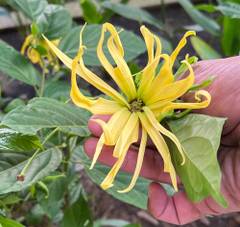
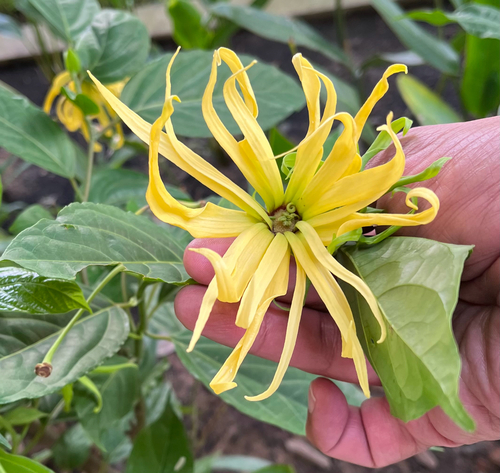
Cananga is a small genus of evergreen trees and shrubs in the custard-apple family (Annonaceae), grown above all for the ylang-ylang tree, Cananga odorata, the source of ylang-ylang perfume oil. The full-size tree grows quickly to 30-60 feet (9-18 m), and on rare wild sites taller, with a straight trunk and brittle, drooping branches; a dwarf form, Cananga fruticosa, stays a shrub of 6-10 feet (2-3 m). The glossy leaves are oval to elliptic, 5-9 inches (13-23 cm) long, with wavy margins and a drooping set on the twigs. The flowers hang in clusters from the branches, each with six narrow, twisted greenish-yellow petals 2-3 inches (5-8 cm) long that age to deep yellow and carry a powerful sweet scent strongest at night. In the tropics flowering continues through much of the year, and the steam-distilled flowers yield an oil used widely in perfumery. Small green fruits ripen to near-black in drooping bunches and are eaten by birds and bats. The brittle wood breaks in storms, and the genus tolerates no frost, which holds it to wet tropical and frost-free subtropical climates.
Native Range
The genus is native to tropical Southeast Asia and the western Pacific, including the Philippines, Indonesia, Malaysia, and nearby islands. Cananga odorata has been carried widely through the tropics for its flowers and now grows in cultivation and as a naturalized tree across South Asia, Africa, and the Pacific.Suggested Uses
The full-size tree is grown in tropical gardens and on small farms for cut flowers and essential-oil production, and as a fast shade tree. The dwarf form is used as a fragrant shrub or large container plant near patios and entries. In frost-prone areas the genus is limited to greenhouses or heated conservatories.How to Identify
Appearance
Size & Dimensions
Height10' - 60'
Width/Spread10' - 25'
Bloom Information
In warm tropical conditions Cananga odorata flowers nearly year-round, with peaks in the warm, wet months. Each flower opens green and matures to yellow over several days, releasing the strongest scent after dark. In cooler subtropical sites bloom narrows to the warm season from late spring through autumn.
Detailed Descriptions
Flower Description
greenish-yellow to deep yellowFoliage Description
greenGrowing Conditions
Sun Requirements
Requires 6-10 hours of direct sunlight daily
• Full Sun: 6+ hours of direct sunlight
• Partial Shade: 3-6 hours of direct sunlight
• Full Shade: Less than 3 hours of direct sunlight
Care & Maintenance
Care Guide
Plants grow in full sun to light shade on deep, moist, well-drained soil within a pH of about 5.0 to 7.5. Warmth through the year matters, as the genus tolerates no frost and slows below about 60F (15C). Regular water suits the trees in their tropical range, with some drought endured once the roots run deep. Growth is fast, and the brittle branches can break in strong wind, so a sheltered position reduces damage. The dwarf Cananga fruticosa grows in large containers that can be moved indoors where winters are cold. Few serious pests affect the genus, though scale insects and mealybugs appear on stressed plants.Pruning
Pruning shapes young trees and removes broken or crossing branches, since the wood snaps easily. Cutting is done after a flowering flush, and growers often head back tall trees to hold flowers within reach for harvest. The dwarf shrub form is trimmed lightly to keep a compact outline.Container Growing
Suitable for container growing
Minimum container size: 10 gallons