Image 1 of 12
1 / 12
Plant Reference
Calocedrus, Genus, decurrens, Species,
- Genus & species
incense cedar
Southwestern Oregon south through California to Baja California, Mexico; 1,000-9,000 feet (300-2,750 m) elevation; mixed coniferous forests
Overview
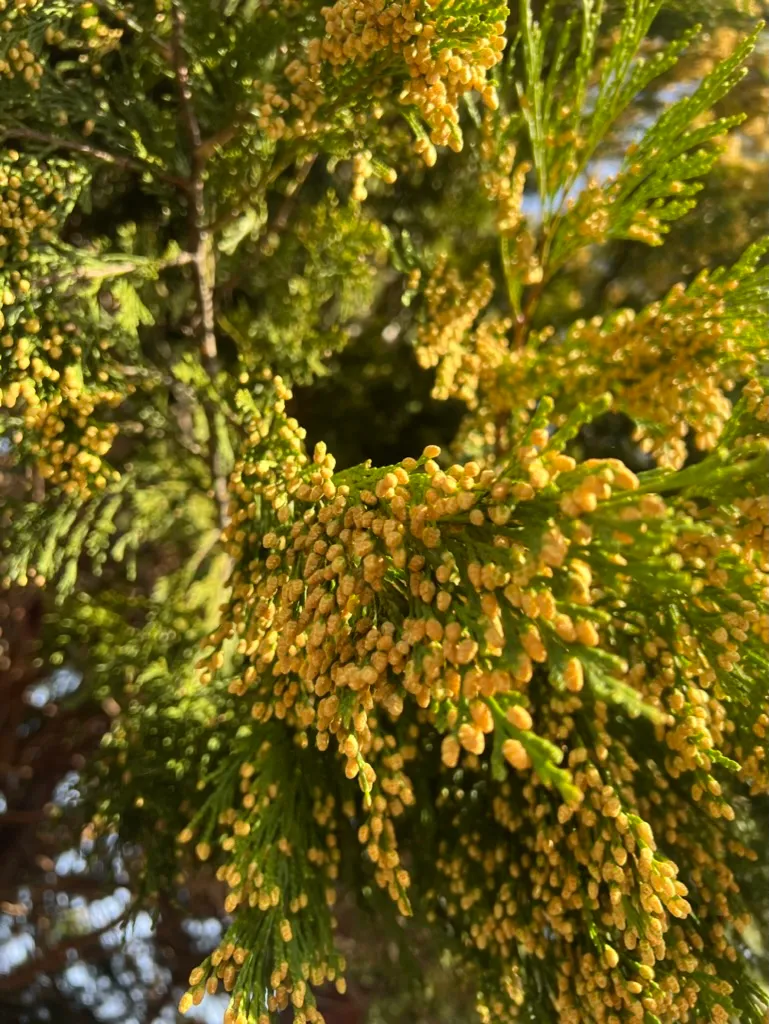
Calocedrus decurrens is a narrow columnar coniferous tree in the cypress family (Cupressaceae), growing 40–70 feet (12–21 m) tall and 8–12 feet (2.4–3.7 m) wide, with a tightly columnar silhouette maintained from youth to maturity. Foliage is glossy dark green, scale-like, arranged in flat fan-like sprays held vertically — in contrast to the horizontally held sprays of Thuja. Crushed foliage releases a strong, sweet, spicy incense-like scent. Bark on mature trunks is cinnamon-red and deeply furrowed, developing into thick plates 2–4 inches (5–10 cm) deep. Cones are small and oblong, 0.75–1 inch (2–2.5 cm), with 3 pairs of scales that open at maturity to a duck-bill shape. Yellow pollen cones form at branch tips in winter (January–February). Growth rate is moderate, reaching landscape size in 20–30 years. The species is the primary wood source for wooden pencils worldwide — the aromatic straight-grained wood has been the standard pencil wood for over a century. Native from southwestern Oregon south through California to Baja California, Mexico, at 1,000–9,000 feet (300–2,750 m) in mixed coniferous forests. Extremely drought-tolerant once established. Tolerates a wide range of soils (pH 5.0–7.5). Heart rot caused by Polyporus amarus is the primary disease in wild populations and can affect landscape trees in humid climates.
Native Range
Native from southwestern Oregon south through California to Baja California, Mexico, at 1,000–9,000 feet (300–2,750 m) in mixed coniferous forests.Suggested Uses
Grown as a narrow columnar coniferous specimen, screen, or windbreak in zones 5–9. Standard spacing is 8–12 feet (2.4–3.7 m). The narrow columnar width (8–12 feet / 2.4–3.7 m) fits sites with limited lateral space. The incense-scented foliage and cinnamon-red bark are year-round features. Native to western North America. Extremely drought-tolerant once established.How to Identify
Appearance
Size & Dimensions
Height40' - 70'
Width/Spread8' - 12'
Bloom Information
Not applicable — wind-pollinated conifer. Yellow pollen cones form at branch tips in January–February. Small oblong seed cones 0.75–1 inch (2–2.5 cm) with 3 pairs of scales open to a duck-bill shape at maturity. Cones ripen in autumn.
Detailed Descriptions
Foliage Description
glossy dark green, scale-like, in flat fan-like vertical sprays; strongly incense-scented when crushedGrowing Conditions
Sun Requirements
Requires 6-12 hours of direct sunlight daily
• Full Sun: 6+ hours of direct sunlight
• Partial Shade: 3-6 hours of direct sunlight
• Full Shade: Less than 3 hours of direct sunlight
Care & Maintenance
Care Guide
Plant in full sun (6–12 hours direct sun) in well-drained soil with pH 5.0–7.5; accepts loam, clay, sand, and rocky substrates. Extremely drought-tolerant once established. The narrow columnar form (8–12 feet / 2.4–3.7 m wide) fits limited-width planting sites. Minimal pruning is needed. Heart rot (Polyporus amarus) can develop in humid climates; good air circulation reduces susceptibility. Non-toxic. Deer-resistant. Hardy in zones 5–9.Pruning
No regular pruning is needed — the natural narrow columnar form develops without shaping. Dead or damaged branches are removed in late winter to early spring (February–March). The central leader is not removed.Pruning Schedule
Prune: February–March
early spring