Callicoma, Genus, serratifolia, Species,
- Genus & species
callicoma
Overview
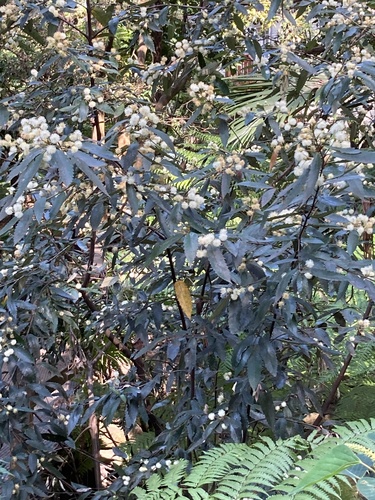
Callicoma serratifolia is an evergreen tall shrub to small tree native to eastern Australia, reaching 15-50 feet (4.5-15 m) tall with an upright, sometimes multi-stemmed habit. The leaves are opposite, lance-shaped to oval, 2-5 inches (5-13 cm) long, with sharply toothed margins, glossy dark green above and paler, often rusty-hairy beneath. In spring and early summer the plant carries many cream to pale yellow flower heads, each a globular cluster about 0.5 inch (1.3 cm) across made up of densely packed stamens rather than petals. Although the flower balls resemble those of a wattle, the plant is not an Acacia; the resemblance gave rise to the common name black wattle, and its pliable stems were used in early colonial wattle-and-daub building. Small dry capsules follow the flowers. The species grows quickly along moist sites and tolerates wet ground, but it is damaged by hard frost and grows poorly in dry, exposed positions.
Native Range
Native to eastern Australia, from southeastern Queensland through New South Wales into eastern Victoria. Grows along creek banks, in gullies, and on the margins of rainforest and wet eucalypt forest, in moist, sheltered situations. It frequently colonizes disturbed, damp ground at low to moderate elevations.Suggested Uses
Planted along creek lines, in moist gullies, and in rainforest-style and screening plantings, spaced 10-15 feet (3-4.5 m) apart. Used for quick screening and for stabilizing damp banks, and in habitat plantings where the flowers and seed draw insects and birds. Its eventual size and need for moisture make it less suited to small, dry gardens.How to Identify
Appearance
Size & Dimensions
Height15' - 50'
Width/Spread10' - 20'
Bloom Information
Detailed Descriptions
Foliage Description
dark greenGrowing Conditions
Sun Requirements
Requires 3-6 hours of direct sunlight daily
• Full Sun: 6+ hours of direct sunlight
• Partial Shade: 3-6 hours of direct sunlight
• Full Shade: Less than 3 hours of direct sunlight
Care & Maintenance
Care Guide
Grow in part shade to full sun in moist, fertile, acidic soil, ideally near water or in a position that does not dry out. Water regularly, since the species comes from damp gullies and streamsides and grows poorly in dry ground. It tolerates wet and periodically waterlogged soils better than most small trees. Young plants are slowed by hard frost, so they are sheltered in cooler districts until established. Few serious pests affect it, though scale and leaf-chewing insects occur. It can be cut back to control size and reshoots readily from the trunk and base.Pruning
Prune after flowering in summer to control height and spread, cutting back to a leaf node or branch junction. The plant tolerates hard pruning and coppicing, reshooting from the base and lower trunk. Remove dead or frost-damaged wood as it appears.Pruning Schedule
summer