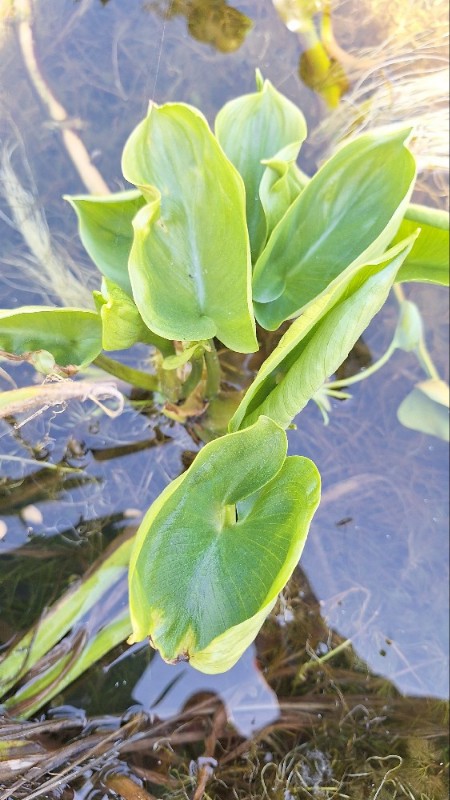
Calla, Genus, spp., Multiple species,
- Genus
- Multiple species
bog arum
Overview
Calla is a genus in the arum family (Araceae) represented by a single species, Calla palustris, a rhizomatous marginal-aquatic perennial of the cool northern hemisphere. The creeping rhizome runs along wet ground or just below shallow water, rooting at the nodes and producing glossy, broadly heart-shaped leaves 2-4 inches (5-10 cm) long on stalks 4-8 inches (10-20 cm) tall. From late spring the plant bears a flat white spathe about 1.5-2.5 inches (4-6 cm) long that surrounds a short greenish-yellow spadix carrying the true flowers. Pollinated chiefly by water snails and small flies, the spadix ripens into a tight cluster of red berries by late summer. The whole plant contains calcium oxalate crystals, which make the raw foliage and berries toxic to people and pets if eaten. Calla grows along acidic bogs, pond margins, and slow stream edges and spreads into floating mats, which can crowd small water features. The florist calla lily belongs to the unrelated genus Zantedeschia rather than to Calla.
Native Range
Calla palustris has a circumboreal distribution across the cool temperate and subarctic northern hemisphere, including northern North America, Europe, and northern Asia. It grows in still and slow-moving fresh water such as bogs, fens, pond edges, and ditch margins, usually in acidic, peaty conditions.Suggested Uses
Calla palustris is used at the margins of wildlife ponds, in bog gardens, and in container water gardens kept permanently wet. It suits naturalistic plantings in acidic, boggy ground in USDA zones 3-8. Its toxic berries and foliage limit its use where children or pets reach the water edge.How to Identify
Appearance
Size & Dimensions
Height4" - 10"
Width/Spread1' - 2'
Bloom Information
Detailed Descriptions
Flower Description
White spathe with greenish-yellow spadixFoliage Description
Glossy dark greenGrowing Conditions
Sun Requirements
Requires 4-8 hours of direct sunlight daily
• Full Sun: 6+ hours of direct sunlight
• Partial Shade: 3-6 hours of direct sunlight
• Full Shade: Less than 3 hours of direct sunlight
Care & Maintenance
Care Guide
Plants grow in full sun to part shade at the margins of ponds or in consistently wet, acidic, peaty soil. They need permanently moist ground or water 0-4 inches (0-10 cm) deep over the rhizome and tolerate winter cold to about USDA zone 3. Growth spreads by rhizome rather than needing replanting, and crowded mats can be thinned by lifting sections in spring. The plant fails in dry or alkaline soil. Few pests trouble it, though aphids may gather on the flower stalks.Pruning
No formal pruning is needed. Faded spathes and yellowing leaves can be removed at the rhizome, and spreading colonies can be reduced by lifting and dividing rhizome sections in spring. Berry heads can be taken off before they drop if self-seeding is unwanted.Container Growing
Suitable for container growing
Minimum container size: 2 gallons
