Calathea, Genus, spp., Multiple species,
- Genus
- Multiple species
calathea
Tropical Americas (Mexico to Brazil)
Overview
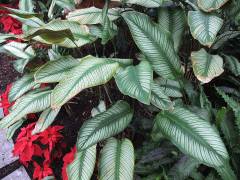
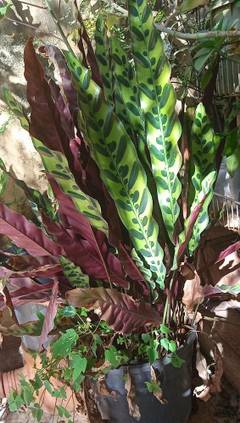
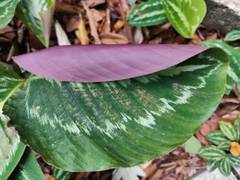
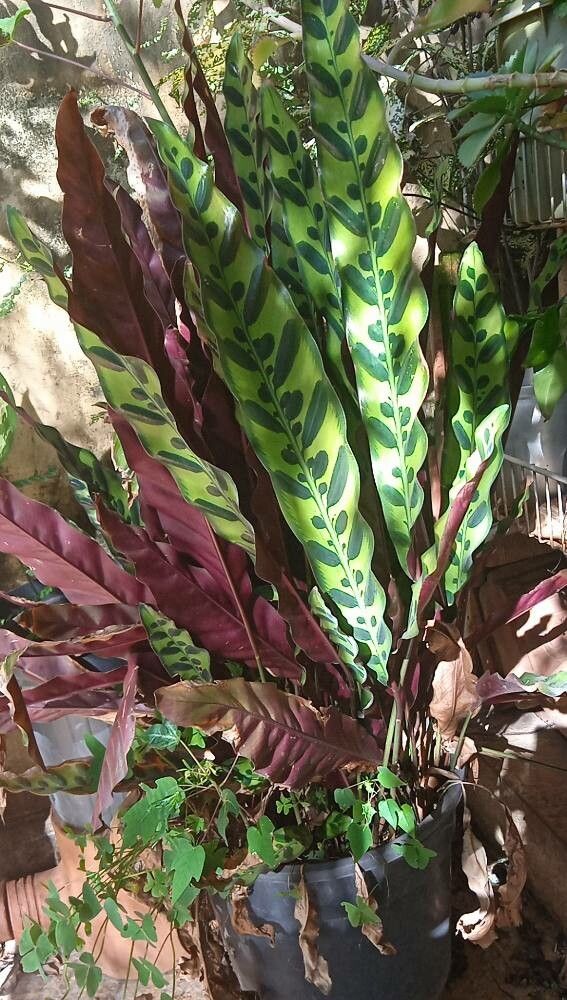
Calathea is a genus of evergreen, rhizomatous perennials in the arrowroot family (Marantaceae), with species native to the tropical Americas. Plants form clumps 12-36 inches (30-90 cm) wide and reach 12-60 inches (30-150 cm) tall, depending on species. The leaves are oblong to broadly elliptic, 4-18 inches (10-45 cm) long, held on slender petioles that arise directly from the rhizome. Many species carry contrasting patterns of green, silver, cream, and pink on the upper surface, with maroon to purple undersides. A swollen joint (pulvinus) at the leaf base raises the blades vertically at night and lowers them by day, a movement that gives the group its prayer-plant name. Flowers are borne in dense bracted spikes; in most cultivated species they are small and partly hidden among the foliage, though C. crocata and C. lutea carry more visible orange or yellow bracts. Calatheas grow on shaded, humid rainforest floors and depend on warmth and steady moisture, so they brown at the leaf margins in dry indoor air or cold drafts. They contain no compounds known to be toxic to people or pets, which accounts for their wide use as houseplants.
Native Range
The genus is native to the tropical Americas, ranging from Mexico through Central America and the West Indies into tropical South America as far as Brazil and Bolivia. Species grow on the floor of lowland and montane rainforest, usually in deep shade and consistently high humidity.Suggested Uses
Calatheas are used as foliage houseplants and in shaded, frost-free conservatory and terrarium plantings. In tropical and subtropical gardens (USDA zones 10-11) they serve as understorey groundcover and container subjects in sheltered shade. Their need for steady warmth and humidity limits outdoor use elsewhere.How to Identify
Appearance
Size & Dimensions
Height1' - 5'
Width/Spread1' - 3'
Colors
Bloom Information
Flowering is irregular in cultivation, and most species bloom only sporadically indoors. In habitat, bracted flower spikes appear mainly in the warm wet season. The small flowers of most species last a few days each, opening in sequence from the bracts over several weeks. Several species are grown for their foliage and rarely flower in pots.
Detailed Descriptions
Flower Description
White, yellow, or orangeFoliage Description
Green patterned with silver, cream, and pink above; maroon to purple beneathGrowing Conditions
Sun Requirements
Needs bright indirect light. Keep it out of direct sun, which can scorch the leaves.
• Bright indirect light: a bright spot near a window, with no direct sun on the leaves
Care & Maintenance
Care Guide
Plants need bright indirect light to light shade, since direct midday sun bleaches the leaves to pale tan patches. The potting mix should stay evenly moist but never waterlogged, and rainwater or filtered water suits them because the foliage reacts to fluoride and salts that brown the leaf tips. Suitable temperatures range from 65-80F (18-27C) with humidity above 50 percent; cold below 55F (13C) damages the foliage. A loose, free-draining mix based on peat or coir holds moisture without compacting. Most species spread slowly by rhizome and can be divided in spring. Spider mites colonise plants kept in dry air.Pruning
Pruning is limited to removing spent or browned leaves at the base with clean shears. Tattered older foliage can be cut away as new leaves unfurl from the centre of the clump. No structural or seasonal cutting back is needed.Container Growing
Suitable for container growing
Minimum container size: 1 gallons