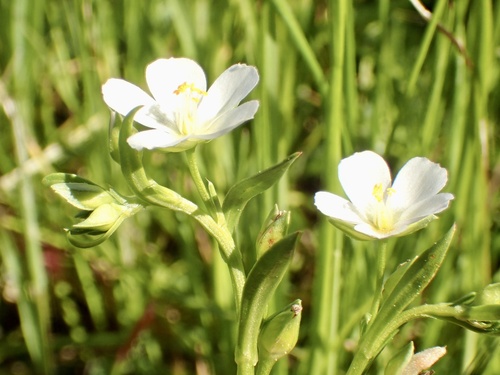
Calandrinia, Genus, menziesii, Species,
- Genus & species
redmaids
Western North America (California Floristic Province)
Overview
Calandrinia menziesii is a low, sprawling annual wildflower native to western North America, with fleshy stems 4-16 inches (10-40 cm) long that trail or lean across the ground. The narrow, somewhat succulent leaves are 1-3 inches (2.5-7.5 cm) long, smooth, and gray-green. From late winter into spring, the stems carry cup-shaped flowers about 0.5-0.75 inch (13-19 mm) across in vivid magenta to deep crimson-red, the source of the common name redmaids. Each flower has five petals and opens fully only in sunlight, closing in shade or on cloudy days. The species grows in open grasslands, disturbed ground, fields, and roadsides, completing its life cycle in a single cool season. It germinates with winter rain, blooms in spring, and dies as the soil dries in summer. The small, shiny black seeds were gathered and eaten by Indigenous peoples of California. Plants reseed where soil is left open, often returning in disturbed ground year after year. Limitations include a short bloom season, a sprawling habit that needs room, and a quick decline once hot, dry weather sets in. Flowers stay closed in dull weather, reducing the display on overcast days.
Native Range
Calandrinia menziesii is native to western North America, from British Columbia south through California to Baja California and east to Arizona. It grows in open grasslands, agricultural fields, disturbed soils, and along roadsides at lower elevations.Suggested Uses
Grown in wildflower meadows, native plant gardens, and as a spring groundcover on open ground. Used in restoration and naturalized seed mixes for California grasslands. Suited to sunny banks and containers where the trailing stems can spread.How to Identify
Appearance
Size & Dimensions
Height4" - 1'4"
Width/Spread6" - 1'4"
Bloom Information
Flowers open from late winter into spring, generally March through May, and earlier in mild coastal areas. Each bloom lasts a day or two and opens fully only in direct sun, with the plant flowering over several weeks. Cool, moist springs lengthen the bloom. Seed capsules form and shed shiny black seeds as flowers fade.
Detailed Descriptions
Flower Description
Magenta to crimson-redFoliage Description
Gray-green, fleshyGrowing Conditions
Sun Requirements
Requires 6-12 hours of direct sunlight daily
• Full Sun: 6+ hours of direct sunlight
• Partial Shade: 3-6 hours of direct sunlight
• Full Shade: Less than 3 hours of direct sunlight
Water & Climate
Water Needs
Care & Maintenance
Care Guide
Grows in full sun and well-drained loam, sandy, or clay soil at a pH of 6.0-7.5. Seed sown in fall germinates with winter rain for spring bloom; spring sowing works in cooler regions. Soil should stay moist through the growing season, though established plants tolerate some drying. No fertilizer is needed in average garden soil. The sprawling stems spread outward and need open space. Plants self-sow freely where the ground is left undisturbed.Pruning
No pruning is needed. Plants are left in place to flower and set seed, then cleared once they brown at season end. Clearing spent plants before seed drop limits self-seeding where it is not wanted.Container Growing
Suitable for container growing
Minimum container size: 1 gallons
Toxicity
Non-toxicPlanting Guide
Planting Methods & Timing
Planting Method
direct sow
Direct Sow Timing
Fall or early spring
Days to Maturity
60–90 days
Plant Spacing
6 inches
Companion Planting
Good Companions