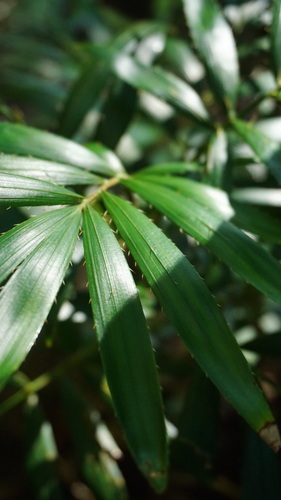
Calamus, Genus, spp., Multiple species,
- Genus
- Multiple species
Tropical Asia, Africa, and Australasia
Overview
Calamus is the largest genus of palms, with around 400 species in the family Arecaceae, spread through the tropics and subtropics of Asia, Africa, and Australasia, with the greatest diversity in South-East Asia. Most species are climbing, spiny palms - the rattans - whose slender, flexible stems can reach 30-100 ft (10-30 m) or more as they scramble through rainforest canopy, though a few are short and clumping. The pinnate leaves often extend into a whip-like, hooked tip armed with backward-pointing spines that grip surrounding vegetation. Stems, leaf sheaths, and leaf stalks are usually densely spiny. Small flowers are borne on branched clusters, and most species are dioecious, with separate male and female plants; the rounded fruits are covered in overlapping scales. Calamus is the main source of commercial rattan cane used for furniture and basketry. The genus needs a warm, humid, frost-free climate, moist but well-drained soil, and shade to part shade when young. The climbing habit and spines limit its garden use to tropical collections and plantations.
Native Range
Calamus is native to the tropics and subtropics of Asia, Africa, and Australasia, from West Africa through India and South-East Asia to southern China, New Guinea, and northern Australia, with its centre of diversity in South-East Asia. The genus grows in rainforest and moist forest, climbing through the canopy.Suggested Uses
Grown in tropical and botanical gardens and in rattan plantations rather than general landscapes, where the spiny climbing stems are harvested for cane. A few clumping species are kept as foliage plants in warm, humid sites. Given the spines and reach, plants are positioned away from paths and seating.How to Identify
Appearance
Size & Dimensions
Height30' - 100'
Width/Spread3' - 10'
Bloom Information
Across the genus, small flowers are carried on branched clusters emerging among the leaves, in warm-season cycles that vary with species and climate. Most species are dioecious, so male and female flowers occur on separate plants. Scaly rounded fruits follow on female plants.
Detailed Descriptions
Flower Description
cream to yellowFoliage Description
greenGrowing Conditions
Sun Requirements
Requires 2-6 hours of direct sunlight daily
• Full Sun: 6+ hours of direct sunlight
• Partial Shade: 3-6 hours of direct sunlight
• Full Shade: Less than 3 hours of direct sunlight
