Image 1 of 2
1 / 2
Plant Reference
Calamintha, Genus, nepeta, Species, ssp., Subspecies, nepeta, Subspecies,
- Genus & species
- Subspecies
calamint
Southern Europe, the Mediterranean basin, and western Asia
Overview
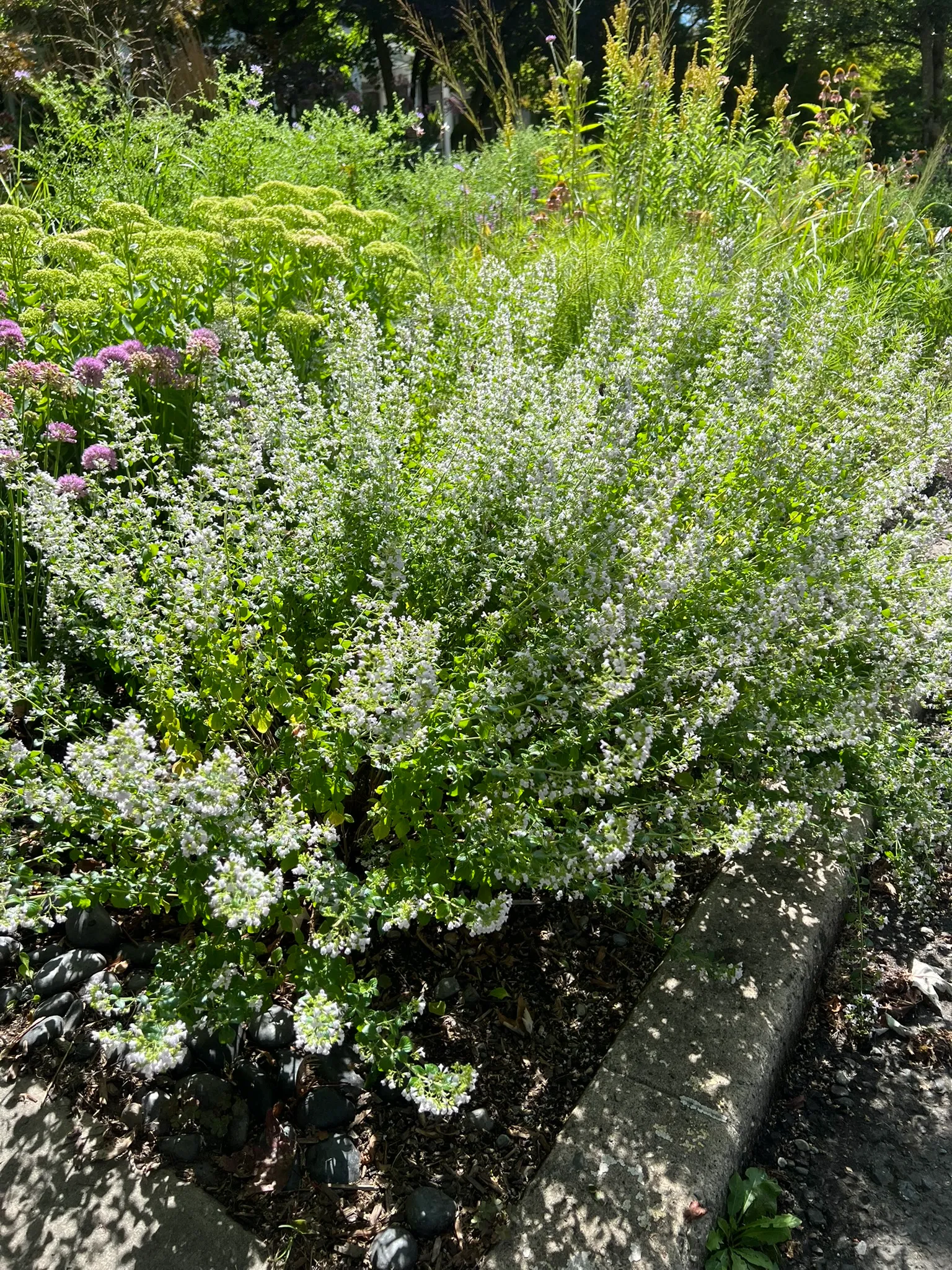
Calamintha nepeta ssp. nepeta is an herbaceous perennial reaching 12–18 inches (30–45 cm) tall and 18–24 inches (45–60 cm) wide, with a bushy mounding spreading habit. Native to southern Europe and the Mediterranean, it produces small rounded grey-green aromatic leaves 0.5–1 inch (1–2.5 cm) long on wiry branching stems with a mint-like crush fragrance. Clouds of tiny tubular white to pale lilac flowers 0.25 inch (6 mm) long appear in profusion from midsummer through hard frost, creating an airy hazy canopy effect. The bloom window runs 14–16 weeks and extends further into fall than most hardy perennials; by comparison, Nepeta cultivars such as 'Walker's Low' bloom 8–10 weeks and shut down by late August. Growth rate is moderate. Hardy in USDA zones 5–9. Self-seeds readily in well-drained soil. Typical plant lifespan is 3–4 years, with self-replacement from seedlings maintaining colonies indefinitely in suitable positions.
Native Range
Calamintha nepeta ssp. nepeta is native to southern Europe, the Mediterranean basin, and western Asia.Suggested Uses
Planted in perennial borders, rock gardens, gravel gardens, cottage gardens, herb gardens, and along pathways where the mint-like crush fragrance is released by brushing contact in USDA zones 5–9, at 18–24 inch (45–60 cm) spacing or in containers of 2 gallons (8 L) or larger. The bloom window from midsummer through hard frost combined with the airy cloud-like inflorescence makes the species a bridging plant between mid-summer perennials such as Nepeta and Agastache and late-season workers such as Symphyotrichum and Solidago. Wet soils that cause crown rot and gardens where self-seeding must be prevented fall outside the species' cultural range. Short lifespan (3–4 years) is managed by allowing self-sowing or by replanting.How to Identify
Appearance
Size & Dimensions
Height1' - 1'6"
Width/Spread1'6" - 2'
Bloom Information
Produces clouds of tiny white to pale lilac tubular flowers 0.25 inch (6 mm) long continuously from midsummer through hard frost — a 14–16 week bloom window. Flowers form profuse loose clusters along the wiry stems. The flower form is a strong bee nectar source and the plant self-seeds freely.
Detailed Descriptions
Flower Description
White to pale lilac; tiny tubular 0.25 inch (6 mm); in profuse airy clouds along wiry stems; midsummer through hard frostFoliage Description
Grey-green; small rounded aromatic 0.5–1 inch (1–2.5 cm); on wiry branching stems; mint-scented crushGrowing Conditions
Sun Requirements
Requires 6-10 hours of direct sunlight daily
• Full Sun: 6+ hours of direct sunlight
• Partial Shade: 3-6 hours of direct sunlight
• Full Shade: Less than 3 hours of direct sunlight
Care & Maintenance
Care Guide
Plant in spring in full sun in lean to moderately fertile well-drained loamy, sandy, or chalky soil at pH 6.5–7.5. Hardy in USDA zones 5–9. Sharp drainage is required; wet winter soil causes crown rot and is the main cause of plant loss. Drought tolerance is high once established. Cutting back to 2–3 inches (5–8 cm) in early spring when new basal growth appears resets the plant for the season. Self-seeding is prolific and supports colony renewal; deadheading before seed drop controls spread where that matters. Plant lifespan is 3–4 years but self-replacement maintains plantings over time.Pruning
Cut back to 2–3 inches (5–8 cm) in early spring (March–April) when new basal growth appears. A light midseason shear can re-tighten plants that become floppy and triggers a fresh flush of flowers. Deadheading before seed drop prevents self-sowing where spread must be contained.Pruning Schedule
Prune: March–April
early spring
Container Growing
Suitable for container growing
Minimum container size: 2 gallons