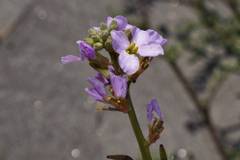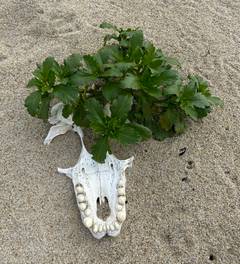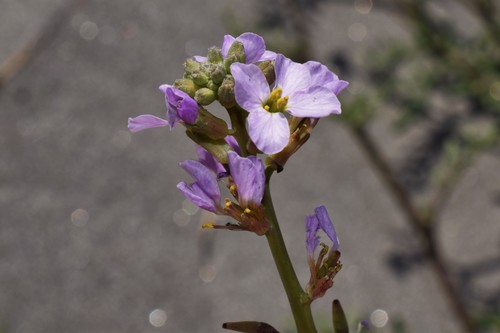
Image 1 of 3
1 / 3
© Σάββας Ζαφειρίου (Savvas Zafeiriou), some rights reserved (CC-BY-NC) · iNaturalist
Cakile, Genus, spp., Multiple species,
- Genus
- Multiple species
Searockets
Northern Hemisphere temperate coasts
SunFull Sun
Overview
Cakile is a genus of about seven species of annual, succulent herbs in the mustard family, found on sandy seashores and dune fronts across temperate coasts of the Northern Hemisphere, with introductions on southern coasts. Plants form low, branching, sprawling mounds 6-18 in (15-45 cm) tall and 12-36 in (30-90 cm) wide, with fleshy stems and thick, lobed or toothed, blue-green leaves that store water and resist salt. From late spring through autumn the genus bears small four-petaled flowers 0.2-0.5 in (5-12 mm) across in pale lilac, pink, or white, in the cross-shaped arrangement typical of the family. Each flower forms a two-jointed, corky seed pod: the upper segment breaks off and floats on seawater to colonize new shores, while the lower stays with the parent. The genus is a pioneer of the drift line, among the first plants to grow on open sand above the tide. Cakile needs full sun, sharp drainage, and salt-laden, sandy soil, and tolerates wind, heat, and drought, but it is short-lived and does not grow inland or in rich, moist ground. The peppery foliage is edible.
Native Range
Native to temperate coasts of the Northern Hemisphere, including the shores of Europe, the Mediterranean, North America, and Asia, with some species spread to the Southern Hemisphere. Plants grow on sandy beaches, dune fronts, and drift lines just above the high-tide mark.Suggested Uses
Grown in coastal, dune, and beach gardens, in sandy seaside borders, and in dune stabilization plantings. The edible, peppery leaves are occasionally used in small amounts as a wild salad green.How to Identify
Appearance
Size & Dimensions
Height6" - 1'6"
Width/Spread1' - 3'
Colors
Bloom Information
Flowering runs from late spring through autumn, generally May to October, often continuing as long as conditions stay mild. The small flowers open in succession at the stem tips over many weeks. Corky seed pods form steadily through the season.
Detailed Descriptions
Flower Description
Pale lilac, pink, or whiteFoliage Description
Blue-green, fleshyGrowing Conditions
Sun Requirements
Requires 6-12 hours of direct sunlight daily
• Full Sun: 6+ hours of direct sunlight
• Partial Shade: 3-6 hours of direct sunlight
• Full Shade: Less than 3 hours of direct sunlight
Care & Maintenance
Care Guide
Grow in full sun in pure sand or very sandy, sharply drained soil with some salt; rich or heavy, moist soil causes rot and weak growth. Plants need little water once germinated, drawing on stored moisture and tolerating drought, heat, salt spray, and wind. As an annual, the genus completes its life cycle in one season and relies on floating seed to spread. It establishes from seed sown directly where plants are to grow, since the fleshy roots dislike transplanting. The genus suits coastal and dune gardens and does not persist inland. Frost ends the plants, which are grown in USDA zones 3-11 as warm-season annuals.Pruning
Pruning is not required for these annual plants. Spent stems can be trimmed to tidy a planting. Plants die after setting seed and are cleared at the end of the season.Container Growing
Suitable for container growing
Minimum container size: 2 gallons
Toxicity
Non-toxicPlanting Guide
Planting Methods & Timing
Planting Method
direct sow
Direct Sow Timing
Spring, after the last frost
Days to Maturity
50–80 days
Plant Spacing
18 inches