Burchardia, Genus, spp., Multiple species,
- Genus
- Multiple species
Overview
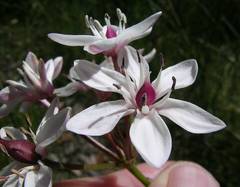
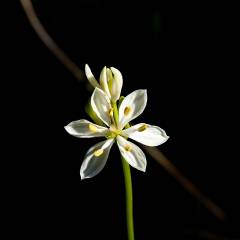
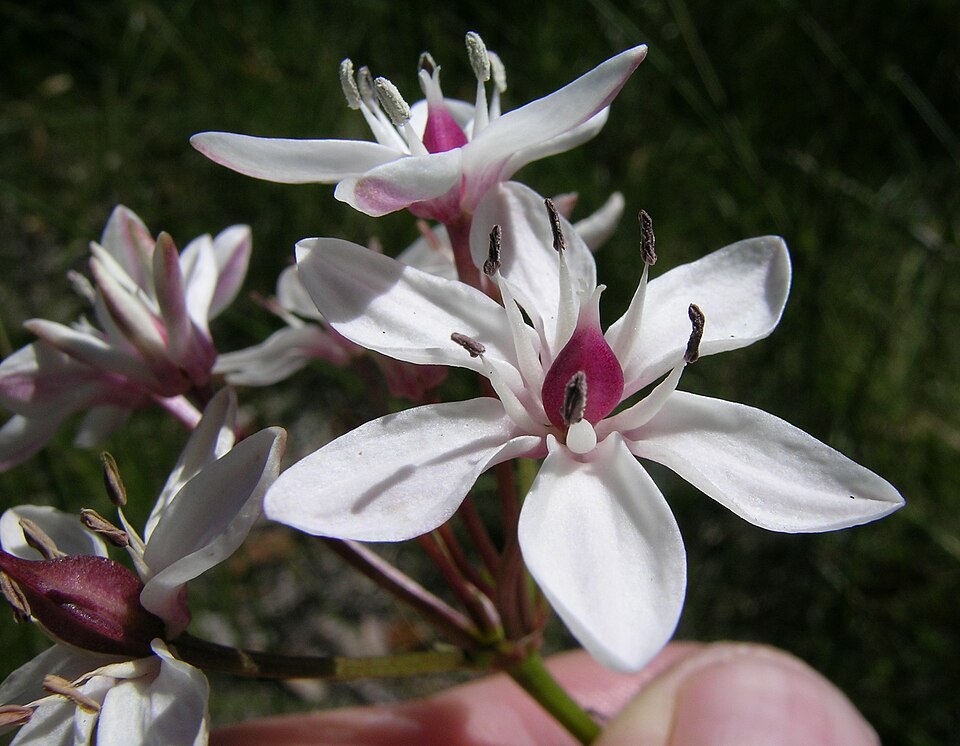
Burchardia is a small genus of about six tuberous perennial herbs in the family Colchicaceae, endemic to Australia. Plants grow from an underground tuber, sending up a few narrow, grass-like basal leaves 4-12 in (10-30 cm) long and a slender leafless flowering stem 8-24 in (20-60 cm) tall. In spring the stem is topped by an open, umbel-like cluster of star-shaped flowers, each with six white tepals, sometimes flushed pink, surrounding a ring of dark purplish anthers and a small central ovary. The genus grows in seasonally moist heath, grassland, and open woodland, often on sandy or lateritic soils that dry through summer. After flowering and seeding the foliage withers and the plant survives the dry season as a dormant tuber. In cultivation it needs an open sunny position, sharp drainage, winter and spring moisture, and a dry summer rest. Its short above-ground season and slender form make it a plant for native and seasonal displays rather than continuous border colour.
Native Range
Burchardia is endemic to Australia, with species across the south-west of Western Australia and through south-eastern states including Victoria, New South Wales, and Tasmania. The genus grows in seasonally wet heath, grassland, and open forest on sandy or lateritic soils.Suggested Uses
Used in native gardens, seasonal wildflower plantings, rockeries, and containers that can be kept dry over summer. The white spring flowers suit grassland-style and meadow schemes. Spaced 4-8 in (10-20 cm) apart in drifts.How to Identify
Appearance
Size & Dimensions
Height8" - 2'
Width/Spread4" - 8"
Bloom Information
Across the genus, white star-shaped flowers open in spring, mainly September to November, in a loose terminal cluster on each stem. The dark anthers contrast with the pale tepals. Flowering is followed by dry capsular fruits, after which the plant becomes dormant.
Detailed Descriptions
Flower Description
white, sometimes pink-flushedFoliage Description
greenGrowing Conditions
Sun Requirements
Requires 6-10 hours of direct sunlight daily
• Full Sun: 6+ hours of direct sunlight
• Partial Shade: 3-6 hours of direct sunlight
• Full Shade: Less than 3 hours of direct sunlight
Care & Maintenance
Care Guide
Grow in full sun on light, sharply drained sandy or gravelly soil that is moist in winter and spring but dries in summer. Hold plants on the lean side, as the tubers rot in rich, wet, or poorly drained ground. Water through the growing season, then withhold water as the foliage yellows and the plant enters summer dormancy. Raise new plants from seed or by separating tuber offsets when dormant. Feeding is rarely needed on the open soils the genus prefers.Pruning
No pruning is needed. Remove spent flower stems after seed has set, unless self-seeding is wanted. The dying foliage is left to feed the tuber, then cleared once fully withered.Container Growing
Suitable for container growing
Minimum container size: 1 gallons