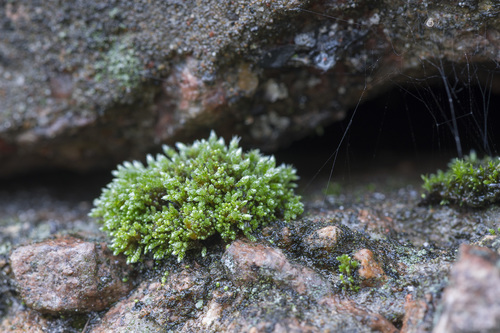
Bryum, Genus, spp., Multiple species,
- Genus
- Multiple species
bryum mosses
SunFull Sun – Part Shade
WaterMedium
Overview
Bryum is a large, cosmopolitan genus of acrocarpous mosses in the family Bryaceae, with several hundred species growing on soil, rock, walls, paths, and disturbed ground from the tropics to polar regions. Plants form low cushions, turfs, or scattered shoots usually 0.2-2 inches (0.5-5 cm) tall, in shades of green, often flushed red or bronze at the base. The leaves are egg-shaped to lance-shaped, concave, and spirally arranged around the stem, frequently ending in a hair-point and bordered by narrow elongated cells. When dry, the shoots become twisted and the cushions take on a duller tone. The genus is named for its rounded, often nodding spore capsules, which are borne singly on a long reddish stalk and hang like tiny pendulous urns. Many species are pioneers that quickly colonise bare soil, gravel, and burnt ground, and some grow vigorously in nutrient-rich or disturbed urban habitats. Reproduction is by spores and, in many species, by tiny bulb-like gemmae that allow rapid vegetative spread. The genus has been split, with several species moved to Ptychostomum and other segregate genera. Plants survive drying by becoming dormant and reviving when rewetted.
Native Range
Bryum is found on every continent, including Antarctica, growing on soil, rock, masonry, paths, dunes, and disturbed ground from sea level to high mountains. Many species are widespread weeds of gardens, pavements, and waste ground in temperate and urban regions.Suggested Uses
Bryum species are grown in moss gardens, terraria, green roofs, and bonsai plantings for low green cover, and pioneer species help stabilise bare soil and gravel. Mosses are studied as indicators of air quality and disturbance. Several Bryum species are among the first colonisers of cleared or burnt ground.How to Identify
Appearance
Colors
Foliage Colors
Bloom Information
Mosses do not flower. Bryum reproduces by spores released from nodding capsules that ripen mainly in spring and summer, and by bulb-like gemmae produced in the leaf axils or on underground shoots. Capsule production varies with species and moisture, and many populations spread chiefly by vegetative gemmae.
Growing Conditions
Sun Requirements
• Full Sun: 6+ hours of direct sunlight
• Partial Shade: 3-6 hours of direct sunlight
• Full Shade: Less than 3 hours of direct sunlight
Water & Climate
Water Needs
