Brunonia, Genus, australis, Species,
- Genus & species
blue pincushion
Overview
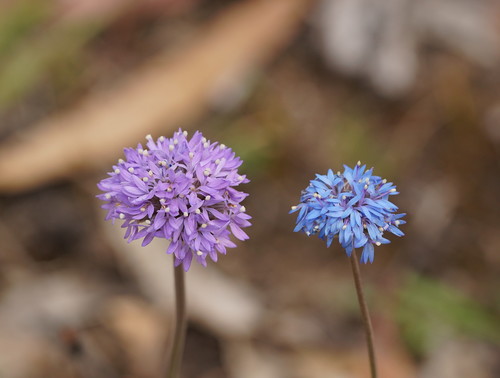
Brunonia australis is a tufted perennial herb in the family Goodeniaceae, the only species in its genus. It forms a basal rosette of narrow, grey-green leaves 1-4 inches (3-10 cm) long, softly hairy and held close to the ground. From spring into summer, leafless stalks rise 8-20 inches (20-50 cm) above the foliage, each topped by a dense hemispherical head of small blue flowers about 1-1.5 inches (2.5-4 cm) across, the massed protruding styles giving the pincushion look that names the plant. The flower heads are surrounded by a ring of green bracts. After flowering, small dry fruits form within the persistent head. The species is distributed across most of mainland Australia, growing in open grassland, woodland, and heath on sandy and gravelly soils. It withstands drought by dying back to the rootstock in hot, dry periods and reshooting after rain. Lifespan is variable, with some plants behaving as short-lived perennials and others persisting several years. Heavy, poorly drained soils and prolonged wet conditions shorten its life.
Native Range
Brunonia australis is native to Australia, where it occurs in all mainland states and the Northern Territory. It grows in open eucalypt woodland, native grassland, and heath, usually on freely draining sandy or gravelly soils.Suggested Uses
Grown in native cottage plantings, rockeries, and container displays, and in grassland restoration. Suited to dry, sunny borders and gravel gardens where its blue heads sit above low groundcovers. Spaced 8-12 inches (20-30 cm) apart in drifts.How to Identify
Appearance
Size & Dimensions
Height8" - 1'8"
Width/Spread6" - 1'
Bloom Information
Flowering is concentrated in spring and early summer, mainly September to December, and can extend after good rains. The blue heads open over several weeks and draw native bees and butterflies. Plants in full sun flower more freely than those in shade.
Detailed Descriptions
Foliage Description
grey-greenGrowing Conditions
Sun Requirements
Requires 6-10 hours of direct sunlight daily
• Full Sun: 6+ hours of direct sunlight
• Partial Shade: 3-6 hours of direct sunlight
• Full Shade: Less than 3 hours of direct sunlight
Care & Maintenance
Care Guide
Grows in full sun on light, freely draining sandy or loamy soils, and tolerates poor, gravelly ground. Established plants need little water and withstand extended dry spells by retreating to the rootstock. Wet, heavy soils and prolonged moisture cause rot and shorten the plant life, so sharp drainage matters most. A position open to air movement reduces fungal problems. Light feeding with a low-phosphorus native fertilizer in spring supports flowering. Spent flower stalks can be trimmed once heads dry.Pruning
Trimming spent flower stalks to the base after seeds ripen keeps the rosette tidy and can prompt a second flush in mild seasons. No structural pruning is required. Old or tatty rosettes can be cut back to encourage fresh basal growth.Pruning Schedule
Prune: December–January
summer
Container Growing
Suitable for container growing
Minimum container size: 1 gallons