Briza, Genus, spp., Multiple species,
- Genus
- Multiple species
quaking grass
Europe, North Africa, and western Asia
Overview
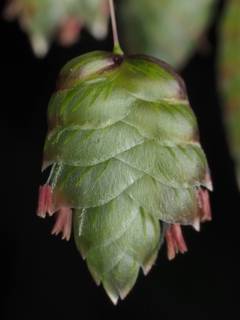
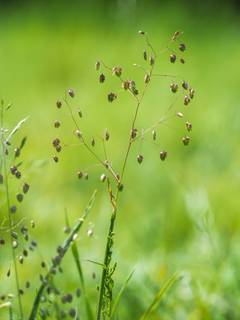
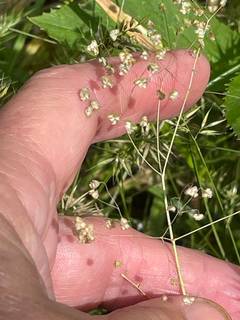
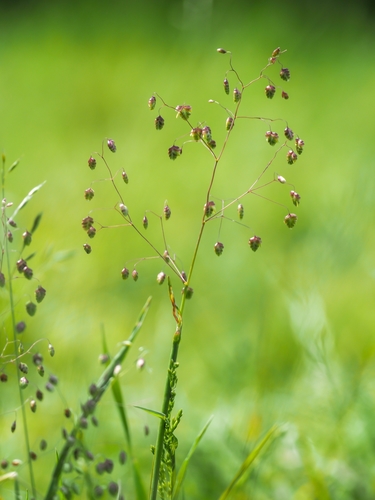
Briza is a genus of about 20 species of annual and perennial grasses (Poaceae) native to Europe, North Africa, western Asia, and parts of temperate South America, known as quaking or rattlesnake grasses. Plants form slender clumps of flat green leaves and rise 8 to 36 inches (20 to 90 cm) tall, depending on species. The flower heads are open, airy panicles carrying flattened, heart- to locket-shaped spikelets that dangle from thread-like stalks and tremble in the slightest breeze. The spikelets are green, often flushed purple, ripening to pale straw. Perennial B. media forms long-lived tufts, while annuals such as B. maxima and B. minor complete their cycle in a season and self-seed freely. Briza grows in open grassland, meadows, and dry banks on a wide range of soils, favouring sunny, well-drained sites. The dried seed heads hold their shape and are cut for arrangements. In rich, moist soils plants may flop and self-sow to the point of becoming weedy.
Native Range
Briza is native to Europe, North Africa, western Asia, and parts of temperate South America, growing in meadows, grassland, and open, rocky slopes. Several species have naturalised well beyond this range, including in North America and Australia.Suggested Uses
Grown in meadow and prairie-style plantings, gravel gardens, and the front of sunny borders, and cut fresh or dried for arrangements. The trembling seed heads add movement among broader-leaved perennials. Spacing of 8 to 12 inches (20 to 30 cm) gives a soft, massed effect.How to Identify
Appearance
Size & Dimensions
Height8" - 3'
Width/Spread6" - 1'6"
Bloom Information
Detailed Descriptions
Flower Description
green to straw, often purple-tingedFoliage Description
greenGrowing Conditions
Sun Requirements
Requires 6-10 hours of direct sunlight daily
• Full Sun: 6+ hours of direct sunlight
• Partial Shade: 3-6 hours of direct sunlight
• Full Shade: Less than 3 hours of direct sunlight
Care & Maintenance
Care Guide
Briza grows in full sun on light, well-drained soils of low to moderate fertility, with a pH of 5.5 to 7.5. Lean, dry conditions keep the clumps upright, while rich, moist soils encourage soft growth that flops. Established plants tolerate drought and need little water once settled. Annual species are raised from seed sown in spring and self-sow afterwards; perennial B. media is sown or divided. Removing seed heads before they ripen curbs unwanted self-seeding.Pruning
Cut perennial clumps back to near ground level in late winter before fresh growth starts. Shear or pull annual plants once they finish, ideally before seed sheds if spread is unwanted. Seed heads can be cut earlier for drying.Container Growing
Suitable for container growing
Minimum container size: 1 gallons
Toxicity
Non-toxicPlanting Guide
Planting Methods & Timing
Planting Method
direct sow
Direct Sow Timing
Sow in spring for annual species; perennials are sown or divided in spring.
Days to Maturity
80–110 days
Plant Spacing
9 inches