Brachyloma, Genus, daphnoides, Species,
- Genus & species
daphne heath
Overview
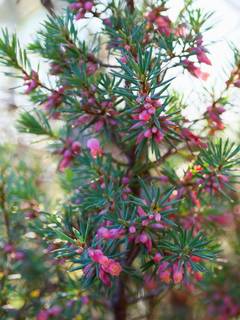
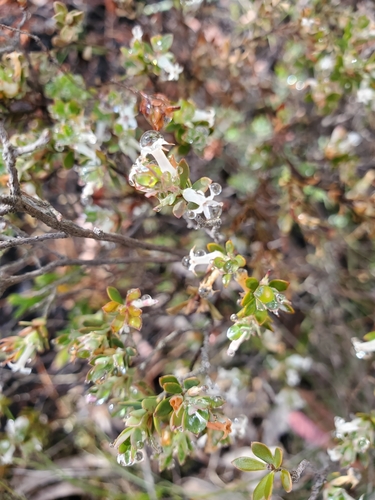
Brachyloma daphnoides is an evergreen shrub reaching 1-5 feet (0.3-1.5 m) tall with a wiry, upright to spreading habit. The small leaves are crowded, oval to oblong, 0.2-0.5 inch (4-12 mm) long, stiff, and dull green, ending in a small point. Tubular flowers about 0.2-0.3 inch (5-8 mm) long are white to cream, fragrant, with five spreading lobes, and are borne singly in the leaf axils along the branches in spring. The fruit is a small berry-like drupe. Growth is slow to moderate. The species grows in heath, woodland, and dry forest on sandy and gravelly soils. It tolerates drought and frost but requires sharp drainage and is sensitive to heavy, wet soils and root disturbance.
Native Range
Native to southeastern Australia, across Queensland, New South Wales, Victoria, Tasmania, and South Australia. Grows in heath, dry sclerophyll forest, and woodland on sandy, well-drained soils at low to moderate elevations.Suggested Uses
Used in native gardens, rockeries, and heath plantings on sandy soils, spaced 2-3 feet (0.6-0.9 m) apart. The fragrant flowers suit low borders and container plantings. Exacting drainage needs limit its use in heavy or wet soils.How to Identify
Appearance
Size & Dimensions
Height1' - 5'
Width/Spread1' - 4'
Bloom Information
Flowers in spring, mainly September to November. The fragrant tubular flowers are scattered along the stems and last several weeks. Flowering is heavier in plants grown in open, sunny positions.
Detailed Descriptions
Flower Description
white to creamFoliage Description
dull greenGrowing Conditions
Sun Requirements
Requires 5-9 hours of direct sunlight daily
• Full Sun: 6+ hours of direct sunlight
• Partial Shade: 3-6 hours of direct sunlight
• Full Shade: Less than 3 hours of direct sunlight
Care & Maintenance
Care Guide
Grows in full sun to light shade in sandy, acidic, sharply drained soils. Established plants tolerate dry periods and need watering only in extended drought. Low-phosphorus native fertilizers suit it; standard fertilizers can damage the roots. Heavy, poorly drained soils cause root rot. Few pests affect it. Plants are slow-growing and resent root disturbance.Pruning
Tip pruning after flowering maintains a compact shape. The plant tolerates light pruning into leafy wood but resprouts poorly from bare old wood. Regular light trimming reduces legginess.Pruning Schedule
Prune: November–December
springsummer
Container Growing
Suitable for container growing
Minimum container size: 3 gallons