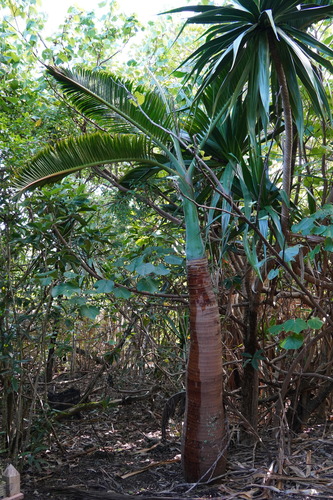
Hyophorbe, Genus, lagenicaulis, Species,
- Genus & species
bottle palm
Overview
Hyophorbe lagenicaulis is the bottle palm, growing 72–120 inches (180–300 cm) tall and 48–72 inches (120–180 cm) wide. The defining feature is the swollen bottle-shaped trunk — widest at the base at 18–24 inches (45–60 cm) in diameter, tapering upward to a smooth green crownshaft 4–6 inches (10–15 cm) in diameter. Only 4–6 pinnate fronds 72–120 inches (180–300 cm) at the crown at any time — the low frond count is a species characteristic, not a sign of poor health. Critically endangered in the wild: fewer than 10 mature specimens remain on Round Island, a small islet off Mauritius — habitat destruction and introduced grazing animals reduced the wild population to near-extinction, though the species is widely cultivated as an ornamental in tropical regions. The species name 'lagenicaulis' means 'flask-stemmed' (Latin: lagena = flask, caulis = stem). Cream to pale yellow flowers in branched inflorescences below the crownshaft. Small orange to black fruit 0.5 inch (12 mm). Native to Round Island, Mauritius. Frost-tender: foliage damage below 35°F (2°C). Slow-growing — 2–4 inches (5–10 cm) per year. Drought-tolerant once established. Full sun to partial shade. Well-draining soil. Lethal yellowing disease (a phytoplasma spread by planthoppers) affects this species in Florida. Non-toxic. The compact size suits containers of 10+ gallons (40+ liters). Zones 10–11.
Native Range
Native to Round Island, a small islet off Mauritius in the Indian Ocean. Critically endangered in the wild (fewer than 10 wild specimens remain). Widely cultivated as an ornamental in tropical regions.Suggested Uses
Grown in the ground in zones 10–11 or in containers of 10+ gallons (40+ liters). Full sun. The bottle-shaped trunk is the display feature. Compact for a palm. Critically endangered in the wild but widely cultivated. Non-toxic. Slow-growing.How to Identify
Appearance
Size & Dimensions
Height6' - 10'
Width/Spread4' - 6'
Bloom Information
Detailed Descriptions
Flower Description
Cream to pale yellow, in branched inflorescence below crownshaftFoliage Description
Dark green, pinnate fronds with arching leafletsGrowing Conditions
Sun Requirements
Requires 6-10 hours of direct sunlight daily
• Full Sun: 6+ hours of direct sunlight
• Partial Shade: 3-6 hours of direct sunlight
• Full Shade: Less than 3 hours of direct sunlight
Care & Maintenance
Care Guide
Full sun to partial shade. Well-draining soil. Drought-tolerant once established. Frost-tender below 35°F (2°C). Slow-growing (2–4 inches / 5–10 cm per year). Only 4–6 fronds at any time (normal). Lethal yellowing disease in Florida. Non-toxic. Zones 10–11.Pruning
Remove dead or browned fronds only — they detach cleanly from the crownshaft. Do not remove green fronds (weakens the palm, and only 4–6 are present at any time). No other pruning needed.Container Growing
Suitable for container growing
Minimum container size: 10 gallons