Boerhavia, Genus, coccinea, Species,
- Genus & species
scarlet spiderling
Overview
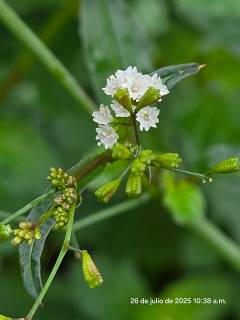
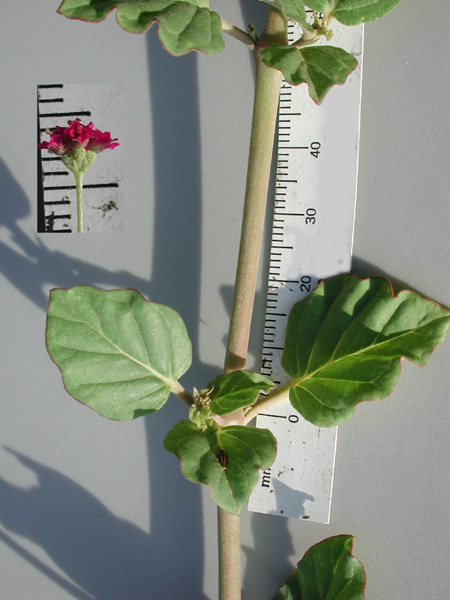
Boerhavia coccinea is a sprawling perennial herb that grows from a stout taproot, sending out branching stems 24-48 inches (60-120 cm) long that lie along the ground or rise to 8-24 inches (20-60 cm). The stems are often reddish and sticky-glandular toward the tips, and the paired oval leaves are 0.5-2 inches (1.5-5 cm) long, green above and paler beneath with wavy margins. Tiny deep pink to scarlet flowers under 0.15 inch (3-4 mm) wide cluster at the ends of slender stalks over a long warm-season period. Each flower yields a small ribbed, sticky fruit, called an anthocarp, that clings to fur, feathers, and clothing and carries the seed far from the parent plant. B. coccinea grows across the tropical and subtropical Americas and is naturalized through much of the warmer world. It tolerates heat, drought, and poor soil but is killed by frost and behaves as an annual at the cold edge of its range. The deep taproot makes established plants difficult to remove by hand, and the stems root readily where they touch moist soil. It is more often managed as a weed of cultivated and disturbed ground than grown intentionally, and it can crowd out low-growing plants in open beds.
Native Range
Boerhavia coccinea is native to the tropical and subtropical Americas, including the southern United States, Mexico, Central and South America, and the Caribbean. It has naturalized across Africa, southern Asia, Australia, and other warm regions, where it grows on disturbed ground, roadsides, and cultivated land.Suggested Uses
Rarely planted intentionally; where present it creates quick groundcover on hot, dry, disturbed sites. In its native range it is grazed by livestock and used in traditional herbal preparations. The sprawling stems can hold loose soil on banks and roadsides.How to Identify
Appearance
Size & Dimensions
Height8" - 2'
Width/Spread2' - 4'
Bloom Information
Flowering continues over a long warm-season period, mainly June to October in the temperate part of its range and nearly year-round in frost-free climates. The deep pink to scarlet flowers are minute, under 0.15 inch (3-4 mm) wide, and open in small clusters. Small flies and bees visit the flowers, which also self-pollinate readily.
Detailed Descriptions
Flower Description
deep pink to scarletFoliage Description
greenGrowing Conditions
Sun Requirements
Requires 6-12 hours of direct sunlight daily
• Full Sun: 6+ hours of direct sunlight
• Partial Shade: 3-6 hours of direct sunlight
• Full Shade: Less than 3 hours of direct sunlight
Care & Maintenance
Care Guide
Boerhavia coccinea grows in full sun with 6 or more hours of direct light and tolerates a wide range of well-drained soils from sand to clay at pH 6.0 to 8.0. Established plants are highly drought-tolerant, drawing on a deep taproot, and need little or no supplemental water. The species is frost-tender and survives winter only in USDA zones 9-11; in colder areas it dies back and regrows from seed. It withstands heat and poor, disturbed soil and self-seeds freely. Because it spreads quickly, it is usually controlled rather than encouraged in managed landscapes.Pruning
No formal pruning is required. Stems can be cut back or mowed at any time during growth to limit spread, and the plant regrows from the taproot. Removing flowering stems before the sticky fruits mature reduces self-seeding.Pruning Schedule
Prune: June–July
summer