Blechnum, Genus, penna-marina, Species,
- Genus & species
alpine water fern
Southern Hemisphere (Chile, Argentina, Australia, New Zealand, subantarctic islands)
Overview
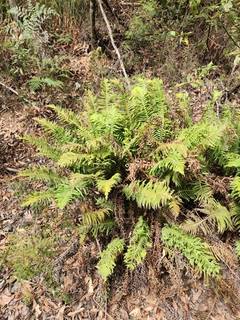
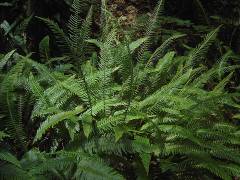
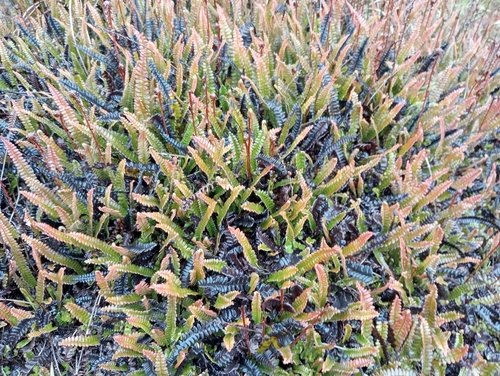
Blechnum penna-marina (now reclassified as Austroblechnum penna-marinum by some authorities) is a low, creeping, evergreen fern reaching 4–8 inches (10–20 cm) tall with an indefinite spread via creeping rhizomes. The sterile (vegetative) fronds are once-pinnate, 4–8 inches (10–20 cm) long and 0.5–1 inch (1.3–2.5 cm) wide, with 15–40 pairs of small, rounded to oblong pinnae along a dark brown to black rachis. Pinnae are leathery, dark green, 0.2–0.4 inch (5–10 mm) long, closely spaced and slightly overlapping. Fertile (spore-bearing) fronds are taller at 6–10 inches (15–25 cm), erect, with narrower pinnae bearing continuous linear sori covered by indusia along the underside. The creeping rhizomes are slender, dark, and wiry, spreading at 4–8 inches (10–20 cm) per year to form dense, low mats. New croziers emerge bronze-tinted in spring before unfurling to dark green. In exposed or cold sites, the evergreen foliage may develop bronze to purplish winter coloring. The fronds are frost-hardy but can be flattened by heavy snow or ice.
Native Range
Blechnum penna-marina has a wide distribution across the Southern Hemisphere, including southern South America (Chile, Argentina, Falkland Islands), southeastern Australia, Tasmania, New Zealand, and various subantarctic islands. It occurs in cool, moist habitats from coastal bluffs to alpine meadows at elevations up to 6,500 feet (2,000 m).Suggested Uses
Planted as a ground cover in shaded rock gardens, woodland gardens, and along shaded paths at 8–12 inch (20–30 cm) spacing. The low, dense mat habit creates a miniature fern carpet. Functions as underplanting beneath taller ferns and shade-loving shrubs. Suitable for alpine troughs, containers of at least 2 gallons (8 L), and green roof plantings in maritime climates. Tolerates coastal conditions in cool climates.How to Identify
Appearance
Size & Dimensions
Height4" - 8"
Width/Spread1' - 2'
Bloom Information
Ferns do not produce flowers. Fertile fronds with continuous linear sori develop in summer (June–August). Sori are covered by indusia along the length of each pinna. Spores mature and release in late summer to fall.
Detailed Descriptions
Foliage Description
Dark green, leathery; bronze new growth and winter tintGrowing Conditions
Sun Requirements
Requires 1-4 hours of direct sunlight daily
• Full Sun: 6+ hours of direct sunlight
• Partial Shade: 3-6 hours of direct sunlight
• Full Shade: Less than 3 hours of direct sunlight
Care & Maintenance
Care Guide
Plant in moist, well-drained, humus-rich, acidic soil in partial to full shade. Tolerates more sun than most ferns in cool, moist climates (zones 7–8 maritime) but scorches in direct afternoon sun in hot regions. Consistent moisture is essential; drought causes frond desiccation and dieback. The creeping rhizomes form dense mats over 2–3 years that suppress weeds effectively. In zones 6–7, mulch with 2–3 inches (5–8 cm) of leaf mold for winter protection. Fronds may flatten under heavy snow or ice but typically recover in spring. Slugs may feed on young croziers.Pruning
Remove any winter-damaged or brown fronds in early spring before new croziers emerge. No other pruning required. Thin established colonies by removing sections of rhizome mat in spring if spread becomes excessive.Pruning Schedule
Prune: March
early spring
Container Growing
Suitable for container growing
Minimum container size: 2 gallons