Bismarckia, Genus, nobilis, Species,
- Genus & species
bismarck palm
Overview
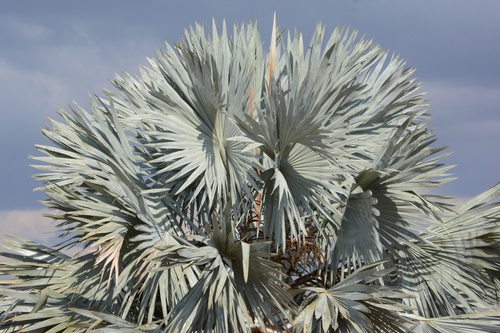
Bismarckia nobilis is the Bismarck palm, growing 240–480 inches (600–1,200 cm) tall with a single trunk 12–18 inches (30–45 cm) in diameter. Massive silver-blue palmate (fan-shaped) fronds 48–72 inches (120–180 cm) wide on stiff petioles 72–96 inches (180–240 cm) — the silver-blue frond color is the defining feature and the most intensely silver of any commonly cultivated palm. The frond spread at 180–360 inches (450–900 cm) wide is among the largest of all palms — a single mature specimen dominates a residential lot. Monotypic: Bismarckia is the only species in its genus. Named after Otto von Bismarck, the first Chancellor of Germany. Dioecious: separate male and female plants. Brown to dark red flowers in branched inflorescences 36–48 inches (90–120 cm). Small brown fruit 1.5 inches (4 cm) on female plants. Native to the grasslands and savannas of western and northern Madagascar, where it grows in seasonally dry conditions on poor laterite soils. Drought-tolerant once established — adapted to dry seasonal climates. The massive root system resents transplanting — plant in the permanent position. Hardy to 25°F (−4°C) when mature — young palms are more cold-sensitive. Full sun (8+ hours) for the most intense silver-blue color; shade shifts toward green. Non-toxic. Growth rate is moderate — 12–18 inches (30–45 cm) per year. Zones 9–11.
Native Range
Native to the grasslands and savannas of western and northern Madagascar, growing in seasonally dry conditions on laterite soils.Suggested Uses
Grown as a specimen palm in zones 9–11 with space for the 180–360 inch (450–900 cm) frond spread. Full sun for silver-blue color. The most intensely silver palm commonly cultivated. Requires a large lot. Non-toxic. Drought-tolerant.How to Identify
Appearance
Size & Dimensions
Height20' - 40'
Width/Spread15' - 30'
Bloom Information
Detailed Descriptions
Flower Description
Brown to dark red, in branched inflorescencesFoliage Description
Silver-blue, palmate (fan-shaped) fronds 48-72 inches (120-180 cm) wideGrowing Conditions
Sun Requirements
Requires 8-10 hours of direct sunlight daily
• Full Sun: 6+ hours of direct sunlight
• Partial Shade: 3-6 hours of direct sunlight
• Full Shade: Less than 3 hours of direct sunlight