Berula, Genus, erecta, Species,
- Genus & species
cutleaf water parsnip
Circumboreal: Europe, Asia, North Africa, North America
Overview
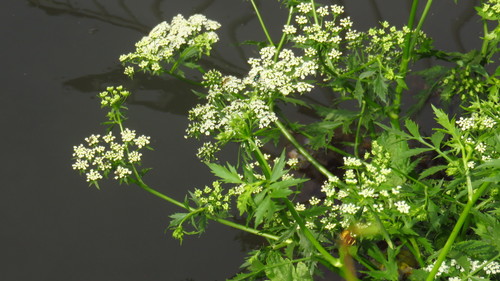
Berula erecta is a creeping semi-aquatic perennial of slow water and wet margins, spreading by rooting stolons to form patches 1-3 feet (30-90 cm) tall. The hollow, ridged stems carry pinnate bright green leaves divided into 7-14 pairs of toothed, oval leaflets, the submerged leaves more finely cut than the emergent ones. From midsummer to early autumn it bears small white flowers in flat-topped compound umbels 0.8-2 inches (2-5 cm) across, each umbel set off by a ring of leaf-like bracts at its base. Small ribbed dry fruits follow. The plant roots in shallow water and saturated mud at the edges of streams, ditches, ponds, and fens, often growing partly submerged. It spreads steadily and can choke narrow ditches and small channels, a limitation where open water is wanted. Its leaves resemble those of edible water parsnips and the highly poisonous water hemlocks (Cicuta and Oenanthe species), so the plant is easily confused with dangerous relatives. Berula erecta itself is regarded as toxic to livestock and is not eaten.
Native Range
Berula erecta has a wide circumboreal range across Europe, Asia, North Africa, and North America, growing in fens, marshes, ditches, slow streams, and pond margins. It favors base-rich, calcareous still or slow-moving fresh water.Suggested Uses
Grown at the margins of wildlife ponds, streams, and bog gardens for its summer umbels and as cover for aquatic life. It helps bind and stabilize muddy banks. Its spread suits larger naturalistic water features rather than small ponds.How to Identify
Appearance
Size & Dimensions
Height1' - 3'
Width/Spread1' - 3'
Bloom Information
Detailed Descriptions
Foliage Description
Bright greenGrowing Conditions
Sun Requirements
Requires 4-10 hours of direct sunlight daily
• Full Sun: 6+ hours of direct sunlight
• Partial Shade: 3-6 hours of direct sunlight
• Full Shade: Less than 3 hours of direct sunlight
Care & Maintenance
Care Guide
Grows in full sun to part shade in shallow fresh water or permanently wet, base-rich mud at pond and stream margins. It is hardy to USDA zone 5 and dies back to overwintering stolons and buds in winter. Constant moisture is needed, as the plant cannot tolerate drying out, though it withstands moving water and seasonal flooding. It spreads quickly by stolons and may need thinning to keep channels open. Few pests trouble it in cultivation, and crown rot occurs only where water stagnates badly.Pruning
Excess growth is cut or pulled out through summer to keep water channels clear. Stolons spreading beyond the intended area are removed by hand. Old growth dies down on its own in winter.Container Growing
Suitable for container growing
Minimum container size: 3 gallons