Bedfordia, Genus, arborescens, Species,
- Genus & species
blanket leaf
Overview
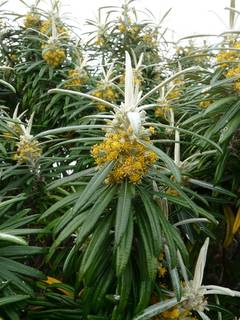
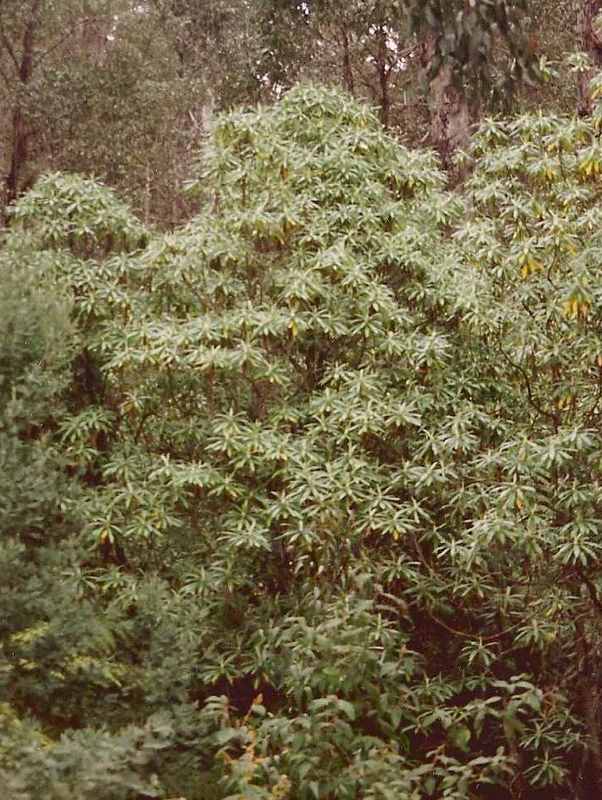
Bedfordia arborescens is an evergreen small tree or tall shrub reaching 10-30 feet (3-9 m) tall, usually single-stemmed with a narrow crown. The leaves are lance-shaped, 3-8 inches (8-20 cm) long, dark green and smooth above and densely white-woolly on the underside, giving the felted texture behind the common name. Small yellow tubular flower heads are clustered in the leaf axils along the upper stems in spring, each cluster 0.4-0.8 inch (1-2 cm) across. The flowers are followed by small seeds carried on tufts of hair. Growth is slow to moderate. The species grows in the cool, moist, shaded understory of wet forest and is damaged by drought, hot exposure, and heavy frost. Lower leaves drop as the trunk lengthens, leaving a tuft of foliage near the top.
Native Range
Native to southeastern Australia, in Victoria, Tasmania, and southern New South Wales. Grows in the understory of cool temperate rainforest and wet sclerophyll forest, in gullies and on sheltered slopes on moist, fertile soils.Suggested Uses
Grown in shaded, moist native and woodland gardens and fern gullies, spaced 6-12 feet (1.8-3.6 m) apart. The white-backed leaves show their underside when stirred by wind. It grows poorly in dry, sunny, or exposed positions.How to Identify
Appearance
Size & Dimensions
Height10' - 30'
Width/Spread5' - 12'
Bloom Information
Yellow flower heads appear in spring, September through November in its native range. The clustered heads last 3-5 weeks. Flowering is sparser on plants growing in deep shade.
Detailed Descriptions
Foliage Description
dark green above, white beneathGrowing Conditions
Sun Requirements
Requires 2-6 hours of direct sunlight daily
• Full Sun: 6+ hours of direct sunlight
• Partial Shade: 3-6 hours of direct sunlight
• Full Shade: Less than 3 hours of direct sunlight
Care & Maintenance
Care Guide
Grows in part to full shade on moist, fertile, free-draining soils in cool, sheltered positions. The root zone needs steady moisture; foliage scorches and growth slows in dry or exposed sites. Heavy frost and hot sun damage the leaves. Mulching maintains the cool, moist root conditions of its forest habitat. Few pests are recorded, though the soft growth can be browsed by animals.Pruning
Tolerates light pruning to shape or to remove leggy growth. Tip pruning of young plants encourages a denser crown. Old or frost-damaged growth can be cut back in spring as new shoots appear.Pruning Schedule
Prune: September–October
spring