Image 1 of 13
Plant Reference
1 / 13
Beaucarnea, Genus, recurvata, Species,
- Genus & species
ponytail palm
Native to eastern Mexico growing in semi-arid forests and rocky scrubland in the states of Tamaulipas, Veracruz, San Luis Potosí, and Hidalgo at low to moderate elevations
Overview
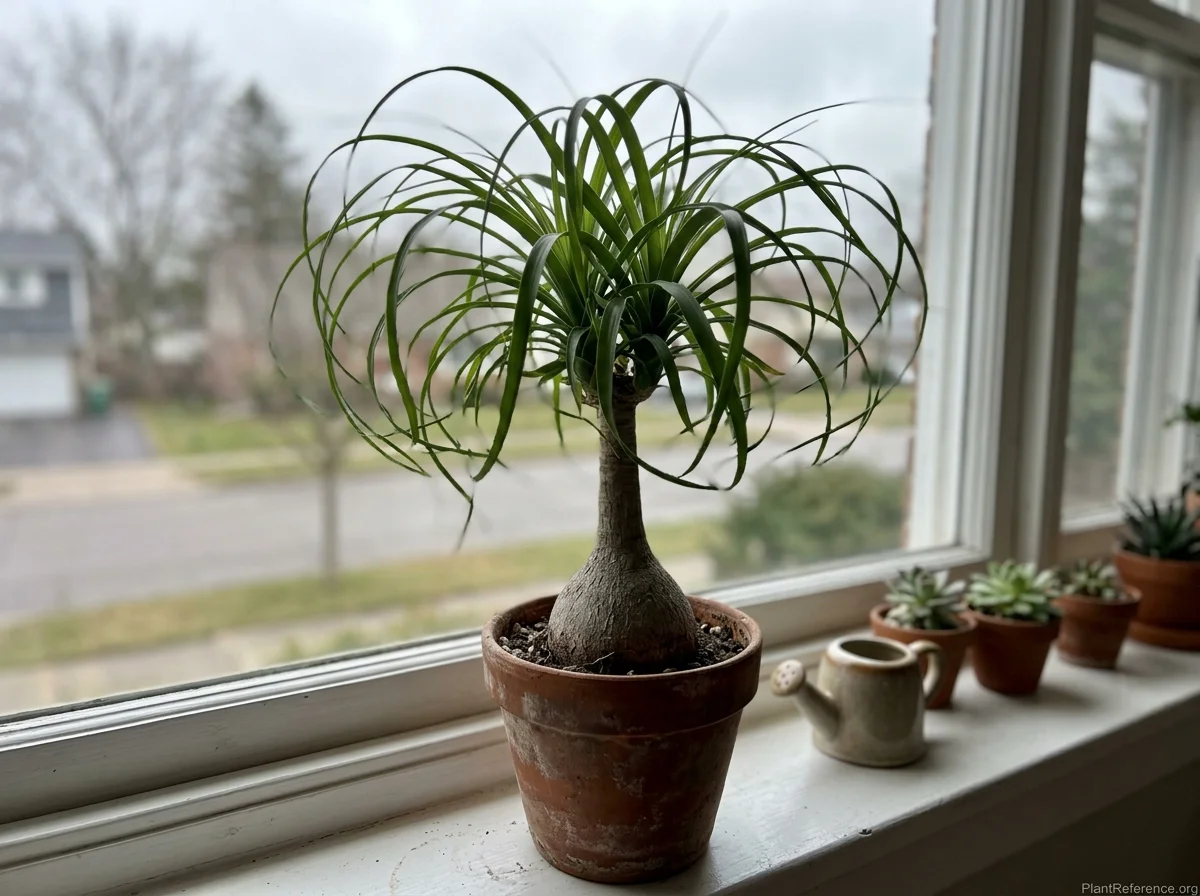
Beaucarnea recurvata is the ponytail palm — a Mexican-native succulent tree in the family Asparagaceae growing 36–72 inches (90–180 cm) tall indoors and up to 30 feet (900 cm) tall on mature outdoor specimens. The species runs as a succulent rather than a true palm despite the common name; the genus sits in the Asparagaceae family alongside agave, yucca, and asparagus, and the visual palm-like appearance derives from convergent evolution rather than taxonomic relationship to the true palms (Arecaceae family). Two diagnostic features define the species: (1) a heavily swollen bulbous trunk base (caudex) that stores water and gives the plant its alternative common name 'elephant foot tree' — the caudex reaches 3+ feet (90+ cm) in diameter on mature outdoor specimens and stores enough water to sustain the plant through months of drought; and (2) a cascade of bright green very long narrow curly leaves erupting from the trunk top like a ponytail. The species name 'recurvata' translates as 'curved back', referencing the recurving leaves that arch backward from the central crown. The species runs non-toxic to pets and children — a culturally safe houseplant for households where toxic alternatives such as Dracaena (saponin toxicity) and Strelitzia (mild toxicity) pose ingestion risk. Indoor growth runs extremely slow; long-lived outdoor specimens in Mexico carry estimated ages of 300+ years. Bright light suits the species; water infrequently. Do not bury the caudex below the soil line — keep the swollen base exposed above the soil surface to prevent rot. Deer avoid the foliage where outdoor cultivation occurs.
Native Range
Beaucarnea recurvata is native to eastern Mexico, growing in semi-arid forests and rocky scrubland in the states of Tamaulipas, Veracruz, San Luis Potosí, and Hidalgo at low to moderate elevations.Suggested Uses
Used as a sculptural indoor specimen in bright rooms, on sunny windowsills, in offices and commercial spaces with significant natural light, and as a non-toxic drought-tolerant conversation piece for households with pets and children. The swollen caudex with the curly leaf cascade gives the species visual interest beyond the typical houseplant foliage display, and the long lifespan (300+ years on outdoor specimens) suits the plant to long-term collection rather than seasonal turnover. The strong drought tolerance and slow growth rate run as low-maintenance traits that suit the species to gardeners who travel frequently or maintain limited time for plant care. Outdoor cultivation works in USDA zones 9–11; container culture with overwintering indoors extends the cultivation range north.How to Identify
Appearance
Size & Dimensions
Height3' - 6'
Width/Spread2' - 4'
Bloom Information
Extremely rare indoors — flowering requires decades of maturity and outdoor conditions that indoor cultivation cannot replicate. The ponytail cascade and swollen caudex run as the year-round display. When flowering does occur on mature outdoor specimens in tropical and subtropical climates, large panicles of small creamy-white flowers emerge above the leaf cascade and carry minor ornamental value secondary to the primary trunk-and-foliage display.
Detailed Descriptions
Flower Description
Creamy-white (extremely rare indoors; requires decades of maturity)Foliage Description
Bright green; very long narrow curly leaves cascading from trunk top like a ponytailGrowing Conditions
Sun Requirements
Requires 4-12 hours of direct sunlight daily
• Full Sun: 6+ hours of direct sunlight
• Partial Shade: 3-6 hours of direct sunlight
• Full Shade: Less than 3 hours of direct sunlight
Care & Maintenance
Care Guide
Place in bright light to direct sun indoors — the species runs adapted to high-light Mexican scrubland conditions and tolerates more direct sun than most indoor succulents. Water very infrequently — the caudex stores water for months and the species runs more reliably underwatered than overwatered. Allow the potting mix to dry completely between waterings; in winter the watering interval may extend to monthly or longer. Well-draining cactus or succulent potting mix with added pumice or perlite suits the species; avoid moisture-retentive houseplant mixes that hold water against the caudex. Keep the caudex exposed above the soil line — burying the swollen base below the soil surface causes rot that runs as the principal cause of indoor decline. The species runs non-toxic to pets and humans. Indoor growth runs extremely slow and the plant tolerates root-bound conditions for many years before repotting becomes necessary.Pruning
Trim brown leaf tips with scissors if desired for cosmetic appearance — the trimmed tips do not regrow. Remove fully dead leaves at the base by pulling gently. No other seasonal pruning is needed.Container Growing
Suitable for container growing
Minimum container size: 5 gallons