Bazzania, Genus, spp., Multiple species,
- Genus
- Multiple species
whip liverwort
Pantropical and temperate humid forests
SunFull Shade – Part Shade
WaterHigh
Overview
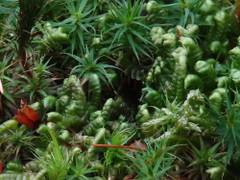
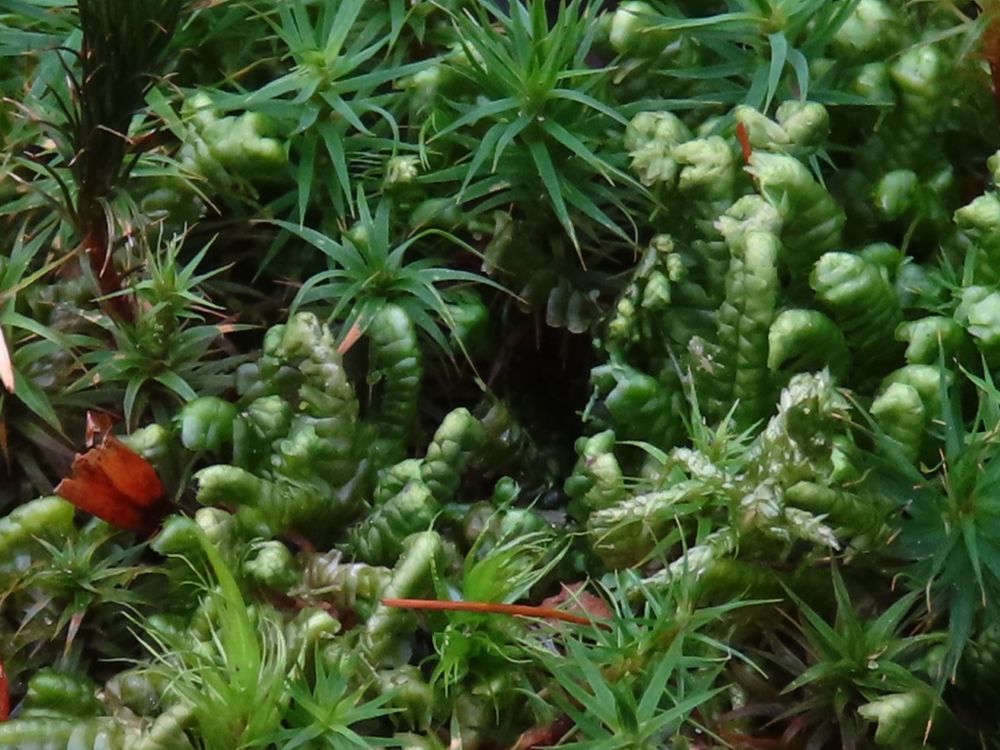
Bazzania is a large genus of leafy liverworts in the family Lepidoziaceae, found in moist forests worldwide and most diverse in the tropics and southern temperate zone. Plants form green to yellow-brown mats, tufts, or pendant masses on the forest floor, rotting logs, rocks, and tree trunks. The flattened shoots are 0.04-0.2 inch (1-5 mm) wide and several inches long, branching repeatedly in a regular forked pattern, with slender whip-like branchlets trailing from the undersides. Leaves are set in three ranks: two rows of overlapping lateral leaves, each squarish and tipped with two or three small teeth, and a row of smaller underleaves along the stem. The leaves overlap in incubous fashion, the front edge of each leaf lying over the base of the one ahead. Plants reproduce by spores from capsules on short, pale stalks and also spread by fragmentation of the shoots. They are evergreen and poikilohydric, staying green where humidity is high and drying when exposed.
Native Range
The genus is widespread in humid forests across the tropics, eastern Asia, Australasia, and the Americas, with fewer species in cool temperate regions including parts of North America and Europe. Plants grow in shaded, consistently humid habitats on the forest floor, decaying wood, mossy rocks, and tree bases, mostly in montane and rainforest settings.Suggested Uses
Used in terrariums, vivariums, bottle gardens, and shaded, humid corners of moss gardens for green, forest-floor texture on wood and stone. Plants form trailing or matted cover in deep shade where steady humidity can be kept. They are unsuited to open, sunny, or dry sites and to disturbance, needing stable, moist, shaded conditions to persist.How to Identify
Appearance
Colors
Fall Foliage Colors
Detailed Descriptions
Foliage Description
green to yellow-brownGrowing Conditions
Sun Requirements
Tolerates up to 3 hours of direct sunlight daily
• Full Sun: 6+ hours of direct sunlight
• Partial Shade: 3-6 hours of direct sunlight
• Full Shade: Less than 3 hours of direct sunlight
Water & Climate
Water Needs
Care & Maintenance
Care Guide
In cultivation for terrariums, vivariums, and shaded moss gardens, plants need deep shade, high humidity, and a cool, moist, acidic surface such as wood, bark, or peaty soil. Constant air moisture matters more than root watering, since liverworts absorb water over their whole surface and have no true roots. Plants tolerate brief drying by going dormant but brown and die back under prolonged dryness or direct sun. Low-nutrient conditions suit them, and fertilizer or hard tap water can damage the shoots. Establishment is by pressing or pinning fragments onto a moist substrate, where they slowly knit into mats. Competition from faster mosses and drying are the main difficulties.Container Growing
Suitable for container growing
Minimum container size: 1 gallons