Bassia, Genus, spp., Multiple species,
- Genus
- Multiple species
Burningbush
Eurasia and Africa (dry and saline regions)
SunFull Sun
Overview
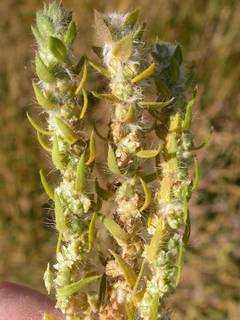
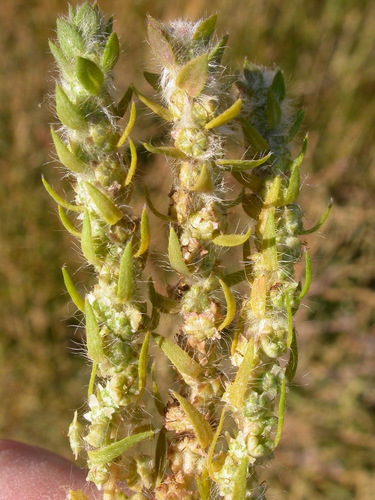
Bassia is a genus of annual and perennial herbs and low subshrubs in the family Amaranthaceae, native to dry, saline, and disturbed ground across Eurasia and Africa. A widely grown member, B. scoparia, is a bushy annual forming dense, egg-shaped to rounded plants 24-60 inches (60-150 cm) tall and 12-30 inches (30-75 cm) wide from a single stem. Leaves are alternate, narrow, lance-shaped to linear, 0.5-2 inches (1.3-5 cm) long, soft, and crowded along the many slender branches, giving a feathery, cypress-like texture. Foliage is bright green through summer and turns deep red to purple in autumn in B. scoparia, the trait behind the name burning bush. Flowers are tiny, green, and petalless, hidden in the leaf axils and wind-pollinated, followed by small one-seeded fruits. Perennial species such as B. prostrata form low, woody-based mounds used for forage and erosion control. Plants tolerate heat, drought, and saline or alkaline soils. B. scoparia self-seeds heavily and is an agricultural weed across much of its introduced range.
Native Range
Native to dry and saline regions of Europe, Asia, and Africa, with several species centered in the steppes and deserts of central and western Asia. B. scoparia has been introduced and naturalized widely in North America, Australia, and elsewhere, where it colonizes roadsides, fields, rangeland, and disturbed saline ground from sea level to about 8,000 feet (2,400 m).Suggested Uses
B. scoparia is grown as a quick summer hedge, edging, or container accent for autumn colour, spaced 18-24 inches (45-60 cm) apart, and is also dried for arrangements and brooms. Perennial species are planted for forage, revegetation, and erosion control on dry saline land. The heavy self-seeding and weediness of B. scoparia limit its use near farmland and wild areas.How to Identify
Appearance
Size & Dimensions
Height2' - 5'
Width/Spread1' - 2'6"
Bloom Information
Flowering occurs in summer and early autumn, mainly July to September, with the small wind-pollinated flowers going largely unnoticed. Seed ripens from late summer into autumn. In B. scoparia the autumn foliage colour, not the flowers, is the conspicuous seasonal feature.
Detailed Descriptions
Foliage Description
green, turning red in autumnGrowing Conditions
Sun Requirements
Requires 6-12 hours of direct sunlight daily
• Full Sun: 6+ hours of direct sunlight
• Partial Shade: 3-6 hours of direct sunlight
• Full Shade: Less than 3 hours of direct sunlight
Water & Climate
Water Needs
Drought Tolerance
Drought tolerant when established
Care & Maintenance
Care Guide
Plants grow in full sun in a wide range of soils, including poor, dry, sandy, and saline or alkaline ground, and tolerate heat and drought once established. B. scoparia grows quickly from seed sown after frost and needs little water, while overly rich or wet soil produces loose, floppy growth. Perennial species are longer-lived and used on saline rangeland where few forage plants persist. Plants are largely free of serious pests, though B. scoparia can accumulate nitrates and oxalates that are toxic to livestock grazed on it heavily. B. scoparia self-sows aggressively, and its dried plants break off and tumble, scattering seed. Removing spent plants before seed set limits spread.Pruning
The annual B. scoparia can be sheared in summer to keep a formal, rounded shape, as it tolerates clipping much like a hedge plant. Cutting and removing plants before seed matures reduces self-sowing. Perennial species are cut back in late winter to remove old woody growth.Pruning Schedule
Prune: June–July
summer
Container Growing
Suitable for container growing
Minimum container size: 3 gallons