Barbula, Genus, unguiculata, Species,
- Genus & species
Bird's-claw beard-moss
Northern Hemisphere (Europe, Asia, North Africa, North America)
SunFull Sun – Part Shade
Overview
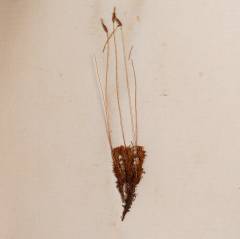
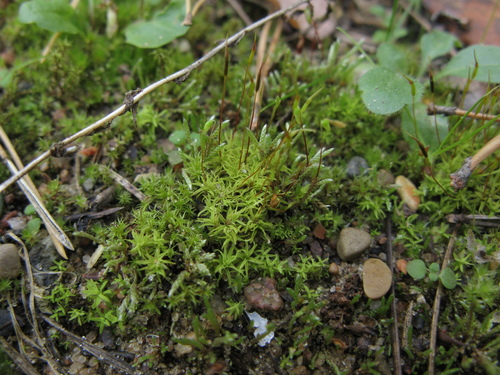
Barbula unguiculata is a common, tuft- to turf-forming moss of the family Pottiaceae, making low green to yellow-green patches 0.2-0.8 inch (0.5-2 cm) tall. The tongue-shaped leaves have rounded tips ending in a short, abruptly bent point, the feature that gives the name bird's-claw, and their margins are rolled under along most of their length. When dry the leaves curl inward and the patches look dull and shrunken; when wet they spread and brighten to green. It readily produces erect, cylindrical spore capsules on reddish stalks, each capped by a long, spirally twisted peristome typical of the beard-mosses. The species is a pioneer of bare, disturbed, lime-rich ground, colonising soil banks, path edges, arable fields, gardens, walls, and waste places in full sun to light shade. It grows quickly on open soil but is soon overtaken where larger plants move in. As a non-flowering plant it has no roots, flowers, or seeds and anchors by rhizoids. It tolerates trampling, drought, and disturbance better than many mosses.
Native Range
Native across much of the Northern Hemisphere, including Europe, Asia, North Africa, and North America, growing on bare, disturbed, often calcareous soil, paths, banks, walls, and cultivated ground.Suggested Uses
Used on green roofs, between paving, on walls, and in moss gardens where a tough, fast-colonising moss is wanted on bare, sunny, lime-rich surfaces. It suits disturbed or compacted ground that defeats many plants. Cover builds quickly for a moss and pairs with other pioneer species.How to Identify
Appearance
Colors
Foliage Colors
Bloom Information
As a moss, this species does not flower; it reproduces by spores. Capsules are produced readily and mature mainly from autumn through spring, releasing spores as the twisted teeth move with humidity. The moss also spreads by growth and by detached fragments on disturbed soil.
Detailed Descriptions
Foliage Description
green to yellow-greenGrowing Conditions
Sun Requirements
Requires 3-10 hours of direct sunlight daily
• Full Sun: 6+ hours of direct sunlight
• Partial Shade: 3-6 hours of direct sunlight
• Full Shade: Less than 3 hours of direct sunlight
Water & Climate
Water Needs
Drought Tolerance
Drought tolerant when established
Care & Maintenance
Care Guide
This adaptable moss grows on bare, firm, lime-rich soil and stone in full sun to light shade, and occurs frequently on disturbed ground. It tolerates drought, trampling, and pollution, drying to a curled state and reviving after rain. No feeding or routine watering is needed, as it absorbs moisture directly from rainfall and dew. It is established by scattering or pressing fragments onto bare, compacted soil or mortar. Dense shade, deep litter, and competition from vascular plants are the main causes of its decline. Once colonised, patches need little attention beyond keeping larger plants clear.Pruning
Pruning does not apply to this moss. Maintenance is limited to removing leaf litter and taller plants that would shade and smother the low patches. Loosened fragments can be repositioned to start new growth.Container Growing
Suitable for container growing